Keep goods and services, primary income and secondary income on separate lines, with the same currency, period and sign convention.
Identify the account's scope
The current account records transactions between an economy's residents and nonresidents. The IMF presents it as the sum of the goods and services balance, net primary income and net secondary income. If a headline mentions a “trade balance,” check whether its table includes merchandise alone or services too before using the figure.
Reconstruct the first balance
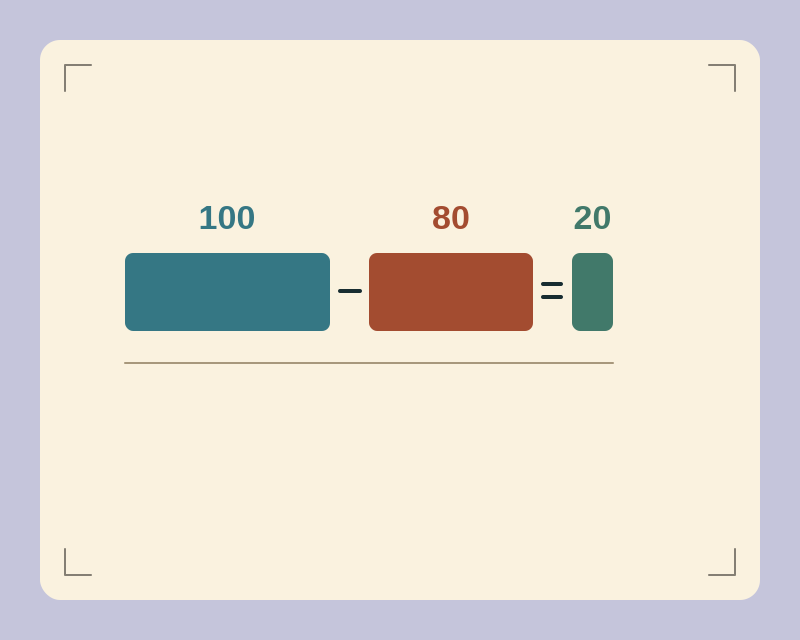
In the exercise, exports and imports already include goods and services for the same period, expressed in fictional currency units. The subtraction is 120 − 100 = +20. We are not comparing price indexes or physical quantities. Retain this subtotal and look for what follows in the table.
Add the two income components
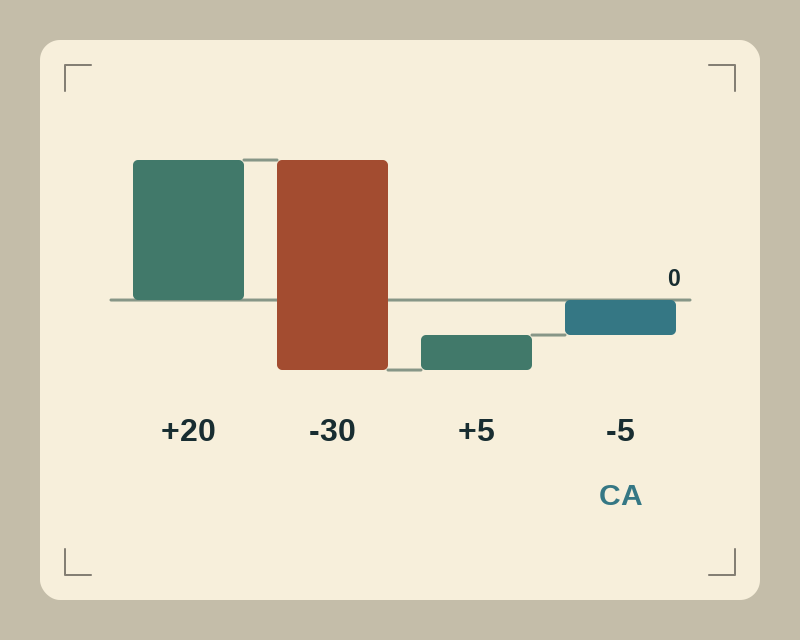
Assume net primary income of −30: payments to nonresidents in that category exceed receipts from nonresidents by 30. Check the report's notes to identify which income items that category includes. Net secondary income is +5 and covers current transfers. These are net balances, not gross totals.
Check the final sign
The sum is +20 − 30 + 5 = −5. A positive goods and services balance coexists with a current account deficit because the other two components sum to −25. Keeping the other balances unchanged, net primary income of −10 would produce +15. This identifies which component changes the conclusion in each scenario.
Keep the definition beside the figure
Record the source, economy, period, unit, revision and component names. If the total does not match, review rounding, coverage and signs before proposing an economic cause. The current account is a period flow; external asset and liability positions are a different measure. This exercise explains an accounting sum without independently diagnosing an economy's external sustainability.
Follow the evidence.
Sources checked November 20, 2026. The exercise scenarios and figures are fictional. Our editorial standards.