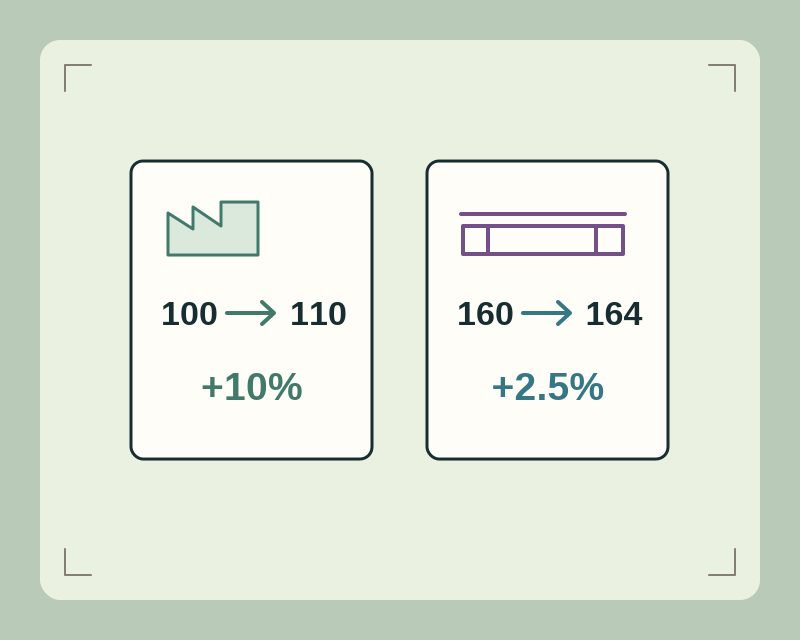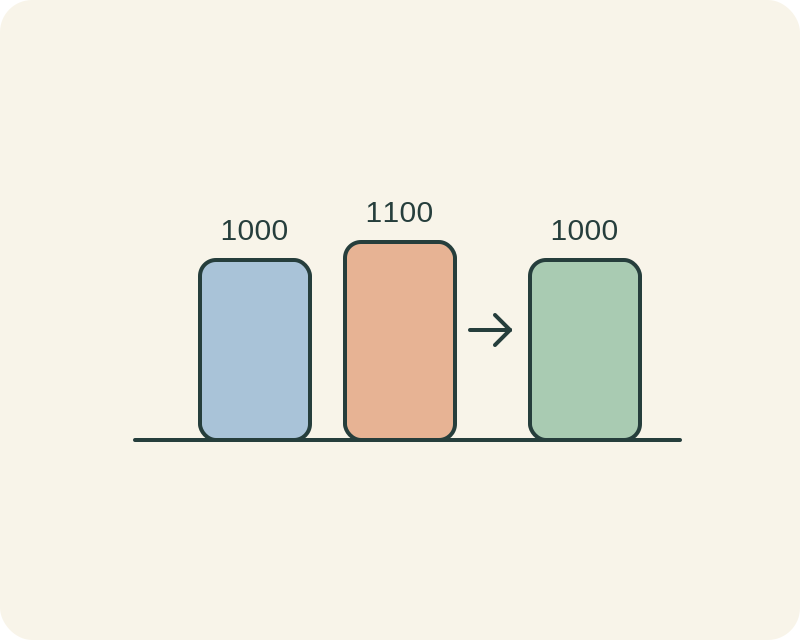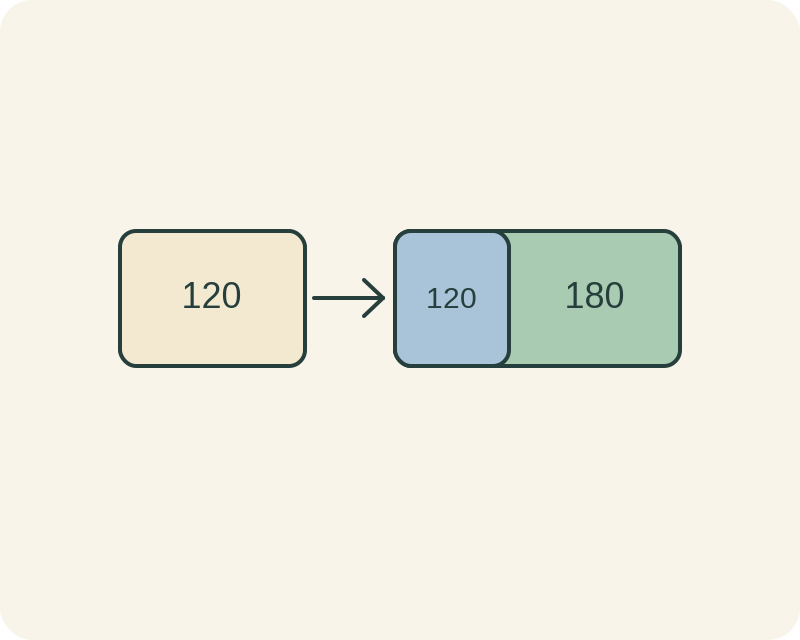
Divide the export price index by the import price index. Keep the values of purchases and sales separate, as they also depend on quantities and mix.
Find two compatible indexes
The OECD defines terms of trade as the ratio of the export price index to the import price index. Check that both series cover the same territory, period and kind of trade, and that they share a base. In the exercise both equal 100 in the reference period.
Work through two unequal falls
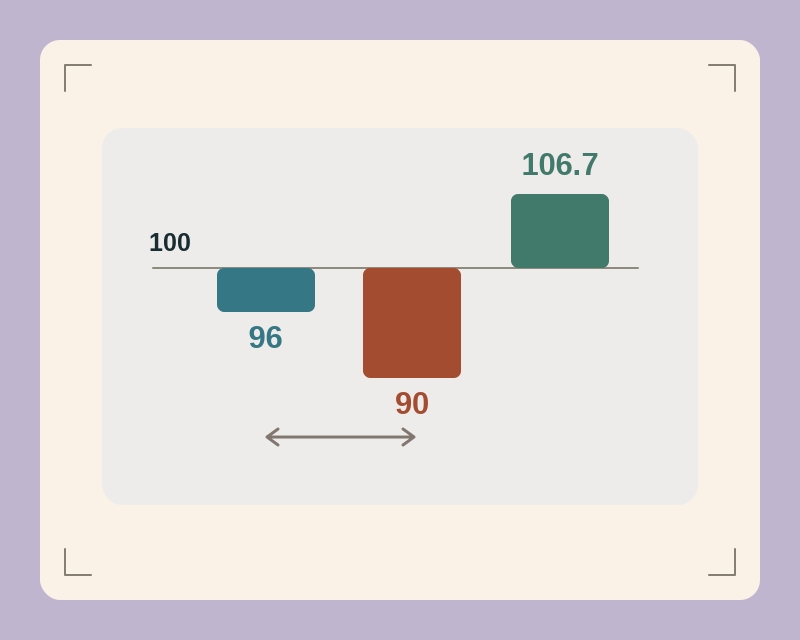
In the second fictional observation, the export index falls to 96 and the import index to 90. Divide 96 by 90 and multiply by 100. The result is about 106.7. Against the base of 100, export prices gained relative to import prices even though each index fell on its own.
See what happens with another denominator
Keep exports at 96 and try an import index of 98. The ratio becomes about 98.0. In this scenario both indexes fall, but export prices now fall further. Comparing directions without looking at the size of the changes would hide the different result.
Read the trade balance separately
Suppose the first scenario also reports exports worth 240 and imports worth 260 in the same currency and period. The table's balance is −20. That can coexist with an index of 106.7 because the balance subtracts monetary values and the index compares relative prices.
Write the comparison with its reference
When citing a figure, note which series and base you used, whether it covers goods or services too, and whether it has been revised. For the exercise, say the ratio increased against the base period because the import price index fell further than the export price index.
Follow the evidence.
Sources checked November 15, 2026. The exercise scenarios and figures are fictional. Our editorial standards.