Find where spending was first recorded and how much represents imports. Work through the difference using values for the same period and economy.
Read the terms of the calculation
The expenditure approach adds consumption, investment, government consumption and investment, and exports, then subtracts imports. The first components can include spending on both domestically and foreign-produced items. Subtracting imports keeps production within the economy in the total.
Follow one purchase through the calculation
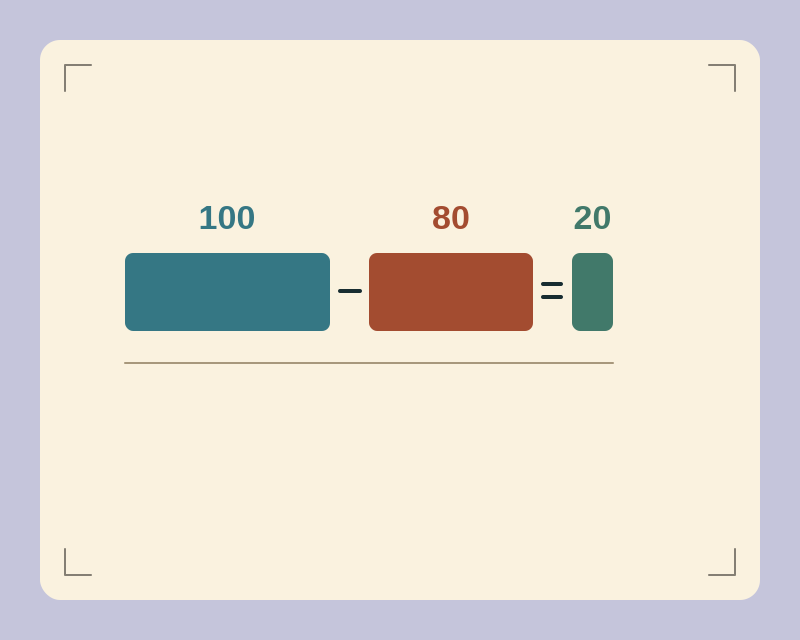
In the fictional example, the household pays 100 and the import value is 80. Assume import and retail sale take place in the same period, with no taxes or other adjustments. The exercise adds 100 to consumption and subtracts 80 in imports. Under those assumptions 20 remains attributable to local distribution.
Try another case before interpreting the sign
If the household spends 100 on a fully domestic product in the same exercise, 100 goes into consumption and there is no import subtraction for that transaction. Comparing real scenarios would require knowing what changes in production, inventories and other spending alongside the purchase.
Read a published contribution carefully
A negative contribution from imports can coincide with rising consumption or investment. Look for whether the table reports levels, rates or contributions to growth. If it uses chained real measures, use the published contributions because the levels need not add up.
Keep the explanation with the table
Record the period, country, approach and unit. For the exercise, a checkable statement is “the purchase added 100 to consumption and subtracted 80 for import value.” That calculation accounts for the 20.
Follow the evidence.
- U.S. Bureau of Economic Analysis · The Expenditures Approach to Measuring GDP ↗
- U.S. Bureau of Economic Analysis · NIPA Handbook, Chapter 2 ↗
- U.S. Bureau of Economic Analysis · How do I use chain-type indexes? ↗
Sources checked November 16, 2026. The exercise scenarios and figures are fictional. Our editorial standards.