Conserva bienes y servicios, ingreso primario e ingreso secundario en líneas separadas, con la misma moneda, periodo y convención de signos.
Identifica el alcance de la cuenta
La cuenta corriente registra transacciones entre residentes y no residentes de una economía. El FMI la presenta como la suma del saldo de bienes y servicios, el ingreso primario neto y el ingreso secundario neto. Si un titular habla de «balanza comercial», comprueba si su tabla incluye solo mercancías o también servicios antes de usar la cifra.
Reconstruye el primer saldo
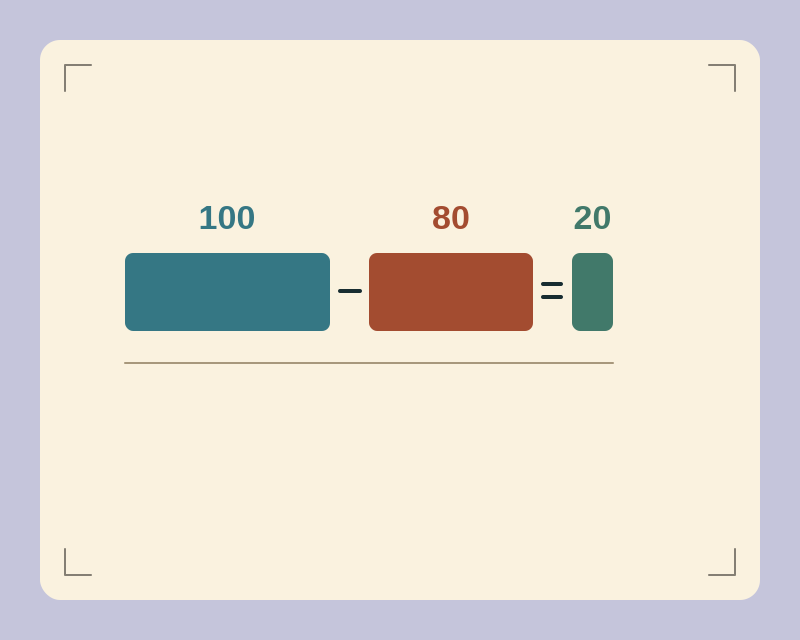
En el ejercicio, exportaciones e importaciones ya incluyen bienes y servicios del mismo periodo y se expresan en unidades monetarias ficticias. La resta es 120 − 100 = +20. No estamos comparando índices de precios ni unidades físicas. Mantén esa cifra como subtotal y busca qué viene después en la tabla.
Añade las dos partidas de ingreso
Supón ingreso primario neto de −30: en esa categoría los pagos a no residentes superan en 30 a los ingresos procedentes de no residentes. Consulta las notas del informe para identificar qué ingresos incluye esa categoría. El ingreso secundario neto es +5 y recoge transferencias corrientes. Son saldos netos, no totales brutos.
Comprueba el signo final
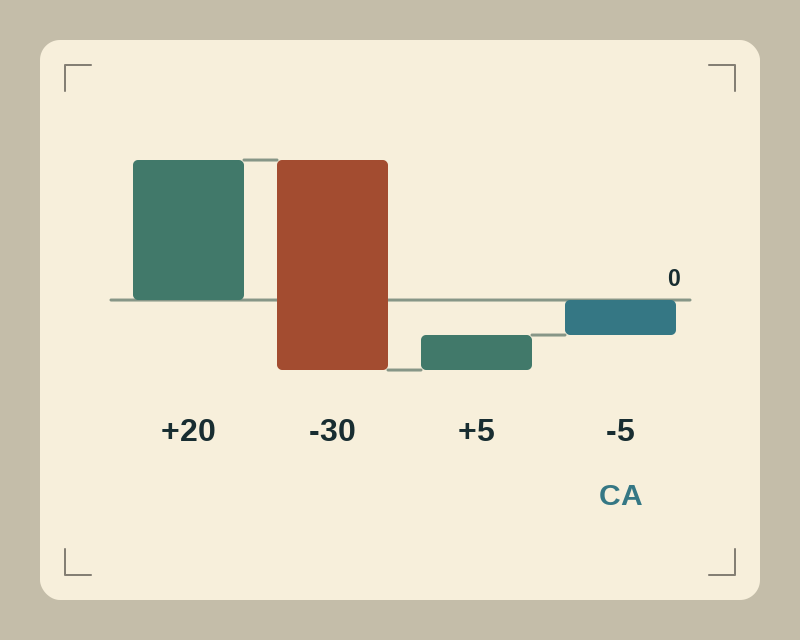
La suma es +20 − 30 + 5 = −5. El saldo positivo de bienes y servicios coexiste con déficit corriente porque las otras dos partidas suman −25. Si conservaras los otros saldos y el ingreso primario neto fuera −10, el resultado sería +15. Así se ve qué componente cambia la conclusión en cada escenario.
Guarda la definición junto a la cifra
Anota fuente, economía, periodo, unidad, revisión y nombres de las partidas. Si el total no coincide, revisa redondeos, cobertura y signos antes de proponer una causa económica. La cuenta corriente es un flujo del periodo; el saldo de activos y pasivos externos es otra medida. Este ejercicio explica una suma contable, sin diagnosticar por sí solo la sostenibilidad externa de una economía.
The current account: why exporting more goods and services than you import is not enough
A fictional economy exports goods and services worth 120 and imports 100. That trade balance is positive by 20. Its report nevertheless shows a current account deficit of 5. Reconstructing it requires reading the other components too.
Keep goods and services, primary income and secondary income on separate lines, with the same currency, period and sign convention.
Identify the account's scope
The current account records transactions between an economy's residents and nonresidents. The IMF presents it as the sum of the goods and services balance, net primary income and net secondary income. If a headline mentions a “trade balance,” check whether its table includes merchandise alone or services too before using the figure.
Reconstruct the first balance
In the exercise, exports and imports already include goods and services for the same period, expressed in fictional currency units. The subtraction is 120 − 100 = +20. We are not comparing price indexes or physical quantities. Retain this subtotal and look for what follows in the table.
Add the two income components
Assume net primary income of −30: payments to nonresidents in that category exceed receipts from nonresidents by 30. Check the report's notes to identify which income items that category includes. Net secondary income is +5 and covers current transfers. These are net balances, not gross totals.
Check the final sign
The sum is +20 − 30 + 5 = −5. A positive goods and services balance coexists with a current account deficit because the other two components sum to −25. Keeping the other balances unchanged, net primary income of −10 would produce +15. This identifies which component changes the conclusion in each scenario.
Keep the definition beside the figure
Record the source, economy, period, unit, revision and component names. If the total does not match, review rounding, coverage and signs before proposing an economic cause. The current account is a period flow; external asset and liability positions are a different measure. This exercise explains an accounting sum without independently diagnosing an economy's external sustainability.
经常账户:货物和服务出口多于进口为何还不够
虚构经济体出口货物和服务 120,进口 100,贸易差额为正 20,但报告显示经常账户逆差 5。要重建结果,还需阅读其他组成项。
将货物和服务、初次收入、二次收入分别列出,统一货币、期间和正负号规则。
确认账户范围
经常账户记录经济体居民与非居民之间的交易。国际货币基金组织将其写为货物和服务差额、初次收入净额及二次收入净额之和。标题提到“贸易差额”时,先查表格只含货物还是也含服务,再使用数字。
重建第一项差额
练习的出口和进口已包括同一期的货物与服务,以虚构货币单位表示。120 − 100 = +20。这里比较的不是价格指数或实物数量。把这项保留为小计,继续查看表格后续项目。
加入两项收入
假设初次收入净额为 −30,表示该类对非居民的支付比来自非居民的收入多 30。应查报告注释,确定该类别包含哪些收入。二次收入净额为 +5,记录经常转移。这些都是净差额,不是收支总额。
检查最终正负号
+20 − 30 + 5 = −5。货物和服务为顺差,却能同时存在经常账户逆差,因为另外两项合计 −25。其他差额不变,初次收入净额若为 −10,结果就为 +15。这样能看清每个情境中哪项改变了结论。
把定义留在数字旁
记录来源、经济体、期间、单位、修订版本和项目名称。总额不符时,先查四舍五入、覆盖范围和符号,再提出经济原因。经常账户是期间流量,对外资产负债头寸是另一种指标。本练习解释会计加总,本身不能诊断一国对外可持续性。
Fuentes y método
Fuentes consultadas el 20 de noviembre de 2026. Los casos y datos numéricos de los ejercicios son ficticios. Editorial standards · Disclosures.