Conserva instante, periodo, unidad y conjunto. Reconcilia el inicio con los movimientos antes de explicar el cierre, y no sumes fotografías del mismo inventario como si fueran entradas nuevas.
Pregunta si el dato es una foto o una película
El Australian Bureau of Statistics distingue existencias en un momento y flujos durante un periodo en su manual de cuentas nacionales. Usamos esa diferencia conceptual para un ejemplo editorial de piezas físicas; no aplicamos aquí una valoración contable del inventario.
“Piezas disponibles el lunes a las 08:00” necesita una hora de corte. “Piezas recibidas desde ese lunes hasta el viernes a las 18:00” necesita dos límites. La palabra semana por sí sola no indica si ambos datos comparten el mismo intervalo.
Define qué estás contando
Elige una unidad y un conjunto: un modelo de cuaderno en una ubicación, por ejemplo. Aclara si las piezas reservadas, en tránsito o dañadas pertenecen al conteo. Una cifra de disponibles para venta y otra de presentes físicamente pueden diferir sin que ninguna sea un error.
Conserva esas reglas durante la comparación. Si cambias de ubicación o incorporas otro modelo, identifica el cambio de cobertura. No intentes reconciliar un conteo de cajas con movimientos de piezas sin documentar antes la relación entre ambas unidades.
Reconstruye un cierre con movimientos explícitos
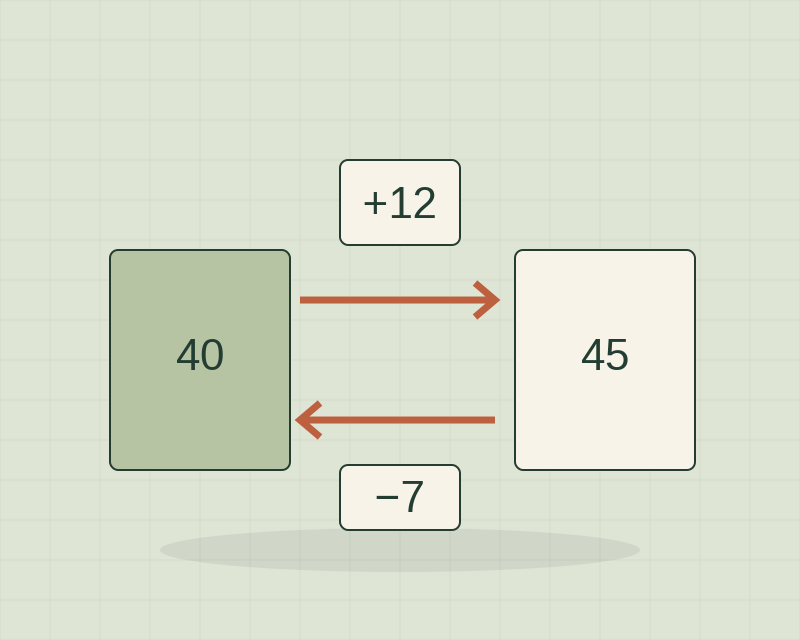
El ejemplo siguiente es ficticio. Al inicio hay 40 cuadernos; se reciben 12 y salen 7 durante el periodo. No hay otros movimientos ni ajustes en este escenario construido.
| Dato | Tipo | Piezas |
|---|---|---|
| Inicio, lunes 08:00 | Existencia | 40 |
| Recibidas hasta viernes 18:00 | Entrada del periodo | 12 |
| Salidas hasta viernes 18:00 | Salida del periodo | 7 |
| Cierre, viernes 18:00 | Existencia | 45 |
La comprobación es 40 + 12 − 7 = 45. El cambio neto fue de 5 piezas, mientras que los movimientos de entrada y salida suman 19 piezas. El neto y la actividad responden preguntas diferentes; ninguno representa por sí solo ingresos o beneficio.
Investiga una diferencia sin inventar su causa
Si un conteo físico arroja 44 en vez de las 45 esperadas, registra la diferencia de −1 y revisa fechas, unidades, registros y posibles ajustes. Esa diferencia todavía no demuestra pérdida, robo o un error de una persona. Necesita investigación.
Una devolución, daño o traslado puede requerir una línea identificada según las reglas del registro. No cambies silenciosamente el inicio para que el cálculo cierre. Conserva corrección, motivo y referencia, de modo que otra persona pueda reconstruir la secuencia.
Compara cierres y periodos con preguntas distintas
Dos semanas pueden terminar con 45 piezas y tener movimientos muy diferentes. En otra semana ficticia, empezar con 45, recibir 10 y dar salida a 10 conserva el mismo cierre. El inventario final no revela por sí solo cuánta actividad ocurrió.
Tampoco sumes 40 al inicio y 45 al cierre para decir que hubo 85 piezas nuevas. Son observaciones del mismo conjunto en momentos distintos. La guía de promedios trata composición; la de porcentajes, bases de proporciones. Aquí la pregunta es la dimensión temporal del dato.
Escribe un resumen que permita volver al registro
Un resumen correcto del ejemplo sería: “El inventario pasó de 40 a 45 cuadernos entre los cortes indicados, con 12 entradas y 7 salidas, sin otros ajustes en el caso ficticio”. Añade ubicación y reglas si forman parte de una revisión real.
Guarda por separado inicio, entradas, salidas, ajustes y cierre, junto con sus referencias. La lectura de noticias de negocios ayuda a reconocer unidades y periodos en fuentes externas. Un cálculo que cierra confirma su consistencia aritmética; la exactitud de los registros exige comprobar los hechos.
What Is There and What Moved: Stocks and Flows in a Report
“There are 45 items left” and “12 arrived this week” describe different things. One quantity gives a position at a moment; the other gives movement between moments. Combining them without labels can confuse a business review.
Retain moment, period, unit and population. Reconcile opening quantities with movements before explaining the close, and do not add snapshots of the same inventory as new arrivals.
Ask whether the figure is a photograph or a film
The Australian Bureau of Statistics distinguishes stocks at a point in time and flows over a period in its national-accounts manual. We use that conceptual difference for an editorial example of physical items, without performing an accounting valuation of inventory.
“Items available Monday at 08:00” needs a cutoff time. “Items received from that Monday until Friday at 18:00” needs two boundaries. The word week alone does not establish whether both figures use the same interval.
Define what you are counting
Choose a unit and population: one notebook model in one location, for example. Clarify whether reserved, in-transit or damaged items belong to the count. Available-for-sale and physically-present quantities may differ without either being an error.
Retain those rules during comparison. Identify coverage changes when adding a location or model. Do not reconcile box counts with item movements before documenting how the units relate.
Reconstruct a close with explicit movements
The following example is fictional. It opens with 40 notebooks, receives 12 and dispatches 7 during the period. This constructed scenario has no other movements or adjustments.
| Measure | Type | Items |
|---|---|---|
| Opening, Monday 08:00 | Stock | 40 |
| Received through Friday 18:00 | Period inflow | 12 |
| Dispatched through Friday 18:00 | Period outflow | 7 |
| Closing, Friday 18:00 | Stock | 45 |
The check is 40 + 12 − 7 = 45. Net change was 5 items, while inflow and outflow movements total 19 items. Net change and activity answer different questions; neither alone represents revenue or profit.
Investigate a difference without inventing its cause
If a physical count returns 44 rather than the expected 45, record a −1 difference and review dates, units, records and possible adjustments. The difference does not yet establish loss, theft or someone’s error. It needs investigation.
A return, damage or transfer may require an identified line under the record’s rules. Do not silently change the opening value to make the calculation balance. Retain the correction, reason and reference so someone else can reconstruct the sequence.
Compare closes and periods with different questions
Two weeks can end with 45 items and have very different movements. Another fictional week opens with 45, receives 10 and dispatches 10, keeping the same close. Ending inventory alone does not reveal how much activity occurred.
Nor should you add 40 at opening to 45 at closing and claim 85 new items. These are observations of the same population at different times. Our averages guide addresses composition; the percentage guide addresses proportion bases. Here the question concerns a figure’s time dimension.
Write a summary that leads back to the record
A correct summary would be: “Inventory moved from 40 to 45 notebooks between the stated cutoffs, with 12 arrivals and 7 departures, without other adjustments in this fictional case.” Add location and rules for an actual review.
Keep opening, inflows, outflows, adjustments and close separately with their references. Business-news reading helps recognize units and periods in external sources. A balanced calculation confirms arithmetic consistency; record accuracy requires checking the events.
有多少与流动多少:报告中的存量和流量
“还剩 45 件”和“本周收到 12 件”描述不同事情。前者说明某时点的状态,后者说明两个时点之间的流动。没有标签就混用,会让业务审核变得混乱。
保留时点、时期、单位与集合。解释期末前先核对期初和流动,不要把同一库存的多张快照相加,当成新到货。
先问数据是照片还是电影
澳大利亚统计局在国民账户手册中区分时点存量和期间流量。本篇借用这一概念差异,构造实物数量例子,不进行库存会计估值。
“周一 08:00 可用的件数”需要截点;“从该周一至周五 18:00 收到的件数”需要两个边界。单说本周,不能证明两个数采用同一区间。
定义正在数什么
选择单位和集合,例如某地点的一种笔记本。明确预留、在途或损坏品是否纳入。可售数量与实际在场数量可能不同,而未必哪个出错。
比较时保留这些规则。加入地点或型号时注明覆盖变化。没有先说明箱与件的关系,就不要拿箱数去核对件数流动。
用明确流动重建期末
以下例子完全虚构。期初有 40 本,期间收到 12 本、发出 7 本。这个构造情境没有其他流动或调整。
| 数据 | 类型 | 件数 |
|---|---|---|
| 期初,周一 08:00 | 存量 | 40 |
| 收到,截至周五 18:00 | 期间流入 | 12 |
| 发出,截至周五 18:00 | 期间流出 | 7 |
| 期末,周五 18:00 | 存量 | 45 |
核对为 40 + 12 − 7 = 45。净变化为 5 件,而进出流动合计为 19 件。净变化与活动量回答不同问题,两者都不能独自代表收入或利润。
调查差异,不编造原因
实际盘点若是 44 而非预期 45,应记录 −1 的差异,检查日期、单位、记录及可能调整。差异尚不能证明丢失、盗窃或某个人出错,需要调查。
退回、损坏或调拨,可能按记录规则需要单列。不要默默修改期初让算式平衡。保留修正、原因和参考,使别人能够重建经过。
期末与期间需要不同问题
两周都可以以 45 件结束,流动却完全不同。另一个虚构周,期初 45,收到 10、发出 10,期末仍一样。期末库存本身不揭示发生了多少活动。
也不能把期初 40 与期末 45 相加,声称新增 85 件;它们是同一集合在不同时刻的观察。本站平均值指南处理构成,百分比指南处理比例基数。这里关注数据的时间维度。
写出能够返回记录的摘要
正确摘要可以是:“在所示截点间,库存从 40 本变为 45 本,收到 12 本、发出 7 本,虚构情境中没有其他调整。”真实审核还需补充地点和规则。
分别保留期初、流入、流出、调整和期末,并附上参考。商业新闻阅读帮助识别外部来源的单位和时期。算式平衡确认算术一致;记录准确仍需核查实际事件。
Fuentes y método
Fuentes consultadas el 20 de octubre de 2026. Los escenarios y cifras ilustrativos son ficticios. Las fichas y ejercicios son propuestas editoriales originales, sin resultados de clientes ni pruebas de proveedores atribuidos. Editorial standards · Disclosures.