Retain moment, period, unit and population. Reconcile opening quantities with movements before explaining the close, and do not add snapshots of the same inventory as new arrivals.
Ask whether the figure is a photograph or a film
The Australian Bureau of Statistics distinguishes stocks at a point in time and flows over a period in its national-accounts manual. We use that conceptual difference for an editorial example of physical items, without performing an accounting valuation of inventory.
“Items available Monday at 08:00” needs a cutoff time. “Items received from that Monday until Friday at 18:00” needs two boundaries. The word week alone does not establish whether both figures use the same interval.
Define what you are counting
Choose a unit and population: one notebook model in one location, for example. Clarify whether reserved, in-transit or damaged items belong to the count. Available-for-sale and physically-present quantities may differ without either being an error.
Retain those rules during comparison. Identify coverage changes when adding a location or model. Do not reconcile box counts with item movements before documenting how the units relate.
Reconstruct a close with explicit movements
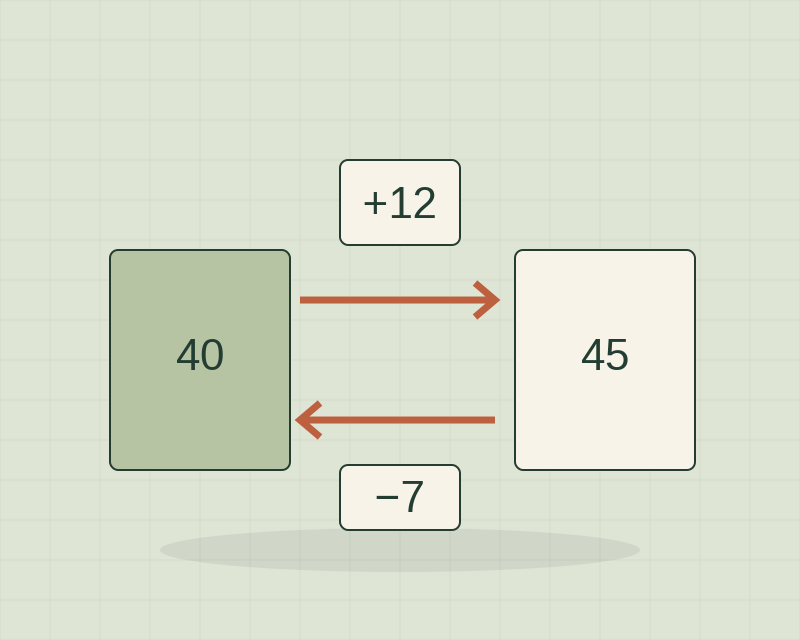
The following example is fictional. It opens with 40 notebooks, receives 12 and dispatches 7 during the period. This constructed scenario has no other movements or adjustments.
| Measure | Type | Items |
|---|---|---|
| Opening, Monday 08:00 | Stock | 40 |
| Received through Friday 18:00 | Period inflow | 12 |
| Dispatched through Friday 18:00 | Period outflow | 7 |
| Closing, Friday 18:00 | Stock | 45 |
The check is 40 + 12 − 7 = 45. Net change was 5 items, while inflow and outflow movements total 19 items. Net change and activity answer different questions; neither alone represents revenue or profit.
Investigate a difference without inventing its cause
If a physical count returns 44 rather than the expected 45, record a −1 difference and review dates, units, records and possible adjustments. The difference does not yet establish loss, theft or someone’s error. It needs investigation.
A return, damage or transfer may require an identified line under the record’s rules. Do not silently change the opening value to make the calculation balance. Retain the correction, reason and reference so someone else can reconstruct the sequence.
Compare closes and periods with different questions
Two weeks can end with 45 items and have very different movements. Another fictional week opens with 45, receives 10 and dispatches 10, keeping the same close. Ending inventory alone does not reveal how much activity occurred.
Nor should you add 40 at opening to 45 at closing and claim 85 new items. These are observations of the same population at different times. Our averages guide addresses composition; the percentage guide addresses proportion bases. Here the question concerns a figure’s time dimension.
Write a summary that leads back to the record
A correct summary would be: “Inventory moved from 40 to 45 notebooks between the stated cutoffs, with 12 arrivals and 7 departures, without other adjustments in this fictional case.” Add location and rules for an actual review.
Keep opening, inflows, outflows, adjustments and close separately with their references. Business-news reading helps recognize units and periods in external sources. A balanced calculation confirms arithmetic consistency; record accuracy requires checking the events.
Follow the evidence.
Sources checked October 20, 2026. Illustrative scenarios and numbers are fictional. The records and exercises are original editorial proposals, without attributed customer results or provider tests. Our editorial standards.