Choose one bird and describe a few observable features. Keep the field note separate from the identification you propose later.
Start with the silhouette
Observe whether the body looks compact or elongated and how head, tail and legs relate. Audubon recommends attending to size, structure and proportions before relying only on plumage. Another nearby bird can provide a relative comparison; a distant estimate is not a measurement in centimeters.
Inspect the bill and a visible pattern
Note whether the bill looks short or long, thick or thin, straight or curved. Add a specific contrast, such as a pale wing stripe or dark area around the eye, if you truly distinguish it. Lighting and distance can obscure colors. “Could not see” is better than completing the note from memory.
Describe an action without inventing its purpose
You might write that it hopped between two branches, walked on the ground or moved its tail on landing. Add location, date and observed surroundings: a tree-filled yard, water's edge or another setting. “Was looking for food” is already an interpretation if you did not see what it took. Actions can offer clues alongside shape.
Try a fictional note
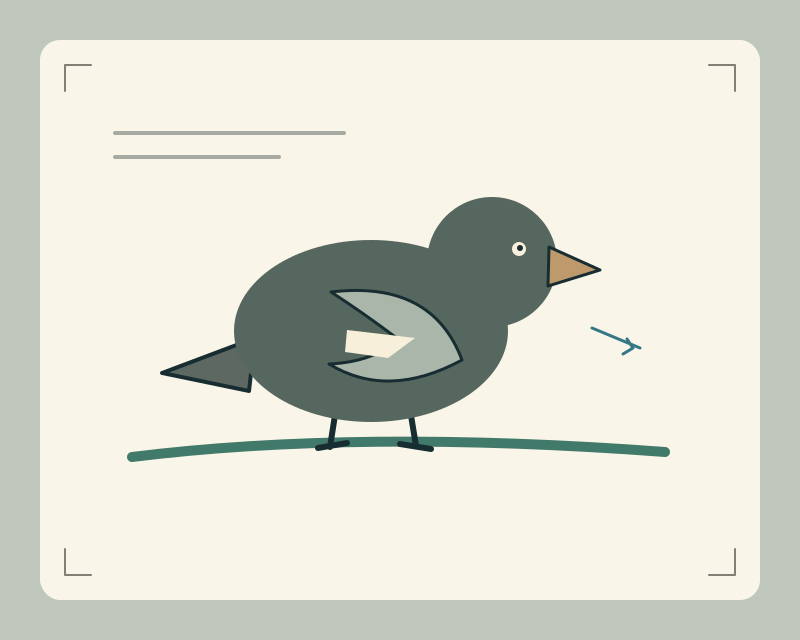
A practice entry could read: “Compact body, short thick bill, tail shorter than body; pale area on wing; hopped on a branch. Size and breast color unconfirmed.” This invented example is not assigned an identified species here. A simple sketch can mark where you saw the contrast.
Consult a guide later and preserve uncertainty
Compare your features with a guide covering the region and season. Look for a characteristic that could distinguish remaining options, without replacing observations with the book's picture. Ending with two possibilities or an unidentified bird is fine. The next observation can focus on one clue, keeping enough distance to avoid disrupting its activity.
Follow the evidence.
Sources checked November 21, 2026. The exercise scenarios and figures are fictional. Our editorial standards.