Sitúate en el centro del dibujo y usa símbolos propios. Registra lo que oyes, conserva las dudas sobre su origen y compara dos momentos desde la misma posición.
Escoge un punto en el que puedas permanecer
Puedes sentarte en un patio, junto a una ventana o en otro lugar cómodo donde puedas detenerte a escuchar. Prepara papel y lápiz. Anota fecha, hora y una referencia breve del lugar, sin intentar describir todo el entorno.
El National Park Service propone mapas de escucha para reconocer sonidos de un paisaje. Nuestro ejercicio añade una leyenda y dos rondas cortas para comparar observaciones personales.
Dibuja una referencia para tu posición
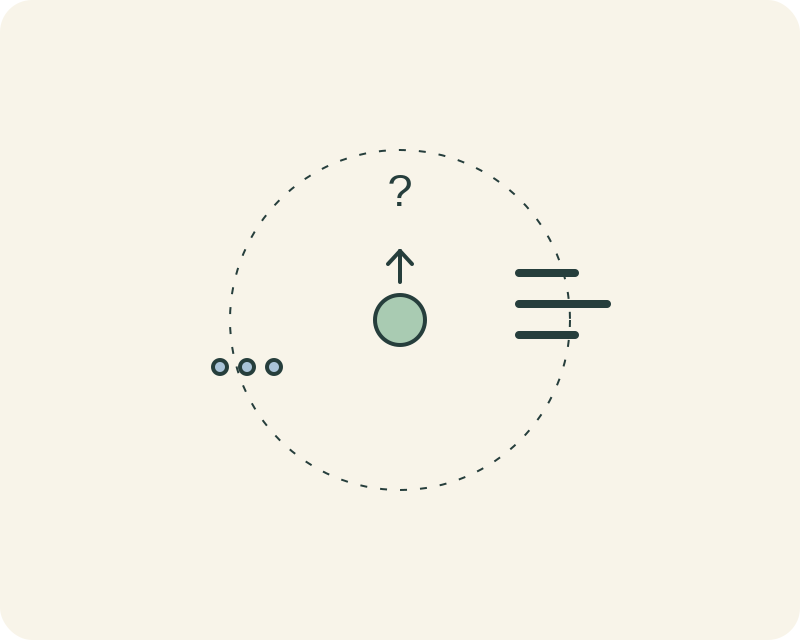
Marca un punto central con la palabra yo y una flecha que indique hacia dónde miras. Usa delante, detrás, izquierda y derecha como referencias relativas. Si cambias de orientación, anótalo para no mezclar los dibujos.
El mapa es un croquis de escucha. La distancia dibujada puede expresar cerca o lejos según tu impresión, sin convertirla en una medición en metros.
Inventa pocos símbolos y pruébalos
| Marca | Qué significa | Nota del ejemplo |
|---|---|---|
| Línea larga | Sonido continuo | Rumor a la derecha |
| Puntos separados | Sonido intermitente | Golpes detrás |
| Signo de pregunta | Origen sin confirmar | Silbido delante |
La tabla no describe una escucha realizada. Puedes cambiar los símbolos si te resultan más claros. Deja una leyenda al margen para recordar qué quisiste representar.
Distingue lo audible de la fuente que imaginas. “Golpes breves” describe una percepción; “alguien martilla” propone un origen que todavía puede necesitar confirmación.
Escucha dos momentos con una pausa
Prueba una primera ronda de dos o tres minutos y marca pocos sonidos. Descansa un momento y repite desde el mismo punto con el mismo criterio. Puedes usar otro color o una segunda hoja para distinguir las rondas.
Al terminar, compara qué siguió, qué apareció y qué dejó de oírse. Un sonido ausente en la segunda ronda puede haberse detenido o haber quedado tapado por otro. Conserva esa duda si no puedes resolverla.
Lee una relación que te llame la atención
Quizá una línea continua ocupe un lado del dibujo y varios sonidos breves el otro. Pregúntate si reconociste primero el más cercano, el más repetido o el que te sorprendió. Si escuchas con otra persona, comparen sus hojas antes de buscar una explicación.
Un sonido producido por personas y otro por animales pueden compartir el espacio. Clasificar el origen no decide por sí solo cómo debe sentirse el lugar.
Conserva una pequeña pregunta
Guarda posición, orientación, momentos y leyenda con el dibujo. Si vuelves otro día, compara condiciones y lo que recuerdas haber percibido. También puedes terminar dejando la hoja ahí: la actividad puede consistir solo en haber escuchado con más atención durante unos minutos.
A sound map for listening to the place around you
A familiar place can change when you attend to its sounds. A page can hold simple relationships: what seems ahead, what continues and what appears briefly.
Put yourself at the drawing’s center and use your own symbols. Record what you hear, retain uncertainty about sources and compare two moments from one position.
Choose a place where you can stay
Sit in a yard, by a window or somewhere comfortable to pause and listen. Prepare paper and pencil. Note date, time and a short location reference without trying to describe the entire setting.
The National Park Service proposes listening maps to recognize sounds in a landscape. Our exercise adds a legend and two short rounds for comparing personal observations.
Draw a reference for your position
Mark a central point labeled me and an arrow showing where you face. Use ahead, behind, left and right as relative references. Note any change in orientation to avoid mixing drawings.
This is a listening sketch. Drawn distance can express a near or far impression without becoming a measurement in meters.
Invent a few symbols and try them
| Mark | Meaning | Example note |
|---|---|---|
| Long line | Continuous sound | Rumble to the right |
| Separate dots | Intermittent sound | Knocks behind |
| Question mark | Unconfirmed source | Whistle ahead |
The table does not describe an actual listening session. Change symbols if another set is clearer. Leave a legend in the margin to remember their meaning.
Separate audible qualities from an imagined source. “Brief knocks” describes perception; “someone hammering” proposes an origin needing confirmation.
Listen twice with a pause
Try a first round of two or three minutes and mark a few sounds. Pause, then repeat from the same point using the same criteria. Use another color or sheet to distinguish rounds.
Compare what continued, appeared or disappeared. A sound absent in the second round may have stopped or been masked by another. Keep that uncertainty if unresolved.
Read a relationship that interests you
A continuous line might fill one side while brief sounds occupy another. Ask whether you noticed the nearest, most repeated or most surprising sound first. With a partner, compare sheets before seeking an explanation.
Human and animal sounds can share a place. Classifying a source does not by itself determine how the setting should feel.
Keep a small question
Save position, orientation, times and legend with the sketch. On another day, compare conditions and remembered perceptions. You can also leave the page there: the activity may simply mean listening more closely for a few minutes.
用声音地图聆听所在的地方
注意声音时,熟悉的地方也会有所不同。一张纸能保存简单关系:什么似乎来自前方,什么持续存在,什么短暂出现。
把自己放在图中央,使用自定符号。记录所听内容,保留来源疑问,并从同一位置比较两个时刻。
选择能停留的位置
可坐在院子、窗边或其他舒适地点,准备纸笔。写下日期、时间和简短位置参考,无需描述整个环境。
美国国家公园管理局提出用聆听地图辨认环境声音。本练习增加图例和两轮短观察,以比较个人感受。
画出位置参考
在中央标“我”,画箭头表示面朝方向,以前、后、左、右作为相对参考。若转向,应注明,避免混淆图形。
这是一张聆听草图。图上远近可表示个人印象,不是以米为单位的测量。
试用少量自定符号
| 标记 | 含义 | 示例备注 |
|---|---|---|
| 长线 | 连续声音 | 右侧低鸣 |
| 分散圆点 | 间歇声音 | 后方敲击 |
| 问号 | 来源未确认 | 前方哨声 |
表格并非实地聆听记录。可换成自己更易理解的符号,在边上保留图例。
区分听到的性质与想象的来源。“短促敲击”描述感受,“有人敲锤”则推测来源,可能仍需确认。
中间暂停,聆听两轮
第一轮可用两三分钟,标记少数声音。暂停后从同一点按同样标准再听,可用另一颜色或纸张区分。
比较什么持续、新出现或消失。第二轮没听到的声音可能停止,也可能被遮盖。无法确定时保留疑问。
读出感兴趣的关系
也许一侧是连续长线,另一侧是短促声音。问自己先注意到的是最近、最反复还是最意外的声音。与他人同行时,先比较图纸,再找解释。
人类和动物的声音可以共享空间。来源分类本身并不决定这个地方应给人什么感受。
留下一条小问题
把位置、朝向、时刻和图例与草图一起保存。改天再来时,比较条件及记得的感受。也可就此放下纸张:活动可以只是几分钟更专注的聆听。
Fuentes y método
Fuentes consultadas el 6 de noviembre de 2026. Los escenarios y cifras ilustrativos son ficticios. Ejercicios y fichas originales, sin resultados de clientes ni observaciones de campo atribuidos. Editorial standards · Disclosures.