Acuerda qué cuenta como resolución y qué señales reabren el caso. Compara cohortes que ya completaron la misma ventana de observación.
Define el evento y la ventana
En este ejercicio, el primer contacto es la primera conversación de atención en vivo. Cuenta como resuelto en ese contacto cuando la persona confirma que ya pudo completar su tarea antes de terminar la conversación. El equipo observa si la misma dificultad reaparece dentro de los siete días siguientes a la apertura.
Anota que es una definición interna. Zendesk documenta una métrica de tickets de un solo toque con reglas propias sobre respuestas y reaperturas. Verifica las reglas de tu sistema antes de comparar su cifra con la ficha del ejercicio.
Lee los veinte casos del ejemplo
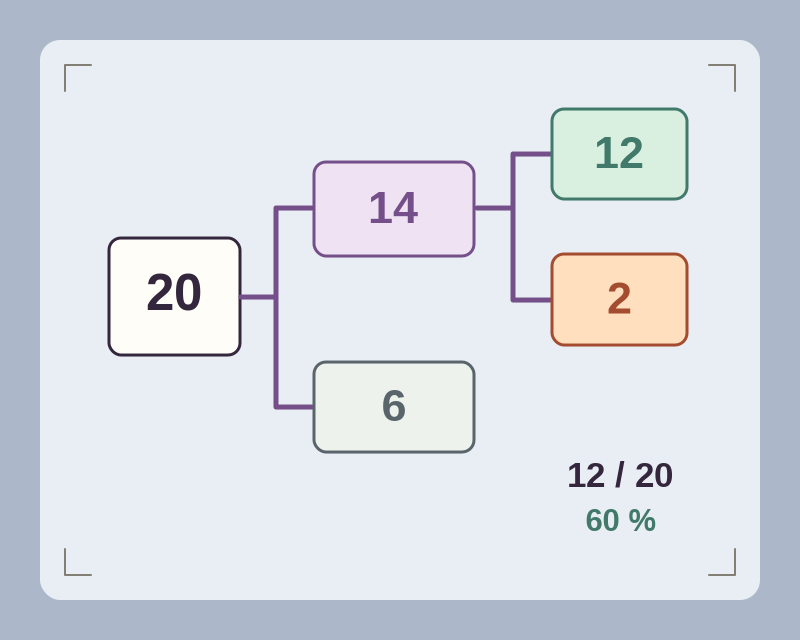
El lunes ingresan veinte casos elegibles de ese canal. Catorce se resuelven al primer contacto. Tres se resuelven tras más contactos y tres siguen abiertos al completar su ventana. De los catorce iniciales, dos regresan por la misma dificultad dentro de siete días. Quedan doce que cumplen el criterio, así que la tasa es 12 ÷ 20, o 60 %.
El 70 % que resultaría de contar los catorce iniciales describe un corte anterior. Conserva ambas cifras solo si puedes explicar cómo cambió el conteo.
Distingue el regreso de un caso nuevo
En el ejercicio, una persona vuelve porque la descarga falla en el mismo paso. Vincula ese contacto con la solicitud original. Otra persona da las gracias y luego pregunta por una función distinta. Registra el asunto nuevo en un caso propio. Si el vínculo es dudoso, conserva la referencia y confirma el motivo antes de reclasificar.
Espera el mismo plazo para comparar
Si agregas los casos del domingo en el informe del lunes, algunos solo tuvieron un día de observación. Separa esa cohorte hasta que complete la ventana. Guarda canal, fecha de apertura, resultado de la primera conversación y fecha y motivo de cualquier regreso.
Usa el resultado para revisar conversaciones
Lee uno de los casos que regresaron. Comprueba qué paso quedó confirmado y cuál dio problemas después. Si actualizas la respuesta de ayuda, vuelve a revisar casos comparables. El porcentaje resume la cohorte y la conversación permite elegir qué probar.
How to measure first-contact resolution and keep reopens in view
A support team replies quickly and marks several requests resolved. Days later, two people return with the same difficulty. The rate depends on whether the initial review has time to see those returns.
Agree on what counts as resolution and what reopens a case. Compare cohorts that have completed the same observation window.
Define the event and window
In this exercise, the first contact is the first live support conversation. A case counts as resolved in that contact when the person confirms they completed the task before the conversation ends. The team watches for the same difficulty within seven days of opening.
Record this as an internal definition. Zendesk documents a one-touch ticket metric with its own rules for replies and reopens. Check your system’s rules before comparing its number with the exercise.
Read the twenty cases in the example
Twenty eligible cases arrive on Monday in this channel. Fourteen resolve on first contact. Three resolve after further contact and three remain open at the end of the window. Two of the original fourteen come back with the same difficulty within seven days. Twelve still meet the criteria, so the rate is 12 ÷ 20, or 60%.
Counting the initial fourteen would give 70%, which describes an earlier cutoff. Keep both figures only if you can explain how the count changed.
Distinguish a return from a new case
In the exercise, one person returns because the download fails at the same step. Link the contact to the original request. Another person says thanks and then asks about a different feature. Give the new issue its own record. If the link is uncertain, keep the reference and confirm the reason before reclassifying.
Wait the same length of time before comparing
If you add Sunday’s cases to Monday’s report, some will have had only a day of observation. Hold that cohort until its window is complete. Keep the channel, opening date, first conversation outcome and the date and reason for any return.
Use the result to review conversations
Read one case that came back. Check which step was confirmed and which caused trouble later. If you update the help response, review comparable cases again. The rate describes the cohort, and the conversation helps you choose what to test.
衡量首次联系解决率时,怎样把重开案件算进去
一个客服团队很快回复,并将几件请求标为已解决。几天后,两个人因同样的困难再次求助。首次查看数据时有没有等到这些回访,会影响解决率。
约定什么算解决、哪些情况要重开案件。比较已经走完同一观察窗口的案件组。
定义事件与观察窗口
在本练习中,首次联系指第一次实时客服沟通。如果沟通结束前,对方确认已完成任务,就算在该次联系中解决。团队观察从立案起七天内,同样的困难是否再次出现。
记明这是内部口径。Zendesk 的单次接触工单指标有自己的回复及重开规则。把系统指标和练习中的记录相比较之前,先核对规则。
看看示例的二十个案件
周一这个渠道收到二十个符合条件的案件。十四个在首次联系时解决,三个经过后续联系后解决,另有三个到观察期结束仍未关闭。最初解决的十四个中,有两个在七天内因同样的问题再次联系。符合条件的还剩十二个,比例是 12 ÷ 20,即 60%。
如果只数最初的十四个,会得到 70%,代表较早的截止点。只有在能解释数字如何变化时,才把两项都保留下来。
区分同一问题再次出现和新问题
本例里,一个人回来是因为下载在同一步失败。把这次联系与原请求关联。另一个人先道谢,后来问起不同的功能。给新问题单独建记录。如果暂不清楚两件事是否相同,保留引用,确认原因后再重新分类。
等到相同的期限再比较
如果周一把周日的案件加入报告,其中有些只观察了一天。等这组走完窗口后再并入比较。记录渠道、立案日期、首次沟通的结果,以及任何回访的日期和原因。
用结果回看沟通过程
读一件后来再次出现的案件,查看哪一步已经确认,哪一步后来出问题。如果修改了帮助回复,再复查条件相近的案件。比例概括整组结果,实际对话能帮助决定下一项试验。
Fuentes y método
Fuentes consultadas el 11 de noviembre de 2026. Los casos y datos numéricos de los ejercicios son ficticios. Editorial standards · Disclosures.