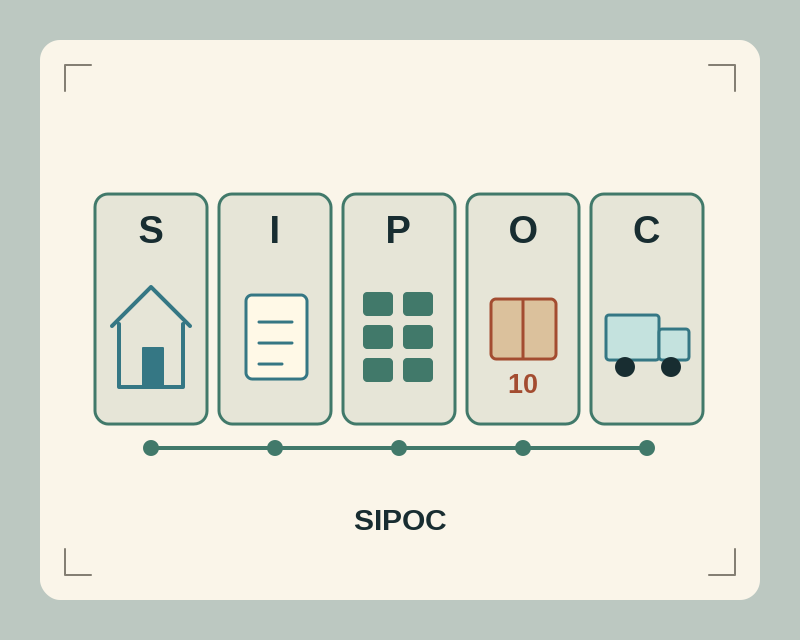
Escribe un inicio y un final observables. Después recorre las cinco letras de SIPOC y comprueba quién entrega qué a quién.
Fija dos límites reconocibles
El ejercicio empieza cuando producción recibe el pedido confirmado y termina cuando entrega los kits empacados a despacho. La negociación comercial y el transporte posterior quedan fuera de este mapa. La ASQ recomienda definir los límites antes de desarrollar el SIPOC. Su versión SIPOC+CM añade restricciones y medidas; aquí trabajamos primero con las cinco letras base.
Reconoce proveedores y entradas
S significa proveedores e I, entradas. En el caso ficticio, ventas aporta pedido y arte aprobado; almacén aporta papel y embalaje. Describe una entrada concreta: referencia del pedido, versión del archivo, cantidad y especificación del material. Un mismo proveedor puede aportar varias entradas y una entrada puede tener más de un proveedor.
Resume el proceso en actividades principales
P corresponde al proceso. El equipo propone seis actividades: recibir el pedido, validar documentos, preparar la impresión, imprimir, verificar y empacar para entregar a despacho. Son un recorrido de nivel alto. Las instrucciones de máquina, cada movimiento de la mesa y los tiempos se desarrollarían después con el alcance ya acordado.
Nombra la salida y a quien la usa
O significa salidas y C, clientes del proceso. La salida del ejemplo es un pedido de diez kits empacados e identificados, con su registro de verificación. Despacho es el cliente interno que recibe esa salida para continuar su trabajo. No todos los clientes del mapa tienen que ser quienes pagan la compra final.
Recorre una interfaz con el equipo
Pregunta a despacho qué necesita para aceptar el pedido y vuelve a la salida descrita. Si falta la identificación de las cajas, añade ese requisito y revisa qué entrada o actividad permite cumplirlo. Conserva fecha, versión y dudas. El SIPOC ordena alcance e interfaces; no demuestra todavía dónde está la causa del retraso ni cuánto mejoró el proceso.
SIPOC: agree where a process starts and ends before analyzing it
A workshop wants to improve preparation of ten printed kits. Sales starts its account at the quotation, while dispatch starts when boxes arrive. Before comparing times or investigating delays, the team needs to agree which process it is examining.
Write observable start and end points. Then follow SIPOC's five letters and check who hands what to whom.
Set two recognizable boundaries
The exercise begins when production receives the confirmed order and ends when it hands packed kits to dispatch. Commercial negotiation and subsequent transport fall outside this map. ASQ recommends defining boundaries before developing a SIPOC. Its SIPOC+CM version adds constraints and measures; here we start with the five base letters.
Identify suppliers and inputs
S means suppliers and I means inputs. In the fictional case, sales provides the order and approved artwork; stores provides paper and packaging. Describe a specific input: order reference, file version, quantity and material specification. One supplier may provide several inputs, and an input may have more than one supplier.
Summarize the main activities
P is the process. The team proposes six activities: receive the order, validate documents, prepare printing, print, check and pack for dispatch handoff. This is a high-level route. Machine instructions, every table movement and timing would be developed later, once scope is agreed.
Name the output and its user
O means outputs and C means process customers. The example's output is an order of ten packed, identified kits with its verification record. Dispatch is the internal customer receiving it to continue its work. A map's customers do not all have to be the people paying for the final purchase.
Walk through an interface together
Ask dispatch what it needs to accept the order and return to the described output. If box identification is missing, add that requirement and review which input or activity enables it. Keep date, version and open questions. SIPOC organizes scope and interfaces; it does not yet establish the delay's cause or how much the process improved.
SIPOC:分析流程前,先约定起点与终点
作坊想改善十套印刷套件的准备流程。销售从报价开始讲,发运部门则从收到箱子开始讲。比较时间或调查延误前,团队需要先约定正在研究哪段流程。
写下可观察的起点和终点,再沿 SIPOC 五个字母检查谁向谁交付什么。
确定两个可识别边界
练习从生产部门收到已确认订单开始,到把包装好的套件交给发运部门结束。商业谈判和后续运输不在此图范围内。ASQ 建议先定义边界,再建立 SIPOC。其 SIPOC+CM 版本另加限制与指标;这里先处理五个基本字母。
识别供应方和输入
S 是供应方,I 是输入。虚构案例中,销售提供订单与已批准图稿,仓库提供纸张和包装材料。应描述具体输入:订单编号、文件版本、数量与材料规格。同一供应方可以提供多项输入,一项输入也可能来自多个供应方。
用主要活动概括流程
P 代表流程。团队提出六项活动:接收订单、核验文件、准备印刷、印刷、检查、包装并交给发运部门。这是高层级路径。机器操作指令、工作台每个动作及用时,可在范围约定后另行展开。
命名输出及其使用者
O 是输出,C 是流程客户。示例输出为十套已包装、已标识的套件及其检查记录。发运部门是接收输出、继续工作的内部客户。图中的客户不一定都是最终付款购买的人。
与团队走查一次交接
询问发运部门接受订单需要什么,再对照已描述的输出。如果缺少箱体标识,就加入这一要求,并检查哪项输入或活动支持它。保存日期、版本和疑问。SIPOC 整理范围与接口,但尚不能证明延误原因或改善幅度。
Fuentes y método
Fuentes consultadas el 21 de noviembre de 2026. Los casos y datos numéricos de los ejercicios son ficticios. Editorial standards · Disclosures.