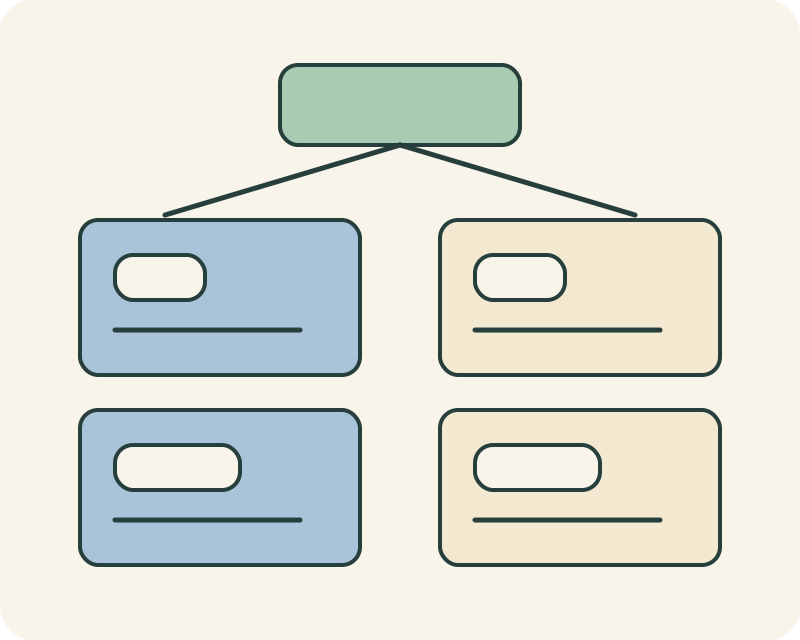
Identifica producto, versión, unidad base y cantidad de cada componente. Multiplica con unidades consistentes y revisa existencias y operación por separado.
Define qué contará como una unidad terminada
Elige una referencia concreta: un kit de escritorio con una bandeja y dos vasos, por ejemplo. Es una composición ficticia para practicar el cálculo. No estamos describiendo un producto disponible, un pedido aceptado ni una fabricación realizada.
Microsoft describe la lista de materiales como los componentes necesarios para producir un producto. La referencia terminada y su unidad base deben quedar claras. Si la ficha describe diez kits, no puedes leer sus cantidades como si correspondieran a uno.
Escribe referencias y unidades por componente
Da a cada pieza una referencia reconocible y una unidad: piezas, metros o gramos según corresponda. Conserva dimensiones o variante cuando afecten la compatibilidad. “Dos vasos” resulta insuficiente si el armado requiere un modelo concreto que se confunde con otro.
Odoo documenta componentes y cantidades en las listas de materiales. Aquí usamos esa estructura conceptual en una tabla propia; no hace falta configurar un sistema para revisar primero si las cantidades están bien definidas.
Multiplica una composición sencilla
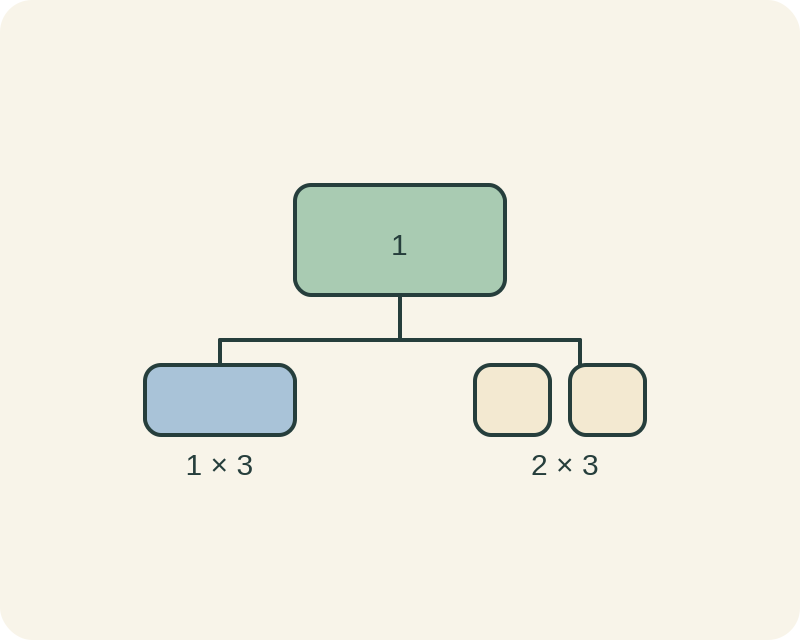
En el ejemplo, la versión A corresponde a un kit terminado: una bandeja B y dos vasos V. Para tres kits de la misma versión, multiplicamos cada cantidad base por tres.
| Componente | Por 1 kit | Para 3 kits |
|---|---|---|
| Bandeja B | 1 pieza | 3 piezas |
| Vaso V | 2 piezas | 6 piezas |
El resultado es tres bandejas y seis vasos. No son nueve kits: nueve es la suma de piezas de dos clases. La identidad de la unidad terminada sigue siendo distinta de la unidad de sus componentes.
Separa necesidad y disponibilidad
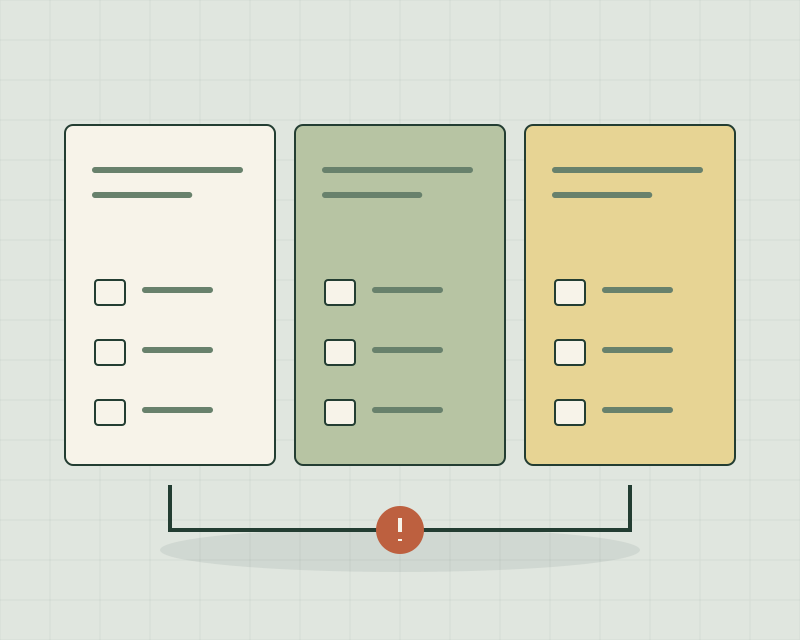
La tabla indica cuánto se requiere bajo esos supuestos, no cuánto hay libre para usar. Para preparar un pedido real revisa existencias, reservas, estado de las piezas y referencias. Una cantidad registrada puede estar comprometida en otro trabajo.
No restes automáticamente cualquier producto parecido como sustituto. Confirma primero si puede cumplir la misma función y si el cambio está autorizado. El punto de reposición responde cuándo volver a pedir; esta lista responde qué compone la unidad.
Conserva la versión que usaste
Si una versión B incluye tres vasos, identifica desde cuándo y para qué kits aplica. No sobrescribas silenciosamente la versión A cuando todavía explica entregas anteriores. Guarda quién confirmó la composición y la muestra o especificación que la respalda.
Una variante de color y una modificación de composición pueden necesitar reglas diferentes. La guía de variantes mantiene la identidad vendible. Aquí conservamos la relación entre esa referencia y sus piezas para evitar mezclar listas al calcular.
Añade el proceso sin confundirlo con la lista
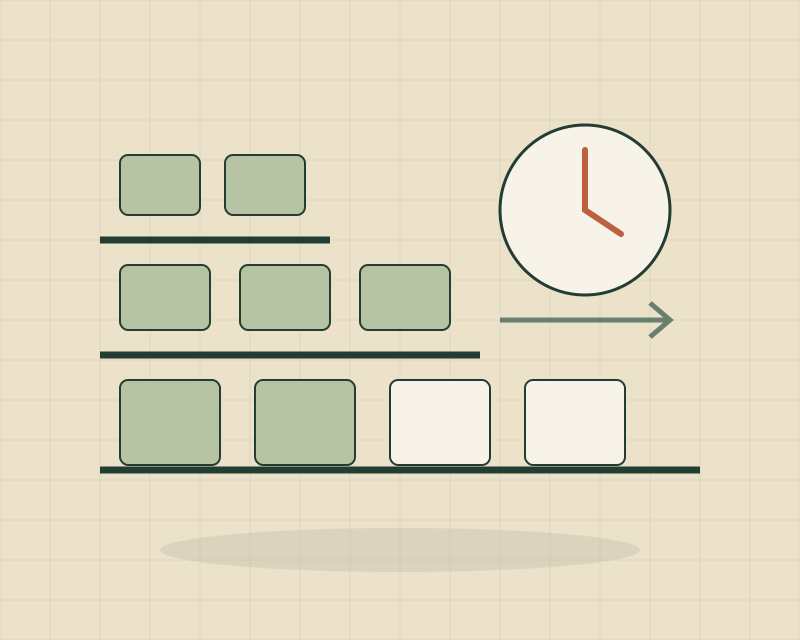
Una lista de materiales no describe por sí sola orden de armado, herramientas, revisión final o tiempo necesario. Prepara esas instrucciones aparte y relaciona ambas referencias. Tampoco un conteo de piezas demuestra el costo completo ni la capacidad de entregar en una fecha.
Antes de ampliar el lote, pide a otra persona que reconstruya la necesidad de tres kits usando solo la ficha. Revisa dónde dudó de la unidad, la referencia o la versión. Es un ensayo propuesto: el ejemplo no afirma que ya se haya armado o entregado nada.
A bill of materials that explains what goes into each kit
Knowing how many kits you want to deliver does not yet tell you how many pieces to prepare. A bill of materials connects a finished unit with its components so calculation need not depend on remembering the previous assembly.
Identify product, version, base unit and each component quantity. Multiply consistently and review stock availability and operations separately.
Define one finished unit
Choose a concrete reference: a desk kit containing one tray and two cups, for example. This fictional composition is for arithmetic practice. It describes neither an available product, an accepted order nor completed manufacturing.
Microsoft describes a bill of materials as components required to produce a product. Make the finished reference and base unit explicit. If a record describes ten kits, its quantities cannot be read as quantities for one.
Write component references and units
Give each piece a recognizable reference and a unit: pieces, meters or grams as appropriate. Retain dimensions or variants affecting compatibility. “Two cups” is insufficient when assembly requires a particular model that could be confused with another.
Odoo documents components and quantities in bills of materials. We use that conceptual structure in our own table; you need not configure software before checking whether quantities are defined properly.
Multiply a simple composition
Version A in our example describes one finished kit: one tray B and two cups V. For three kits of that version, multiply every base quantity by three.
| Component | Per 1 kit | For 3 kits |
|---|---|---|
| Tray B | 1 piece | 3 pieces |
| Cup V | 2 pieces | 6 pieces |
The result is three trays and six cups. That is not nine kits: nine sums pieces of two kinds. The finished unit’s identity remains different from its components’ units.
Separate requirement and availability
The table describes what is required under those assumptions, not what is free to use. A real order needs checks on stock, reservations, condition and references. Recorded inventory may already be committed elsewhere.
Do not automatically subtract a similar product as a substitute. Confirm compatibility and authorization first. The reorder-point guide asks when to replenish; this list asks what constitutes the unit.
Retain the version used
If version B includes three cups, identify when and where it applies. Do not silently overwrite version A while it still explains earlier deliveries. Record who confirmed the composition and its supporting sample or specification.
Color variants and composition changes may need different rules. The variant guide preserves sellable identity. Here we retain the connection between that reference and its pieces, preventing mixed lists during calculation.
Connect the process without confusing it with the list
A bill of materials alone does not describe assembly order, tools, final inspection or time needed. Prepare those instructions separately and link the references. A piece count also establishes neither complete cost nor capacity to deliver by a date.
Before expanding the batch, ask someone else to reconstruct three kits’ requirements from the record alone. Note uncertainty about unit, reference or version. This is a proposed trial; the example claims neither completed assembly nor delivery.
物料清单:说清每套组合包含什么
知道要交付几套产品,还不能直接知道需要准备多少零件。物料清单把成品单位与组件连接起来,让计算不必依赖对上一次组装的记忆。
标明产品、版本、基础单位与每种组件数量,保持单位一致;库存可用性和作业流程另行检查。
定义一个成品单位
选择明确对象,例如由一个托盘与两个杯子组成的桌面套装。这是用于练习计算的虚构组合,不表示存在可售产品、已接受订单或已完成生产。
Microsoft 将物料清单描述为生产产品所需的组件。成品型号与基础单位必须明确。一份描述十套的清单,不能把其中数量当作一套所需数量。
为组件写明编号与单位
给每种组件可识别编号,并标注件、米或克等相应单位。尺寸或变体影响兼容性时也应保留。如果组装需要特定型号,“两个杯子”便不足以避免拿错。
Odoo 文档把组件及其数量纳入物料清单。本文采用这一概念结构制作自己的表格;先检查数量定义,无需先配置软件。
对简单组合进行乘法
本例 A 版对应一套成品:一个 B 托盘、两个 V 杯。准备三套同版本产品时,把各项基础数量乘以三。
| 组件 | 每 1 套 | 3 套所需 |
|---|---|---|
| B 托盘 | 1 件 | 3 件 |
| V 杯 | 2 件 | 6 件 |
结果为三个托盘与六个杯子,并不是九套产品。九只是两类组件的件数相加,成品单位仍然不同于组件单位。
区分需求与可用数量
表格说明假设下需要多少,不说明当前有多少可以使用。真实订单还需检查库存、预留、组件状态及编号。账上数量可能已经用于另一项工作。
不要把外观相似的产品自动作为替代品扣除。先确认兼容性与变更授权。补货点指南回答何时再次订货;本清单回答一套产品由什么组成。
保留使用的版本
若 B 版改为三个杯子,注明何时起、对哪些套装生效。A 版仍解释历史交付时,不要悄悄覆盖它。保留确认人及支持该组合的样品或规格。
颜色变体与组成变化可能需要不同规则。相关变体指南维护可售身份;这里维护该编号与组件的对应,避免计算时混用清单。
关联流程,但不把它当成清单
物料清单本身没有说明组装顺序、工具、最终检查或所需时间。另行编写操作说明,并关联两份资料。组件数量也不能单独证明完整成本或某日交付的能力。
扩大批量前,可请另一人只看记录,重建三套所需数量,并记录其对单位、编号或版本的疑问。这只是建议的试用方式,没有声称已完成组装或交付。
Fuentes y método
Fuentes consultadas el 2 de noviembre de 2026. Los escenarios y cifras ilustrativos son ficticios. Ejercicios y fichas originales, sin resultados de clientes ni observaciones de campo atribuidos. Editorial standards · Disclosures.