Dibuja un recorrido observado, mide los tramos y prueba una sola reubicación con pedidos comparables. Conserva las comprobaciones de calidad y los pasos que siguen haciendo falta.
Elige qué vas a seguir
El diagrama de espagueti que describe el Lean Management Institute muestra el camino de un producto entre etapas. Aquí vamos a seguir a quien prepara un pedido. Si el producto se queda en la mesa mientras alguien busca una caja, el recorrido de la persona sí incluye ese viaje.
Marca dónde empieza el pedido y dónde se deja terminado. Usa una hoja con la mesa, estante, impresora y salida. Dibuja también los pasos que obligan a rodear un mueble.
Traza una vuelta real
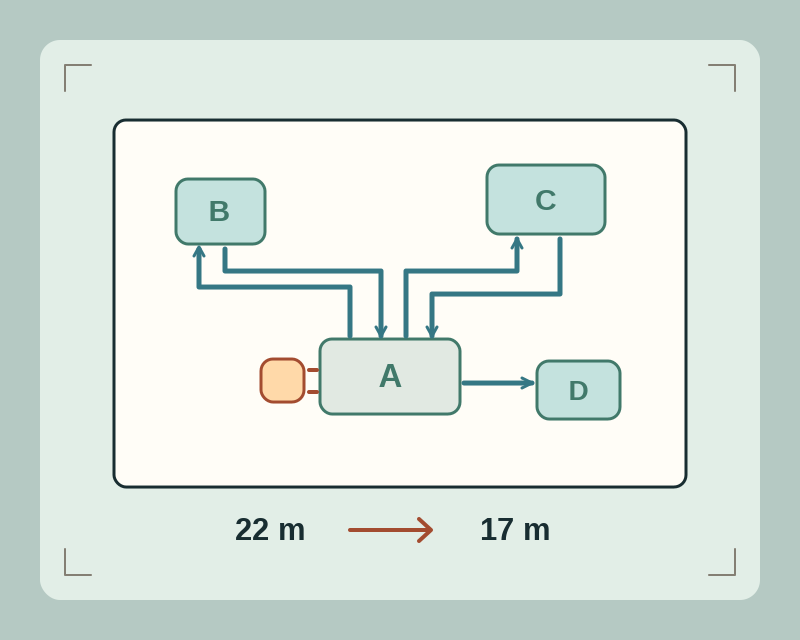
Imagina que la persona empieza en la mesa A. Camina 3 m al estante B y vuelve con la caja. Luego repite el viaje para buscar un separador. Va a la impresora C, a 4 m de A, y vuelve para pegar la etiqueta. Lleva el pedido terminado a D, a 2 m de la mesa.
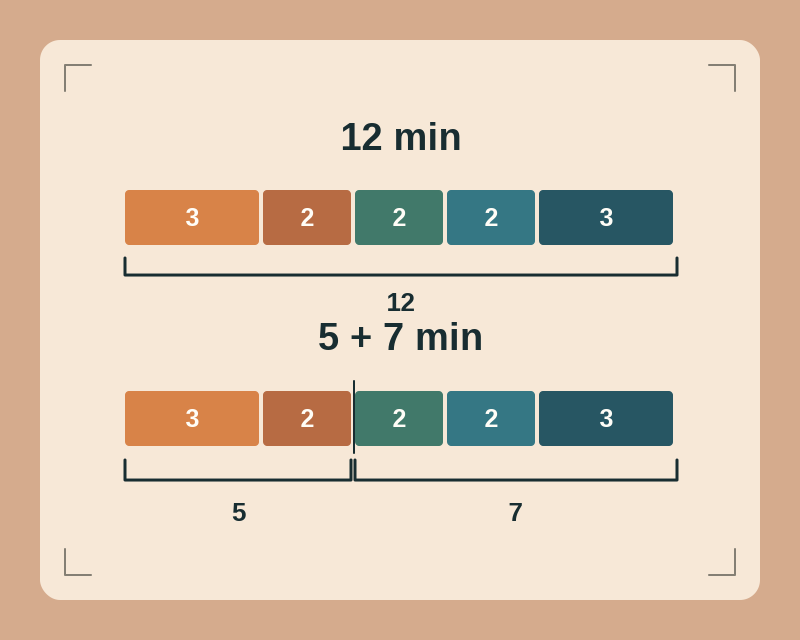
Numera cada tramo y anota su sentido. Los dos viajes de ida y vuelta al estante suman 12 m. La impresora añade 8 m y la entrega añade 2 m. El recorrido completo del ejemplo mide 22 m.
Prueba una ubicación antes de fijarla
Coloca una bandeja provisional para separadores a medio metro de la mesa. Mantén el estante B para las cajas. Si se repite el mismo pedido, el viaje por el separador pasa de 6 m a 1 m y el total previsto queda en 17 m. Dibuja el nuevo camino con otro color.
La bandeja necesita reposición. Registra ese recorrido aparte y comprueba que la bandeja no invada el pasillo ni se mezcle con otras referencias.
Repite con una unidad comparable
Prueba con pedidos que usen la misma caja y un separador. Mide trayecto, piezas correctas y posibles cruces con otras personas. Si alguien ya trae dos pedidos juntos, anota esa condición. El resultado por pedido depende de qué viajes comparte con los demás.
Conserva el plano y la decisión
Guarda fecha, límites del recorrido, distancias y qué moviste. Compara el camino de preparación junto con la reposición de la bandeja. Si encuentras menos metros y aparece un error de materiales, revisa la identificación antes de dejar la bandeja en su sitio.
A walking map for reorganizing a packing station
A fictional workshop packs small orders at one table. The person preparing an order visits the same shelf twice and crosses the aisle to print a label. A small floor plan shows these trips more clearly than a task list.
Draw an observed route, measure its segments and test one move with comparable orders. Keep the quality checks and steps the work still requires.
Choose what you will follow
The spaghetti diagram described by the Lean Management Institute shows the route of a product between stages. Here we will follow the person preparing an order. If the product stays on the table while someone fetches a box, the person’s route includes that trip.
Mark where preparation begins and where the finished order is left. Draw the table, shelf, printer and exit. Include any aisle or obstacle that forces a detour.
Trace one actual loop
Imagine the person starts at table A. They walk 3 m to shelf B and return with a box, then repeat the trip for a divider. They walk to printer C, 4 m from A, and return to attach the label. Finally they take the finished order to D, 2 m from the table.
Number each segment and record its direction. Two round trips to the shelf add up to 12 m. The printer adds 8 m and the handoff adds 2 m. The full example route is 22 m.
Test a location before making it permanent
Put a temporary tray for dividers half a meter from the table. Keep shelf B for boxes. For the same order, the divider trip would fall from 6 m to 1 m and the predicted total to 17 m. Draw the new route in a different color.
The tray needs replenishment. Record that trip separately and check that the tray stays out of the aisle and keeps different part references separate.
Repeat with a comparable unit
Try orders that use the same box and one divider. Measure the route and check for correct parts and crossings with other people. If someone is already carrying two orders together, record that condition. Distance per order depends on which trips it shares.
Keep the drawing and decision
Save the date, route boundaries, distances and what you moved. Compare packing travel alongside tray replenishment. If distance falls and a material error appears, review identification before making the tray permanent.
用步行路线图重新布置包装工作台
一家虚构作坊在同一张桌上包装小订单。准备订单的人两次去同一个货架,还要穿过通道打印标签。比起任务清单,一张小平面图更能看清这些来回。
画下观察到的路线,测量各段,在相近订单中只试着改一个位置。保留质量检查和仍然需要的步骤。
选定要跟踪的对象
Lean Management Institute 介绍的意面图描绘产品在各道工序间的路径。这里跟踪的是准备订单的人。如果商品留在桌上,而人走去拿纸箱,人的路线就包含这次往返。
标出开始准备与放下成品订单的位置。画出桌子、货架、打印机和出口,也画出为了绕开家具而多走的路。
画一遍实际路线
假设从 A 桌出发,走 3 米到 B 架拿纸箱再回来,然后重复这段路取隔板。接着走到距离 A 桌 4 米的 C 打印机,再回来贴标签。最后把完成的订单送到离桌子 2 米的 D 点。
给每段编号并标注方向。去货架两次往返共 12 米,打印机往返增加 8 米,交接再增加 2 米。例子里的完整路线为 22 米。
先试位置,再决定是否固定
在距离桌子半米处放一个临时隔板托盘。纸箱仍留在 B 架。若再做同样的订单,取隔板的往返由 6 米变为 1 米,预计总路程为 17 米。用另一种颜色画新路线。
托盘也需要补货。单独记录补货路线,并检查托盘是否侵占通道、不同规格物料是否分开放。
用可比较的订单重试
选择使用同一种纸箱和一块隔板的订单。测量路线,检查零件是否拿对,以及是否会与他人交叉。如果一个人已经同时带着两张订单,也要注明。每张订单的路程取决于它与其他订单共用哪些往返。
保存图纸和决定
记下日期、路线起止、距离和移动的物品。将包装路线与托盘补货一起比较。如果路程缩短却出现拿错材料的情况,先检查标识,再决定是否固定托盘位置。
Fuentes y método
Fuentes consultadas el 10 de noviembre de 2026. Los casos y datos numéricos de los ejercicios son ficticios. Editorial standards · Disclosures.