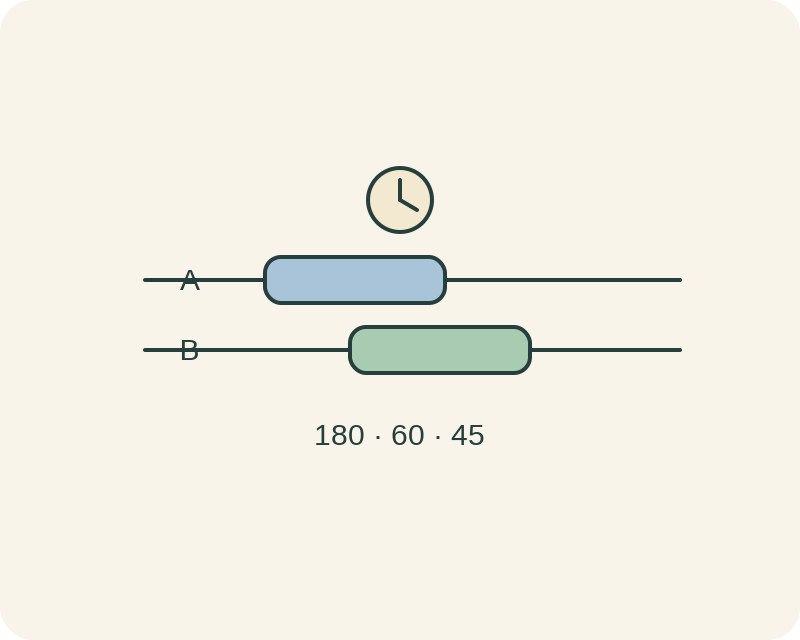
Mide desde la última pieza aceptada de A hasta la primera aceptada de B. Luego prueba adelantar una tarea y comprueba el resultado con el mismo criterio de calidad.
Define dos extremos observables
Para este taller, el inicio es la última carpeta A aceptada. El final llega al aprobar una carpeta B según las mismas comprobaciones de ancho y cierre que se usarán en el resto del lote. Guarda también el instante en que aparece la primera carpeta B si hubo que corregirla. El intervalo completo incluye la comprobación de la muestra.
Observa una transición y registra el comienzo y el final de cada paso. En un taller con varias personas, marca las tareas simultáneas para distinguir minutos de pausa y minutos de trabajo.
Lee los doce minutos del primer ensayo
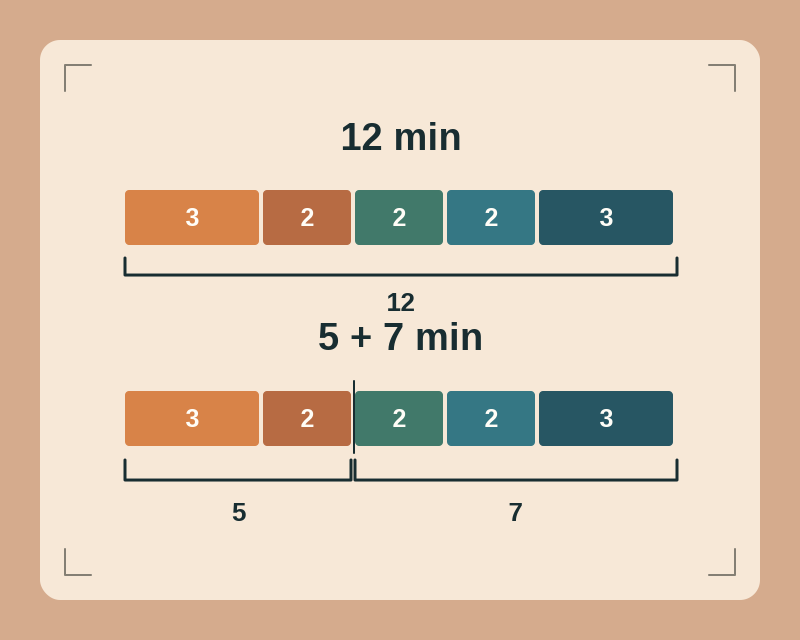
El equipo tarda tres minutos en buscar la guía y la muestra B, dos en contar y cotejar el papel, dos en retirar y montar la guía, dos en plegar la muestra y tres en comprobarla y corregir la posición. En el ejemplo los pasos son consecutivos y la mesa vuelve a producir al minuto doce.
La distinción que usa SMED ayuda a revisar el registro. Una actividad interna requiere detener la operación. Una externa puede realizarse con la operación en marcha. El momento en que se hizo un paso en el primer ensayo y el momento en que puede hacerse son dos datos distintos.
Cambia la ubicación de dos tareas
El taller prepara guía, muestra y papel para B en un carro marcado antes de terminar A. Quien prepara comprueba la etiqueta y deja el material en el carro hasta que se retira el lote anterior. Las carpetas de ambos tamaños conservan sus propias zonas.
Montar la guía y comprobar la primera carpeta siguen dentro de la pausa. Si los tiempos restantes se repitieran, serían siete minutos. La búsqueda y el conteo sumarían todavía cinco minutos de trabajo, ahora fuera de la pausa. Comprueba quién puede hacerlos y cuándo.
Mantén la prueba de la primera pieza
Pide a otra persona que compruebe el ancho y cierre con la muestra aprobada. Si falla, anota qué se ajustó y sigue midiendo hasta que se apruebe una. Conserva los pasos de seguridad aplicables y las comprobaciones del taller cuando cambies la secuencia.
Lleva dos cifras a la revisión
Registra formato de salida y entrada, fecha, duración de la pausa, minutos de preparación y resultado de la primera pieza. Compara varios cambios equivalentes y anota qué tareas se solapan. Si se acorta la pausa y se añade trabajo a otra mesa, la ficha permite ver ambos efectos.
A small workshop changeover from the last batch to the first good unit
A fictional workshop folds paper folders in two sizes at the same table. After batch A, it stops to find samples, check material and fit the guide for size B. Part of the pause passes before anyone touches the guide.
Measure from the last accepted A unit to the first accepted B unit. Then try moving a task earlier and check the result against the same quality criterion.
Define two observable endpoints
For this workshop the start is the last accepted A folder. The end comes when a B folder passes the same width and closure checks as the rest of the batch will use. Also keep the time when the first B folder appears if it needs correction. The full interval includes checking the sample.
Watch a transition and record the start and finish of each step. In a workshop with several people, mark concurrent tasks to separate downtime from work minutes.
Read the twelve minutes of the first trial
The team spends three minutes finding the B guide and sample, two counting and checking the paper, two removing and fitting the guide, two folding the sample and three checking it and adjusting the position. The steps run in sequence in this example and the table returns to production at minute twelve.
The distinction used in SMED helps review the record. An internal task requires the operation to stop. An external task can take place while it runs. When a step happened in the first trial and when it can happen are different facts.
Move two tasks to a different point
Before A finishes, the workshop prepares the B guide, sample and paper on a labeled cart. The person preparing them checks the label and keeps the material on the cart until the previous batch is cleared. The two sizes keep separate areas.
Fitting the guide and checking the first folder stay within the pause. If the remaining times repeated, they would total seven minutes. Finding and counting would still take five minutes of work, now outside the pause. Check who can do them and when.
Keep the first-unit check
Ask someone else to check width and closure against the approved sample. If it fails, record the adjustment and keep timing until one passes. Keep the applicable safety steps and workshop checks when changing the sequence.
Bring two figures to the review
Record the outgoing and incoming sizes, date, downtime, preparation minutes and first-unit result. Compare several similar changeovers and note which tasks overlap. If downtime falls and another table takes on work, the record lets you see both effects.
小作坊换规格时,从上一批最后一件到下一批首件合格
一家虚构作坊在同一张桌上折两种尺寸的纸质文件夹。A 批完成后,大家停下来找样品、核对材料,再装 B 规格的定位板。有人动手碰定位板之前,停台时间已经过去了一部分。
从 A 的最后一件合格品计到 B 的第一件合格品。尝试把一项工作提前,再用同样的质量标准检查结果。
先确定两个可观察的时点
这家作坊从最后一个合格的 A 文件夹开始计时。B 文件夹通过宽度和闭合检查时结束,整批 B 都按同一标准检查。如果做出的第一个 B 需要修改,也要记下它出现的时间。完整间隔包含对样品的检查。
观察一次切换,记录每个步骤的起止时间。如果有多人参与,标出同时进行的任务,以区分停台时间和工作分钟数。
看看第一次试验的十二分钟
找 B 定位板和样品花了三分钟,清点并核对纸张用了两分钟,拆装定位板两分钟,折样品两分钟,检查并调整位置三分钟。本例中各步骤依次进行,第十二分钟恢复生产。
SMED 的分类可以帮助分析这份记录。内部作业必须在操作停止时进行。外部作业可以在操作仍进行时完成。第一次试验中实际做某一步的时间,与这一步可以安排在何时,是两个不同的信息。
改变两项工作在流程中的位置
作坊在 A 批结束前把 B 的定位板、样品和纸张放到一辆有标识的推车上。准备人员检查标签,把材料留在车上,直到前一批清理完毕。两种规格的文件夹各有自己的区域。
安装定位板和检查首件仍在停台期间进行。如果其余用时相同,停台共七分钟。寻找和清点仍需要五分钟工作,只是移到了停台之外。确认谁能做这两项工作,以及何时做。
保留首件检查
请另一位同事按已批准的样品核对宽度和闭合情况。如果不合格,记录调整内容,继续计时直到有一件通过。改变顺序时保留适用的安全步骤和作坊检查。
复盘时带上两类数字
记录切换前后的规格、日期、停台时长、准备工作用时及首件结果。比较几次相近的切换,标出哪些任务同时发生。如果停台缩短,却给另一张工作台增加了任务,记录就能显示两种影响。
Fuentes y método
- Lean Enterprise Institute · Single Minute Exchange of Die ↗
- Shingo Institute · Focus on the Process Before Focusing on the Operations ↗
Fuentes consultadas el 9 de noviembre de 2026. Los casos y datos numéricos de los ejercicios son ficticios. Editorial standards · Disclosures.