Retain a cutoff and explicit aging rule. Check balance, due date and evidence before choosing contact; classification does not explain a missing payment.
Define the cutoff and report scope
Choose a date, currency and included invoices. Keep the agreed due date as well as issue date. Here overdue age starts the day after the due date; an invoice not yet due stays current.
Intuit’s 2025 education material describes aging reports summarizing unpaid invoices. We use that review question without current menu instructions or tax treatment. The example’s classification is our own proposal.
Reconstruct the open balance first
Retain original amount, actually applied payments and documented adjustments for each invoice. An unverified transfer notice is not deducted as confirmed payment. If bank, receipt and ledger differ, identify what needs reviewing.
The following fictional case has no adjustments, additional interest or different currencies. Values are invented monetary units, rather than real customer invoices or instructions to alter accounting records.
Separate three situations at one cutoff
| Invoice | Original | Applied payments | Open balance | Cutoff situation |
|---|---|---|---|---|
| A | 400 | 0 | 400 | Due in 5 days |
| B | 400 | 150 | 250 | 12 days overdue |
| C | 100 | 0 | 100 | 38 days overdue |
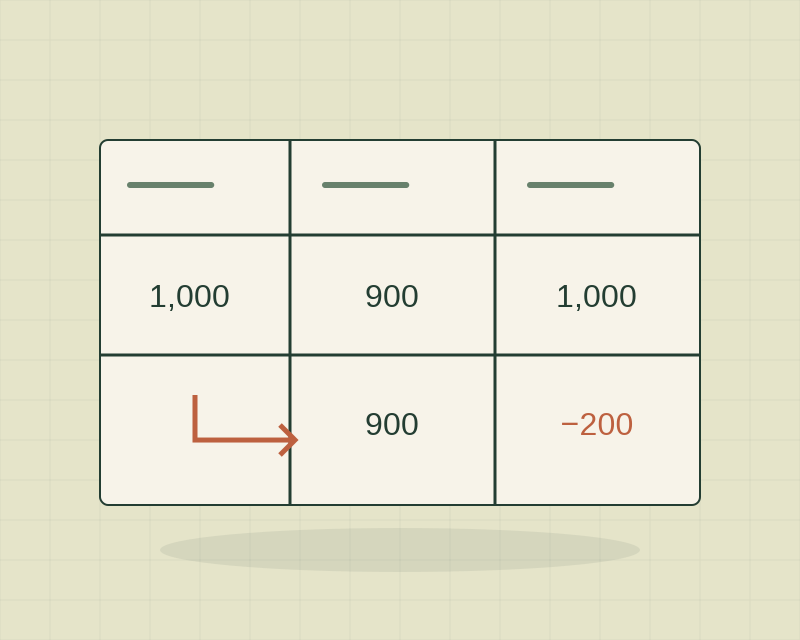
B retains 400 − 150 = 250. Open balances sum to 400 + 250 + 100 = 750. Under the example rule, 400 is current and 250 + 100 = 350 overdue. Do not count B’s original amount and remaining balance as two debts.
Group B into 1–30 days and C into 31–60 if useful. These intervals organize review; they determine neither contractual consequences nor uncollectibility.
Investigate references before interpretation
- Does the due date match the current agreement?
- Are payments or adjustments awaiting correct application?
- Did the invoice reach the agreed recipient?
- Is a clarification or dispute open?
- Which evidence checks the cutoff balance?
Aging measures time under a rule, rather than customer intent. Delay may require document or status clarification; the table neither establishes disinterest nor promises recovery.
Prepare a next step suited to the case
For B, a proposed action is confirming the balance and partial-payment reference with the responsible person. For A, not yet due, checking document availability may suffice. Different groups need not receive identical messages or urgency.
If a condition changes by agreement, retain who confirmed it and what it replaces. Our usage billing guide explains charge calculation; here we inspect the portion still open after issue.
Keep the report with its evolution
At the next cutoff, record applied payments, adjustments and new invoices without erasing the previous report. Lower overdue balances can reflect collections, corrections or other movements; retain the explanation rather than automatically attributing it to a sales action.
A cash calendar projects incoming money; this report describes cutoff balances. A weekly review supports follow-through. This exercise does not replace accounting reconciliation or determine recovery, profit or available cash.
Follow the evidence.
Sources checked October 26, 2026. Illustrative scenarios and numbers are fictional. The records and exercises are original editorial proposals, without attributed customer results or provider tests. Our editorial standards.