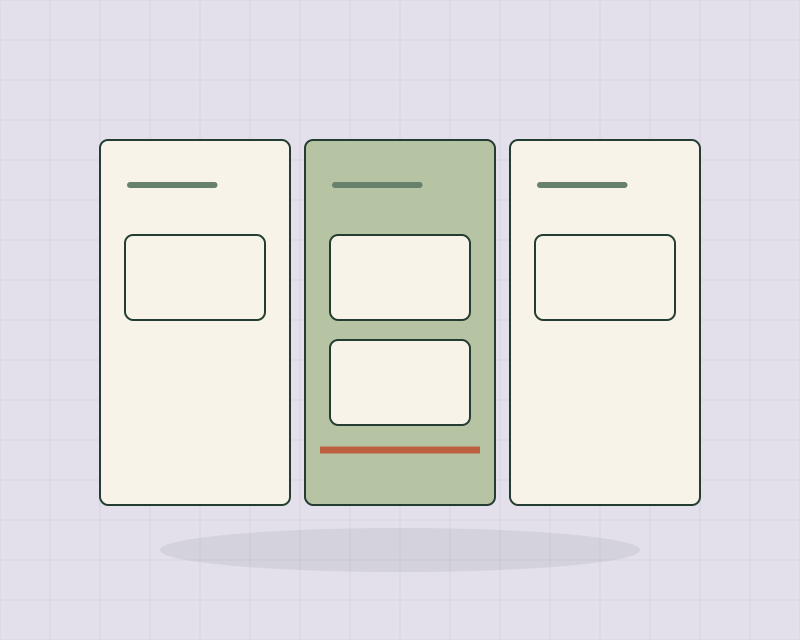
Separate facts, interpretations and decisions. Choose an action you can check at the next review, retaining what you deliberately postponed too.
Gather a small set of references
Open accepted commitments, the week’s deliveries, customer questions and tests actually performed. You do not need to copy everything into another system. Links or references that return to authorized material are enough. A remembered idea and a written response do not carry the same weight.
GOV.UK’s manual describes team retrospectives reviewing what works and what needs correction. We use that question as a reference for this individual exercise, without imposing its meeting length or team structure on a person working alone.
Distinguish fact, interpretation and open decision
In a fictional case, two people asked what a service includes and neither has requested a proposal yet. The fact is that two questions exist. “The offer attracts no interest” would be an interpretation; “Does the scope need explanation?” is a question to investigate. One short week does not represent the whole market.
Use three columns before acting: what you observed, the interpretation proposed and missing information. Our validation guide helps distinguish interest, commitment and ability to deliver. Here you review learning from a particular week.
Return to what you promised
Check which commitments ended, which continue and which changed conditions. When awaiting an input, record what it affects and what communication is needed. Do not confuse “I did not work on this” with “it no longer matters”: a promise may still need attention.
The open-work review shows workload and blockers. The weekly review uses that information to decide whether to keep or change an activity, or stop an initiative that is not yet a commitment to another person.
Turn three issues into different decisions
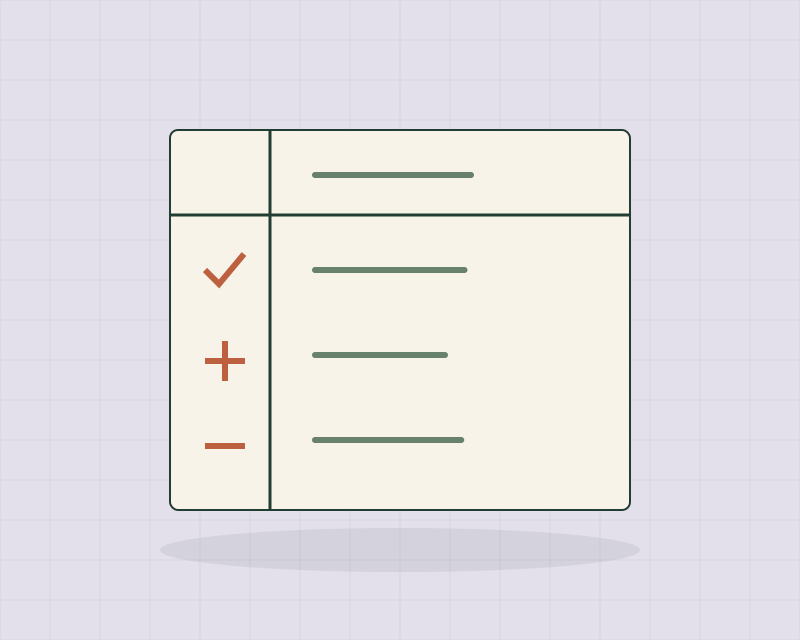
| Observed issue | Proposed decision | Next check |
|---|---|---|
| Two scope questions | Review the explanation with a concrete example | Can the person explain what is included? |
| Job material still missing | Confirm the input with the agreed contact | Did the delivery condition change? |
| Unresearched new service idea | Postpone promotion | Is there new evidence to revisit it? |
No row requires doing everything in the same week. Postponement needs a reason and a return condition, rather than resurfacing as an urgent task every Monday. The table is illustrative, not the result of a customer review performed.
Choose a priority with visible completion
Among actions under your control, choose one that can reduce important uncertainty or meet a commitment. Define the result: “prepare a scope example and review it with one person” allows a later check. “Improve sales” does not yet define that work.
Record what stays outside so the priority is more than an additional row. Workday planning then helps reserve actual capacity. This exercise does not require turning personal time into the business’s emergency resources.
Leave a note you can review without rebuilding the week
Record date, evidence, decision, reason, owner and review condition. Next time, ask what changed and what remains unchecked. Retain the earlier decision even when replacing it: understanding why your view changed prevents describing a recent intuition as the plan all along.
If several actions stayed open, narrow the next review. The useful result is an informed decision and a recognizable commitment, rather than a productivity score or growth guarantee.
Follow the evidence.
Sources checked October 20, 2026. Illustrative scenarios and numbers are fictional. The records and exercises are original editorial proposals, without attributed customer results or provider tests. Our editorial standards.