Follow a visible edge, retain the viewpoint and compare another object position. The drawing can remain a private trial with differences and questions.
Choose an object that can stay still
Find your own mug, shoe or empty bottle, paper and an already familiar drawing tool. Place the object where you can comfortably see it and leave space for the sheet. You need neither a new material set nor a complete still life.
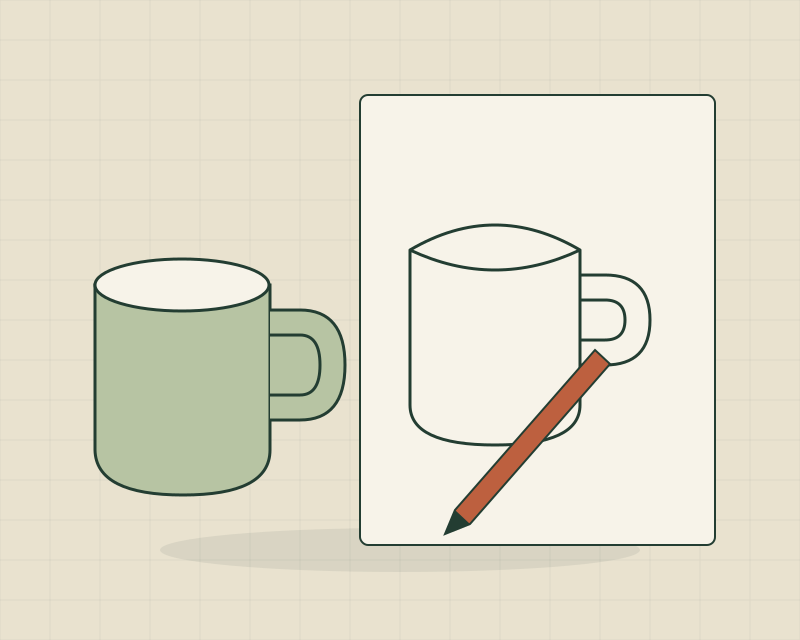
Our proposed example uses an undecorated mug. We reproduce no museum work and claim no completed session. The creative space guide can help prepare and clear a shared table.
Separate an edge from a name
The National Gallery of Art describes contour drawing through long continuous lines conveying an object’s shape. We use that idea to observe a mug from one chosen position, without turning its entire lesson into a mandatory recipe.
Look where the edge changes direction: opening, body, base and visible handle. A recognizable mug can have unexpected proportions. An invisible rear handle edge need not be invented to complete the “correct” object.
Make a first version from what is visible
Choose a recognizable edge point and follow it with your gaze while advancing the pencil. Pause and look again where needed. Try letting one line explain a route before layering many corrections. There is no required speed or minimum time.
Notice relationships: does the opening look wider than tall, where does the handle meet the body, and what is hidden? The handle’s empty opening has a shape too. Leave shading and details for later if they distract from this initial question.
Change one condition for another version
| Version | Condition | Question |
|---|---|---|
| A | Handle toward one side | Which opening and joins are visible? |
| B | Partial turn, same chair | Which edge disappears or overlaps? |
Avoid changing chair height and sheet position simultaneously if you want to recognize the turn’s effect. You are comparing two observations, rather than measuring a universal perspective. Keep both drawings even if you prefer the first.
Collage arranges cut shapes. Here lines emerge from looking at an object, and part can disappear from view when it turns.
Compare one relationship before judging the whole
- Where do observed and drawn edges diverge?
- Which opening changed after turning the mug?
- Which line came from memory rather than observation?
- Which detail would you like to inspect again?
A note could say: “I drew the whole handle although part was hidden.” That opens another trial without rating ability. If sharing, request comments on a visible relationship rather than a verdict on talent.
Choose whether to continue or stop here
Repeat one section, change objects or add another technique later. Keep date and position if useful. The first version need not be erased, exhibited or turned into brand content.
Our observation walk considers place-design decisions; this session explores looking and line. Noticing a previously overlooked edge can be the result, without professional promises or attributed health effects.
Follow the evidence.
Sources checked October 27, 2026. Illustrative scenarios and numbers are fictional. The records and exercises are original editorial proposals, without attributed customer results or provider tests. Our editorial standards.