Move the same pieces before fixing them. Compare what draws your eye and what becomes hidden; retain a relationship you want to explore without seeking a universally correct composition.
Gather a small set
Use a base sheet, three paper colors, glue and a way of cutting or tearing suitable for you. Existing paper and prepared pieces are enough. You need neither special purchases nor a reproduction of a known artwork.
The National Gallery of Art proposes exploring shapes through cut paper, moving pieces and trying layers before gluing. Our exercise develops an original comparison of two compositions; it reproduces neither the museum’s full activity nor its artworks.
Cut different relationships
Prepare a wide rectangle, a narrow one, a rounded shape and an irregular-edged piece. Keep some offcuts: the opening left by cutting can serve as another shape. These quantities organize this trial; they are no rule of collage.
Start with everything outside the base. Notice which pieces resemble one another in color or size and which create a visible difference. If two colors merge under your light, change their size or separation to explore another relationship.
Build a first composition without glue
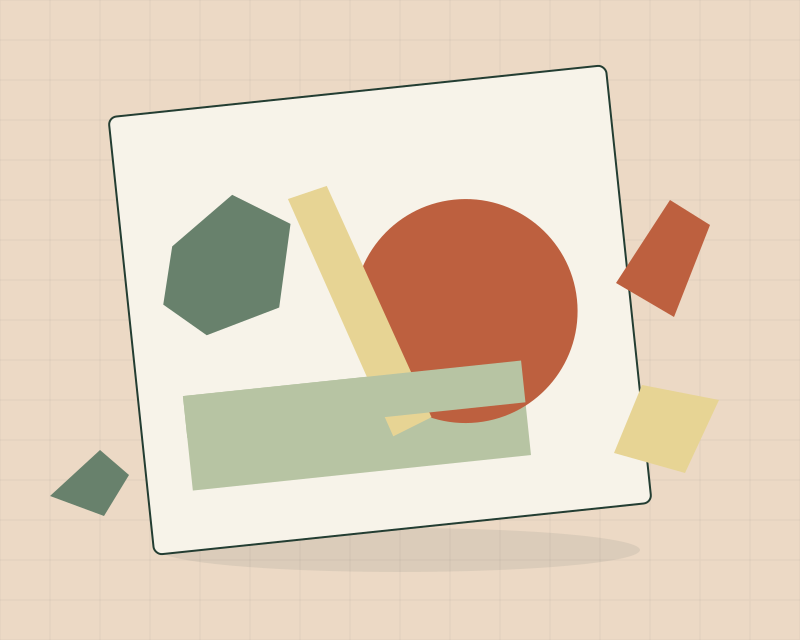
In the proposed example, the wide rectangle sits near the bottom edge, the rounded shape partly overlaps it and the narrow strip points toward a corner. Leave a large uncovered area. You need not call it a landscape or decide what it represents.
Notice what you look at first. Is that due to size, contrast with the base or distance from the others? Rotate the sheet and see whether your reading changes. These are your observations about this arrangement, rather than compulsory properties of each color or shape.
Change one relationship and retain the pieces
Before dismantling, make a simple sketch or take your own photo if you want a comparison. Then move the rounded shape behind the rectangle and separate the strip toward the opposite side. Keep the background to make the change easier to recognize.
Compare what is covered, which outline remains recognizable and the gaps between pieces. Overlap can suggest front and back without a figurative object. You need not choose the fullest version: empty space participates in the composition too.
Choose a relationship to keep
- Which element attracts your eye now?
- Which edge is clearer in each version?
- Does separation visually join pieces or isolate them?
- What changes if you remove a piece rather than adding another?
Choose an arrangement and glue in layers, carefully lifting each piece to retain its position. If you prefer another session, store shapes without gluing. Our shared creative workspace guide can help with setup and clearing without occupying the whole table.
Keep an observation if you wish
A note might say: “Moving the rounded shape behind makes its edge less recognizable; I want to try a larger size.” That gives another session a question, without requiring an artistic judgment or a result to publish.
A photo sequence preserves memories; a fiction scene builds actions. This exercise explores paper, color and space relationships. Enjoy it without attributing a therapeutic effect or making it work.
Follow the evidence.
Sources checked October 24, 2026. Illustrative scenarios and numbers are fictional. The records and exercises are original editorial proposals, without attributed customer results or provider tests. Our editorial standards.