Keep the customer's reason with the order. Add the inspection and destination by unit so support and inventory can refer to the same case.
Capture the reason when the request opens
Link the case to the order, variant and quantity. Use a category that can be grouped, such as “incorrect color,” and keep a short statement from the customer. If the reason is unknown or it is unclear which unit it describes, leave it open for review.
Record what actually arrives
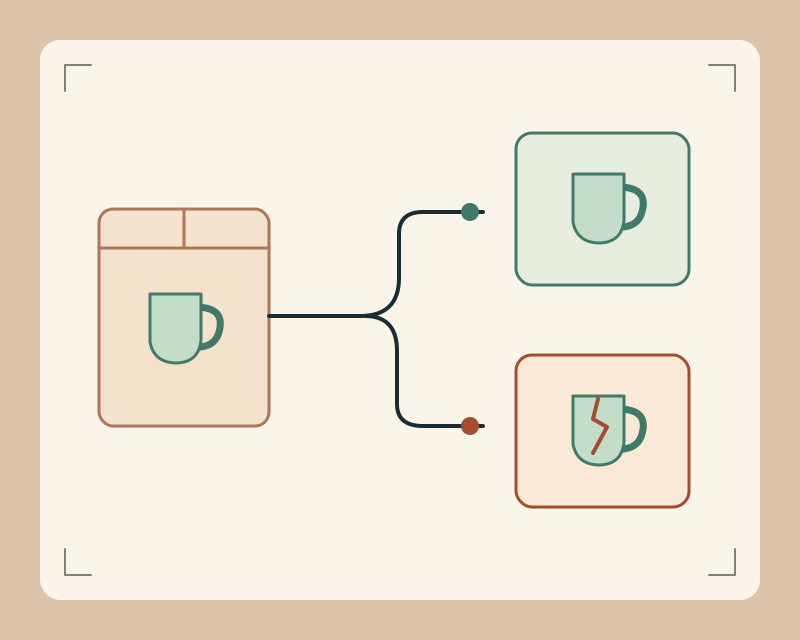
In the fictional return, the order shows blue and both received units are green. One passes the store's inspection for restocking; the other has a visible crack. Record the quantity in each condition and relevant evidence before updating stock.
Assign a destination and owner
Once approved, the intact unit goes to the stock location for the green variant. The damaged unit is held away from sellable stock for review. Record who authorizes each movement and the date. Track the refund separately under the customer agreement and applicable policy.
Count using the right unit
In a reasons report, this case is one request for incorrect color. A units received report shows two mugs, one of which arrived cracked. If several cases share the reason, check where the color was assigned before attributing the problem to the warehouse.
Confirm the movements before closing
Reconcile the quantity received, units returned to stock and units set aside. Check separately what the customer was told and what action was completed. The record should explain the result without asking the customer to repeat their story.
Follow the evidence.
- Shopify Help Center · Creating returns and exchanges ↗
- Shopify Help Center · Processing and managing returns ↗
Sources checked November 15, 2026. The exercise scenarios and figures are fictional. Our editorial standards.