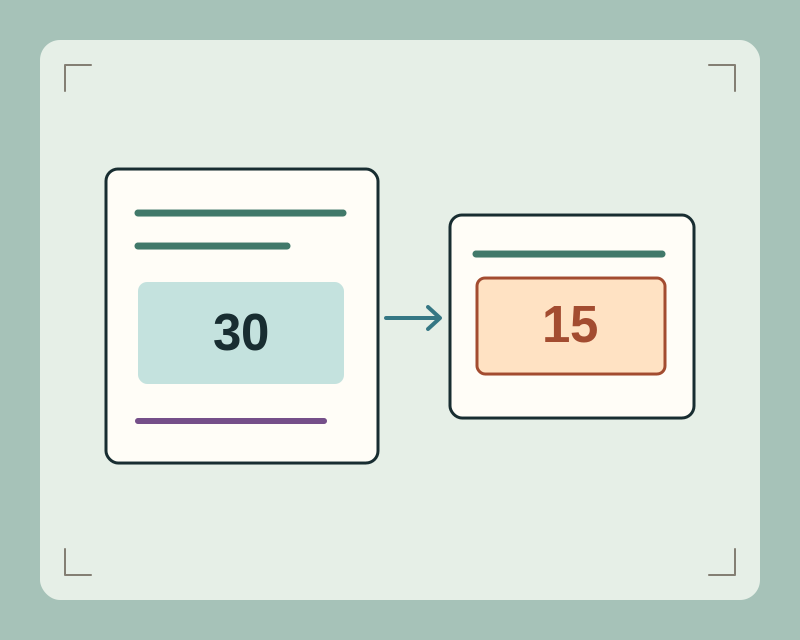
Start with the terms the shop has already approved. Check the standard policy on the returns page and the exception on the relevant offer.
Record the scope
Write down the country, covered products, window, return method and any applicable costs. In this exercise the standard window is 30 days and the display model has 15. These figures are fictional. Keep the approved reference so each check starts with the same text.
Locate the two kinds of markup
Google documents a standard policy as MerchantReturnPolicy nested in Organization through hasMerchantReturnPolicy. For a product-specific policy, place the markup in Offer. The properties supported for an offer are a subset of those supported for the standard policy. Check the relevant group before moving fields between pages.
Follow the window to the right offer
Open the returns page and find the 30-day window in the visible content and in the data describing it. Then open the display model’s page. Check that the 15-day window refers to that offer and that shoppers can read it before buying. If another model inherits the standard window, check that the exception stays limited to the intended model.
Inspect the deployed file
Inspect both pages’ HTML. For a finite return window, Google requires merchantReturnDays alongside the applicable category. Check that the value represents days and that the country scope matches the policy. Use the Rich Results Test to look for markup errors and keep the URL, date and reviewed version.
Prepare the next review
Suppose the shop changes the standard window to 25 days and keeps the exception at 15. Review the standard policy first, then an offer that inherits it and finally the exception. Keep what you read in each place. A markup test checks the implementation. Search appearance is a separate observation.
Follow the evidence.
Sources checked November 13, 2026. The exercise scenarios and figures are fictional. Our editorial standards.