Empieza por las condiciones que ya aprobó la tienda. Comprueba la política general en la página de devoluciones y la excepción en la oferta que corresponde.
Haz una ficha con el alcance
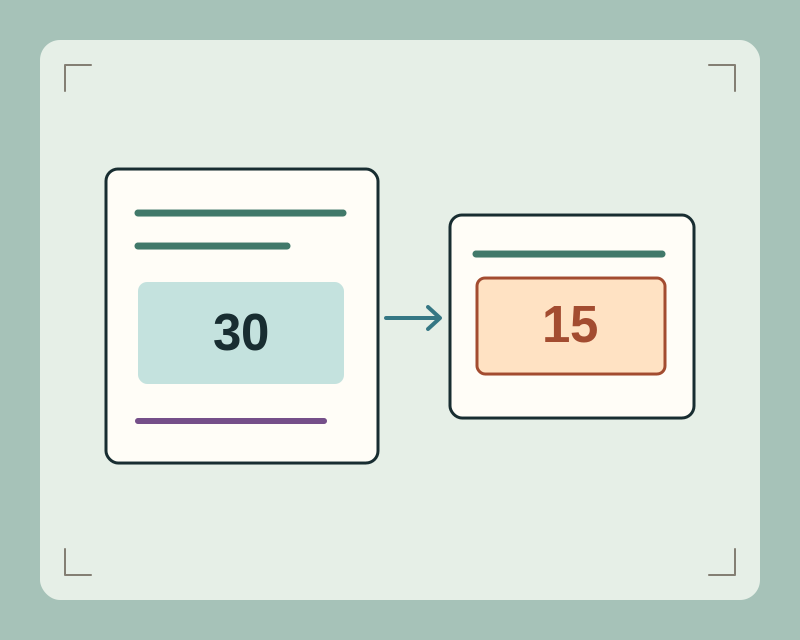
Escribe el país, los productos cubiertos, el plazo, el método de devolución y cualquier costo que corresponda. En el ejercicio, la regla general es de 30 días y el modelo de exposición tiene 15. Las cifras son ficticias. Conserva la referencia aprobada para que la comparación empiece por el mismo texto.
Distingue las dos ubicaciones
Google documenta una política general como MerchantReturnPolicy dentro de Organization, mediante hasMerchantReturnPolicy. Para una política específica de producto, sitúa el marcado en Offer. Las propiedades admitidas para una oferta son un subconjunto de las generales. Revisa el grupo que corresponde antes de trasladar campos entre páginas.
Sigue el plazo hasta la oferta correcta
Abre la página de devoluciones y busca el plazo de 30 días en el contenido visible y en los datos que lo describen. Luego abre la ficha del modelo de exposición. Comprueba que el plazo de 15 días se refiera a esa oferta y que el cliente pueda leerlo antes de comprar. Si otro modelo hereda el plazo general, revisa que la excepción quede limitada al modelo previsto.
Comprueba el archivo desplegado
Inspecciona el HTML de ambas páginas. En una política con plazo finito, Google pide merchantReturnDays junto a la categoría aplicable. Comprueba que el valor describa días y que el ámbito del país corresponda a la política. Usa la prueba de resultados enriquecidos para buscar errores en el marcado y conserva la URL, la fecha y la versión revisada.
Deja preparada la próxima revisión
Supón que la tienda cambia la regla general a 25 días y conserva la excepción en 15. Revisa primero la política general, luego una oferta que la hereda y al final la oferta con excepción. Guarda qué se leyó en cada una. Una prueba de marcado permite comprobar la implementación y la presentación en la búsqueda se observa por separado.
How to review structured data for a return policy
A fictional shop sells lamps in one country. Most can be returned within 30 days and a display model has a different window. If the visible terms and the structured data disagree, the team needs to know which version to correct.
Start with the terms the shop has already approved. Check the standard policy on the returns page and the exception on the relevant offer.
Record the scope
Write down the country, covered products, window, return method and any applicable costs. In this exercise the standard window is 30 days and the display model has 15. These figures are fictional. Keep the approved reference so each check starts with the same text.
Locate the two kinds of markup
Google documents a standard policy as MerchantReturnPolicy nested in Organization through hasMerchantReturnPolicy. For a product-specific policy, place the markup in Offer. The properties supported for an offer are a subset of those supported for the standard policy. Check the relevant group before moving fields between pages.
Follow the window to the right offer
Open the returns page and find the 30-day window in the visible content and in the data describing it. Then open the display model’s page. Check that the 15-day window refers to that offer and that shoppers can read it before buying. If another model inherits the standard window, check that the exception stays limited to the intended model.
Inspect the deployed file
Inspect both pages’ HTML. For a finite return window, Google requires merchantReturnDays alongside the applicable category. Check that the value represents days and that the country scope matches the policy. Use the Rich Results Test to look for markup errors and keep the URL, date and reviewed version.
Prepare the next review
Suppose the shop changes the standard window to 25 days and keeps the exception at 15. Review the standard policy first, then an offer that inherits it and finally the exception. Keep what you read in each place. A markup test checks the implementation. Search appearance is a separate observation.
怎样检查退货政策的结构化数据
一家虚构商店在一个国家销售灯具。多数灯具可在 30 天内退货,展品型号采用另一期限。如果可见条款与结构化数据不一致,团队需要找出该修正的版本。
从商店已经批准的条款出发。在退货说明页核对通用规则,再到对应商品报价核对例外。
记录政策范围
写下国家、适用商品、期限、退货方式和适用费用。练习中通用期限为 30 天,展品型号为 15 天。这些数字是虚构的。保留已批准的说明,让每次核对都从同一份文字开始。
找到两种标记的位置
Google 的文档将通用政策写作 MerchantReturnPolicy,通过 hasMerchantReturnPolicy 放在 Organization 内。某个商品适用特别政策时,标记放在 Offer 内。报价层支持的属性只是通用属性的一部分。把字段移到另一页面前,先核对适用的属性组。
顺着期限找到正确的报价
打开退货说明页,在可见文字和相应数据中找到 30 天。再打开该展品的页面,检查 15 天是否对应这个报价,以及顾客能否在购买前看到它。如果其他型号沿用通用期限,要核对例外只限于预定的型号。
检查部署后的文件
查看两个页面的 HTML。对有限退货期,Google 要求提供适用类别和 merchantReturnDays。确认该值表示天数,国家范围也符合政策。用富媒体搜索结果测试查找标记错误,并保存网址、日期和版本。
给下一次检查留记录
假设商店把通用期限改成 25 天,例外仍为 15 天。先检查通用政策,再看沿用它的报价,最后看例外报价。记下每处读到的内容。标记测试用来核对实施情况,搜索中的呈现另行观察。
Fuentes y método
Fuentes consultadas el 13 de noviembre de 2026. Los casos y datos numéricos de los ejercicios son ficticios. Editorial standards · Disclosures.