Vincula lote de entrada, orden de trabajo, lote terminado y salida. Practica ambas direcciones con un caso pequeño y deja visibles las relaciones que falten.
Empieza por identificar la unidad que seguirás
Un taller ficticio fabrica el modelo C4. Su referencia de catálogo identifica qué cuaderno es. Para seguir una tanda concreta, el taller añade un identificador de lote y acuerda cuándo empieza uno nuevo. Elige un alcance que el equipo pueda marcar y registrar de manera consistente.
Conserva juntos el identificador del producto y el del lote. Una etiqueta legible que remite a una fila comprobable resulta más útil que un código cuyo significado solo conoce quien lo escribió.
Registra tres momentos de trabajo
En recepción, vincula el lote del insumo con la referencia del proveedor y el documento que lo acompaña. En producción, registra qué entradas utilizó la orden y qué lote terminado produjo. Al salir, conserva el vínculo entre lote terminado, cantidad y documento de destino.
El estándar de trazabilidad de GS1 describe cómo enlazar entradas y salidas de una transformación. La ficha de este ejercicio utiliza referencias internas inventadas y puede practicarse en papel o en una hoja sencilla.
Sigue un caso con dos lotes terminados
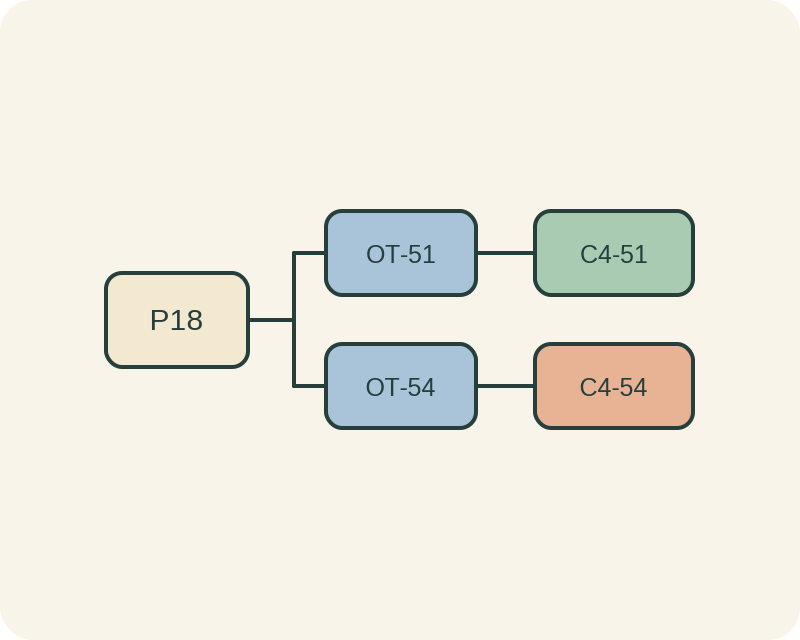
En el taller ficticio, el papel P18 se utilizó en dos órdenes. Cada lote terminado tiene una salida con un destino distinto. Las cantidades son de cuadernos y se registran al momento de cada salida.
| Papel | Orden | Lote terminado | Salida |
|---|---|---|---|
| P18 | OT-51 | C4-51 | S-071 · 12 unidades |
| P18 | OT-54 | C4-54 | S-074 · 8 unidades |
| P19 | OT-58 | C4-58 | S-078 · 10 unidades |
Si la consulta empieza en S-074, llegas a C4-54 y a P18 mediante OT-54. Si empieza en P18, identificas C4-51 y C4-54 y consultas sus respectivas salidas. La tercera fila queda fuera de esa relación según este registro.
Conserva divisiones, mezclas y datos pendientes
Si un lote terminado se reparte entre dos destinos, registra dos salidas. Si una orden incorpora dos lotes de papel, conserva ambos vínculos. Un único campo que guarda el último valor perdería parte del recorrido.
Cuando falte una referencia, marca la fila como pendiente y busca el documento o etiqueta que podría aclararla. Mantén la distinción entre una relación confirmada y otra que parece probable por cercanía de fechas.
Pide una búsqueda sin explicaciones adicionales
Entrega a otra persona un identificador de salida y solicita que encuentre su entrada. Después da un lote de insumo y pide ubicar todas las salidas registradas. Anota dónde se pierde el vínculo y cuánto alcance queda por revisar.
En el ensayo, conserva unidades, fechas, responsables y documentos de referencia. El resultado describe la capacidad de seguir los datos que existen. Una pregunta sobre calidad de un material requiere sus propias comprobaciones.
Corrige el punto donde se pierde la información
Si la etiqueta se separa del material en la mesa de trabajo, revisa cómo conservar la referencia antes de cambiar de herramienta. Si la información llega tarde al expediente, acuerda quién la registra en cada movimiento y cómo se revisa una corrección.
La lista de materiales describe lo que requiere un producto según su versión. El registro de lotes añade la historia de los insumos que se utilizaron y las salidas que se documentaron en una operación concreta.
A batch record you can follow in both directions
Two notebooks of the same model may use materials received on different days. A batch record lets you trace the input actually used and follow its path to a dispatch destination.
Link input lot, work order, finished batch and dispatch. Practice both directions on a small case and expose any missing relationships.
Identify the unit you will follow
A fictional workshop makes model C4. Its catalog reference identifies the notebook. To follow a particular run, the workshop adds a batch identifier and agrees when a new batch begins. Choose a scope the team can label and record consistently.
Keep product and batch identifiers together. A readable label pointing to a verifiable row is more useful than a code only its author understands.
Record three moments in the work
At receipt, link the material lot to its supplier reference and accompanying document. In production, record which inputs a work order used and the finished batch it produced. At dispatch, retain the link between finished batch, quantity and destination document.
GS1’s traceability standard describes linking transformation inputs and outputs. This exercise uses invented internal references and can be practiced on paper or a simple spreadsheet.
Follow a case with two finished batches
In the fictional workshop, paper P18 went into two work orders. Each finished batch has a separate dispatch destination. Quantities count notebooks and are recorded at dispatch.
| Paper | Work order | Finished batch | Dispatch |
|---|---|---|---|
| P18 | OT-51 | C4-51 | S-071 · 12 units |
| P18 | OT-54 | C4-54 | S-074 · 8 units |
| P19 | OT-58 | C4-58 | S-078 · 10 units |
Starting at S-074 leads to C4-54 and P18 through OT-54. Starting at P18 leads to C4-51 and C4-54 and their dispatches. The third row sits outside that relationship in this record.
Keep splits, mixtures and pending data
When a finished batch goes to two destinations, record two dispatches. If an order uses two paper lots, retain both links. A single field storing only the latest value would lose part of the path.
When a reference is missing, mark it pending and seek the document or label that could clarify it. Distinguish a confirmed link from one that seems likely because the dates are close.
Ask for a lookup without extra explanation
Give someone a dispatch identifier and ask them to find its input. Then provide a material lot and ask them to find every recorded dispatch. Record where the trail stops and what remains to review.
Keep units, dates, owners and document references. The result describes how well you can follow existing data. Material quality questions require their own checks.
Fix the point where information is lost
If labels separate from materials at the worktable, examine how to retain the reference before changing tools. If information reaches the record late, agree who records each movement and how corrections are reviewed.
A bill of materials describes what a product requires under a version. Batch records add the history of inputs used and dispatches documented in a particular operation.
一份可以双向追查的批次记录
同款笔记本可能用了不同日期收到的纸。按批记录可以查回实际使用的材料,也能顺着材料找到成品的出库去向。
连接原料批次、工单、成品批次与出库记录。选一个小案例练习双向查询,并保留缺失的关联。
明确要追查的单位
虚构工坊制作 C4 笔记本。目录编号说明是什么型号。追查某次生产时,工坊另加批次编号,并约定何时另开新批次。选择团队能持续标记和记录的范围。
把产品编号与批次编号放在一起。清楚的标签应能指向可核查的记录,比只有填写者知道含义的代码更有用。
记录三个工作时点
收货时,把材料批次与供应商编号和随货单据连接。生产时,记录工单用了哪些输入、产出哪批成品。出库时,保留成品批次、数量与去向单据之间的关联。
GS1 追溯标准描述了加工输入与输出的关联。本练习使用虚构内部编号,可以用纸张或简单表格练习。
追查两个成品批次
虚构工坊把 P18 纸用于两张工单。每个成品批次分别发往一个去向。数量以笔记本为单位,在出库时记录。
| 纸张批次 | 工单 | 成品批次 | 出库 |
|---|---|---|---|
| P18 | OT-51 | C4-51 | S-071 · 12 本 |
| P18 | OT-54 | C4-54 | S-074 · 8 本 |
| P19 | OT-58 | C4-58 | S-078 · 10 本 |
从 S-074 出发,经 C4-54 和 OT-54 可查到 P18。从 P18 出发,则可找到 C4-51 与 C4-54 及各自的出库记录。按这份记录,第三行不属于该关联。
保留拆分、混用与待确认项
成品同一批分发两个去向时,记录两次出库。工单用到两批纸,就保留两条关联。单个字段若只保留最新值,会丢失部分路径。
缺少编号时标成待确认,再找可澄清的单据或标签。已证实的关联要与仅因日期接近而显得可能的关联分开。
请另一人独立查找
给出一个出库编号,请对方找出其材料。再提供一个材料批次,请找齐记录中的各次出库。写下路径在哪里中断、还有哪些范围需要复核。
保留单位、日期、负责人和单据引用。结果说明已有记录能追查到什么程度。材料质量问题需要另行核实。
修复信息丢失的位置
标签若在操作台与材料分离,先检查如何保留编号,再考虑更换工具。如果信息迟到,就约定各次流转由谁记录、由谁核对更正。
物料清单说明某个版本需要什么。批次记录补充实际作业中用到的材料和已有单据的出库历史。
Fuentes y método
Fuentes consultadas el 3 de noviembre de 2026. Los escenarios y cifras ilustrativos son ficticios. Ejercicios y fichas originales, sin resultados de clientes ni observaciones de campo atribuidos. Editorial standards · Disclosures.