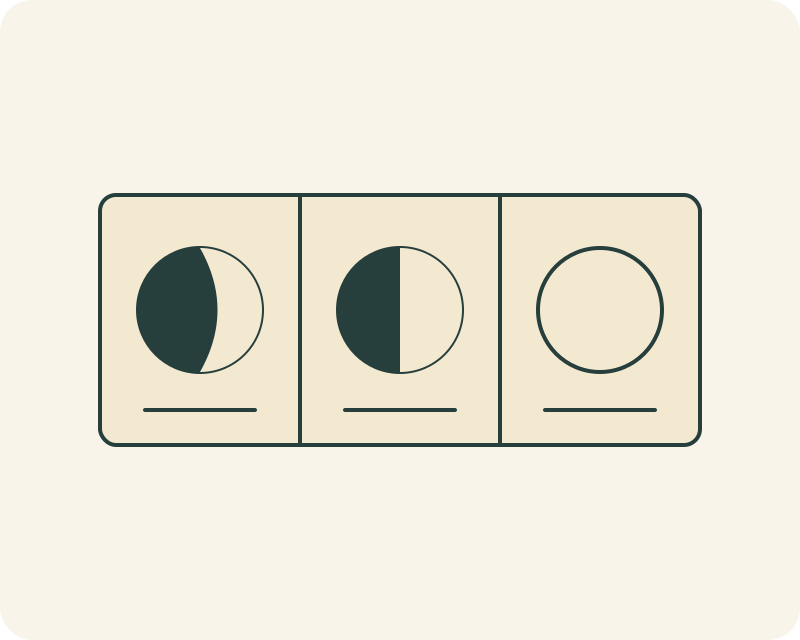
Registra fecha, hora, lugar aproximado y forma observada. Compara la parte iluminada entre días y conserva las dudas sin rellenar una observación que no pudiste hacer.
Empieza por una observación breve
Elige un lugar desde el que puedas mirar el cielo con comodidad y dibuja un círculo pequeño en papel. Si la Luna es visible, marca aproximadamente la parte brillante tal como la ves. No hace falta un dibujo preciso ni un telescopio para este primer ejercicio.
Anota fecha, hora local y zona horaria, además de una referencia general del lugar. Evita convertir el cuaderno en una obligación diaria: una observación incompleta puede quedarse como pregunta para otra ocasión.
Distingue luz y superficie visible
NASA explica que la luz lunar es luz del Sol reflejada y que el Sol ilumina una mitad de la Luna. Las fases corresponden a cuánto de esa mitad iluminada vemos mientras cambia su posición en la órbita. La parte oscura del dibujo no significa que haya desaparecido superficie.
El Observatorio Naval de Estados Unidos distingue fases por la forma y la proporción iluminada. Creciente indica aumento de la fracción visible iluminada; menguante, disminución. La comparación tiene sentido entre momentos, no solo al recordar qué lado parecía brillante.
Prueba una ficha con condiciones visibles
La siguiente ficha es una propuesta en blanco, no un diario de observaciones realizadas por la revista. Puedes copiarla sin publicar tu ubicación precisa.
| Campo | Qué anotar | Para qué sirve |
|---|---|---|
| Momento | Fecha, hora y zona horaria | Ordenar observaciones |
| Contexto | Lugar general y referencia del horizonte | Interpretar orientación |
| Forma | Dibujo aproximado y parte brillante | Comparar lo visto |
| Condiciones | Nubes, obstáculos o visibilidad incompleta | Conservar límites |
Si una nube tapa una parte, dibuja o describe esa limitación aparte. No traces como borde de fase el contorno de una nube o de un edificio que pasa por delante.
Compara dibujos antes de poner un nombre
En otra oportunidad, mira si la parte brillante ocupa más o menos del disco que en la anotación anterior. Conserva también la orientación del papel: girar el dibujo puede cambiar cuál lado parece iluminado sin cambiar la fase que intentas representar.
La guía diaria de NASA ofrece una referencia de fase y fracción iluminada para contrastar tu nota. Su ciclo completo de fases dura aproximadamente 29.5 días; no esperes que coincida siempre con los mismos días del mes del calendario.
Separa observación y consulta
Escribe “vi aproximadamente medio disco brillante” como observación y deja en otra línea el nombre obtenido al consultar una fuente. Si ambas cosas no parecen coincidir, revisa fecha, hora y orientación antes de corregir el dibujo de memoria.
No incluimos un pronóstico de visibilidad para una ciudad ni una fase asignada a esta noche. Horizonte, momento y condiciones locales requieren su propia comprobación. No encontrar la Luna en una mirada breve no demuestra que estuviera en fase nueva.
Elige una pregunta para la siguiente vez
Puedes seguir una sola relación: cómo cambia la forma, dónde aparece respecto al horizonte o qué dudas deja tu dibujo. El cuaderno sirve para volver a mirar, no para completar una colección perfecta de fases en una semana.
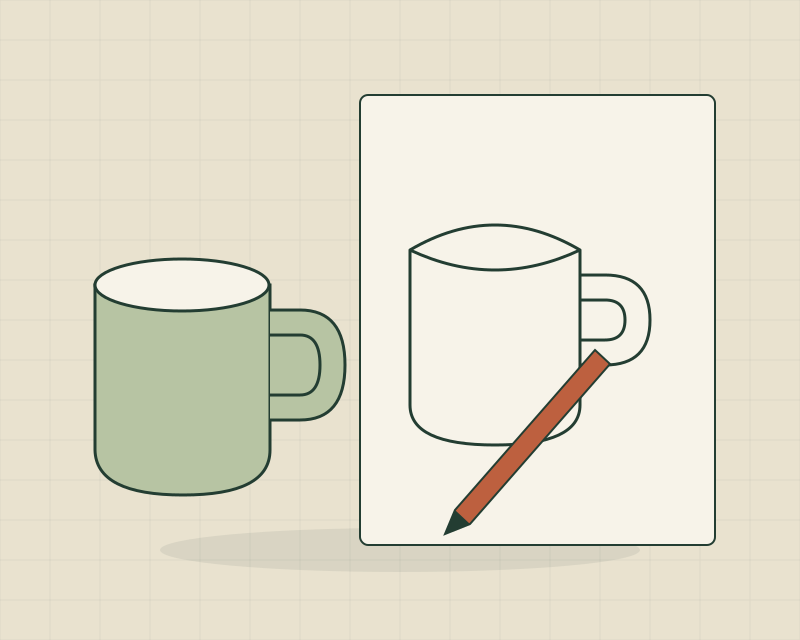
El dibujo de contornos relacionado sigue un objeto cercano desde posiciones distintas. Aquí comparamos un objeto celeste entre momentos y conservamos las condiciones de observación. Si una noche solo disfrutas de la vista, el ejercicio también puede terminar ahí.
A notebook for watching the Moon change
You need not identify every crater to begin watching the Moon. A circle, a date and a note about what you actually saw can pose a question: what changed since the previous observation?
Record date, time, general location and observed shape. Compare the illuminated portion across days and keep uncertainties instead of inventing a missed observation.
Begin with a brief observation
Choose somewhere comfortable for looking at the sky and draw a small circle on paper. If the Moon is visible, roughly mark the bright portion as you see it. This first exercise needs neither a precise drawing nor a telescope.
Write the date, local time, time zone and a general location reference. Avoid turning the notebook into a daily obligation: an incomplete observation can remain a question for another occasion.
Separate light and visible surface
NASA explains that moonlight is reflected sunlight and that the Sun illuminates one half of the Moon. Phases concern how much of that illuminated half we see as its orbital position changes. Darkness in a drawing does not mean surface has disappeared.
The US Naval Observatory distinguishes phases by shape and illuminated proportion. Waxing indicates an increasing visible illuminated fraction; waning indicates a decreasing one. Compare moments instead of relying only on which side looked bright.
Try a record with visible conditions
This is a proposed blank record, not a journal of observations made by the publication. You can copy it without publishing your exact location.
| Field | What to record | Purpose |
|---|---|---|
| Moment | Date, time and time zone | Order observations |
| Context | General place and horizon reference | Interpret orientation |
| Shape | Approximate drawing and bright portion | Compare what was seen |
| Conditions | Clouds, obstructions or incomplete visibility | Retain limits |
If a cloud covers part of the Moon, draw or describe that limitation separately. Do not mistake a passing cloud or building edge for the phase boundary.
Compare drawings before naming a phase
On another occasion, examine whether the bright portion covers more or less of the disk than before. Retain paper orientation too: rotating a drawing can change which side looks illuminated without changing the phase represented.
NASA’s Daily Moon Guide supplies a phase and illuminated-fraction reference to compare with your note. A complete phase cycle takes approximately 29.5 days; do not expect it always to match the same calendar dates.
Separate observation and reference lookup
Write “I saw roughly half a bright disk” as an observation and put the phase name found in a source on another line. If they seem inconsistent, inspect date, time and orientation before redrawing from memory.
This guide offers neither a city visibility forecast nor a phase assigned to tonight. Horizon, timing and local conditions require their own checks. Not finding the Moon during a quick look does not establish a new Moon.
Choose a question for next time
Follow one relationship: changing shape, location relative to the horizon or uncertainty left by the sketch. The notebook supports looking again rather than assembling a perfect phase collection in one week.
The related contour exercise follows a nearby object from different positions. Here we compare a celestial object over time and retain observing conditions. If you simply enjoy the view one night, the exercise can end there too.
记录月亮变化的观察本
开始看月亮,不必先认出每座陨石坑。一个圆、一条日期和一段实际所见的笔记,就足以提出问题:与上一次相比,什么改变了?
记录日期、时间、大致地点与形状,跨日比较明亮部分。没有看到的情况保留为空,不补造观察。
从短暂观察开始
找一处能舒适看天的位置,在纸上画一个小圆。如果月亮可见,按实际所见粗略标出明亮部分。这个入门练习不需要精确绘图,也不需要望远镜。
记录日期、当地时间、时区与大致地点参照。无需把观察本变成每日任务;一次不完整的观察,可以留作下次的问题。
区分光照与可见表面
NASA 说明月光是反射的太阳光,太阳照亮月球的一半。月球在轨道上的位置改变时,我们看见这受光一半的比例也改变,从而形成月相。图中暗处不表示月球表面消失。
美国海军天文台通过形状和受光比例区分月相。盈表示可见明亮比例增加,亏表示减少。应比较不同时间,而非只凭记忆判断哪一侧较亮。
尝试保留条件的记录表
下面是可复制的空白记录建议,不是本刊已经开展的观测日记。使用时无需公开精确位置。
| 项目 | 记录内容 | 用途 |
|---|---|---|
| 时刻 | 日期、时间与时区 | 排列观察顺序 |
| 环境 | 大致地点与地平参照 | 理解方向 |
| 形状 | 粗略绘图与明亮部分 | 比较所见 |
| 条件 | 云、遮挡或视野不完整 | 保留限制 |
如果云遮住一部分,另外画出或描述这个限制。不要把云或建筑物遮挡的边缘,当成月相明暗边界。
先比较,再命名月相
另一次观察时,看看明亮部分占据的圆面比例比以前多还是少。也保留纸张方向:转动图纸会改变看起来亮的是哪一侧,却不改变所表达的月相。
NASA 每日月亮指南提供月相与受光比例参考,可用于核对笔记。完整月相周期约为 29.5 天,因此不应期待总与日历中同样的日期对应。
把观察与查阅分开
“看到约半个明亮圆面”可以记作观察,查到的月相名称写在另一行。两者似乎不符时,先检查日期、时间与方向,不要凭记忆改画。
本文没有提供某城市的可见性预报,也没有指定今晚的月相。地平、时刻与本地条件需要单独核对。短暂抬头没找到月亮,并不能证明处于新月。
为下次保留一个问题
可以只关注一种关系:形状变化、相对地平的位置,或绘图留下的疑问。观察本让人愿意再看一次,而非要求一周内收齐完美月相。
相关轮廓练习从不同位置看近处物体;这里跨时刻比较天体,并保留观察条件。如果某晚只是欣赏景色,也可以就此结束练习。
Fuentes y método
- NASA · Moon phases ↗
- US Naval Observatory · Phases and percent illuminated ↗
- NASA · Daily Moon Guide ↗
Fuentes consultadas el 2 de noviembre de 2026. Los escenarios y cifras ilustrativos son ficticios. Ejercicios y fichas originales, sin resultados de clientes ni observaciones de campo atribuidos. Editorial standards · Disclosures.