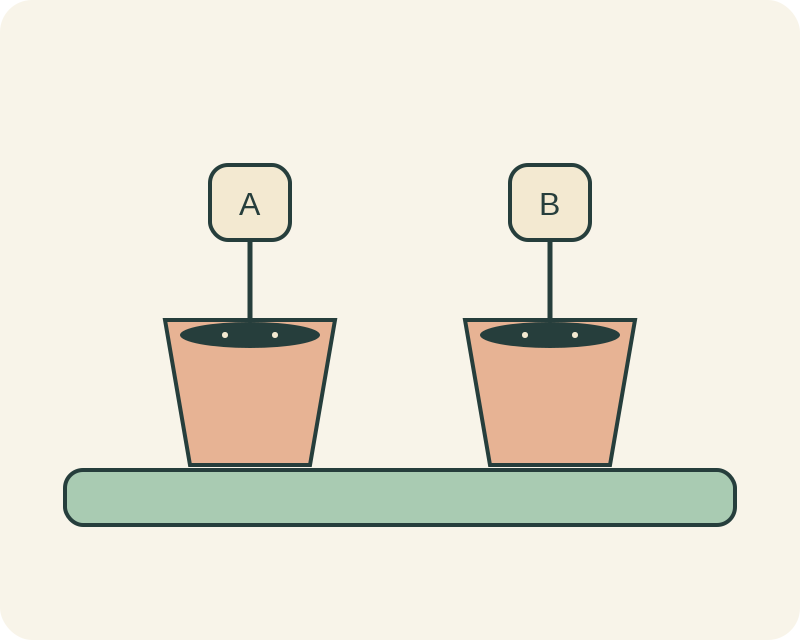
Choose seeds suited to your conditions, follow their instructions and label each container. Record observations without promising a fixed germination date.
Choose the seed and its conditions first
Read the packet before filling a pot: identify species and variety, sowing season, depth, light and temperature instructions. Some seeds need specific treatment or are better sown directly in their final position. If necessary information is missing, consult the supplier or a species guide before improvising.
RHS and Minnesota sources describe indoor growing in their own climates. Their calendars and window recommendations do not automatically apply to your location. Choose a species suited to the season and the light and space you can actually provide.
Prepare a small space and suitable containers
Gather clean containers with drainage, a tray to protect the table and suitable seed-starting medium. Add readable labels and a way to water gently. Before sowing, check where excess water will go and whether you can move everything without losing its references.
For this first activity, we suggest two containers of one variety. This is an organizational choice, not a quantity required for germination. Keep packet information nearby for reference without using the packet as a label exposed to water.
Follow the specific sowing instructions
Prepare and moisten the medium according to its instructions. Space the seeds and follow the depth appropriate to the species. Some need light to germinate; burying every seed by the same rule can be a mistake. Water gently to avoid moving seeds and allow excess water to drain.
If using a moisture-retaining cover, check the instructions and monitor conditions inside. RHS advises removing it when seedlings appear. Do not let the setup overheat in a sunny window without checking it.
Label each container as you finish it
Write the variety, date and a short reference before moving on, while you still recognize its contents. In this fictional example, A and B hold the same variety. It does not claim that sowing occurred or results were observed.
| Container | Label | First note |
|---|---|---|
| A | Chosen variety · sowing date · A | Depth and conditions copied from the packet |
| B | Chosen variety · sowing date · B | Same variety; separate reference |
You can sketch the arrangement and retain a photograph of the packet. A stable label makes the container understandable even when you move it.
Observe before adding water
Check moisture in the growing medium and conditions in the location according to the species’ needs. Maintain suitable moisture without waterlogging; a wet surface does not ensure the interior is right. Record the first visible shoot date, if one appears, and changes in location or care.
Do not turn the packet’s indicative time frame into a guaranteed date. If shoots do not appear, review the instructions and your record before attributing this to one cause. Two practice containers do not constitute a controlled trial.
Prepare the next stage of care
After emergence, seedlings need suitable growing conditions, including sufficient light. Consult the species guide for thinning, moving to larger containers and acclimatizing outdoors where appropriate. If you cannot yet provide those conditions, address that before sowing more.
Today’s activity can end with the label, record and a next observation. The related garden observation guide offers another way to look at established plants; this exercise begins with a small sowing and its initial care.
Follow the evidence.
Sources checked October 31, 2026. Illustrative cases, people, codes and numbers are fictional. These are original editorial proposals and exercises, without claiming actual server-log analysis, store tests, sowing or customer results. Our editorial standards.