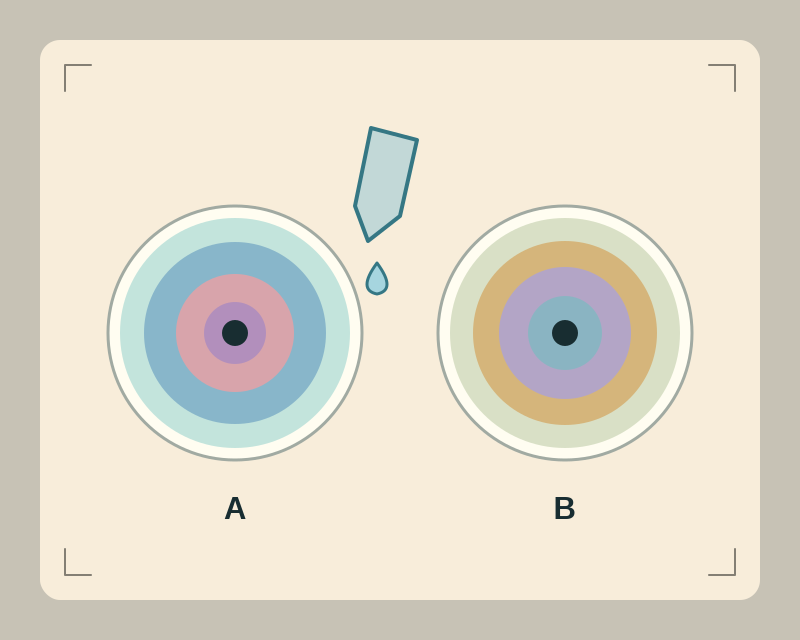
Prepara dos muestras por separado. Cambia el marcador y conserva papel, tamaño de punto y cantidad de agua para comparar lo observado.
Prepara materiales y una superficie protegida
Reúne dos marcadores negros lavables y solubles en agua, dos discos blancos de papel de filtro, un gotero, agua y dos tapas o platos de plástico. Etiqueta las muestras A y B con lápiz, cerca del borde. Protege la mesa de manchas. Usa los materiales según su etiqueta y lávate las manos al terminar; con niños, prepara la actividad con una persona adulta.
Haz dos puntos pequeños
Coloca cada filtro en su soporte y dibuja un punto pequeño en el centro con un marcador distinto. Procura que los puntos tengan un tamaño parecido. Anota qué marcador corresponde a cada letra y deja secar la marca antes de añadir agua. Un punto muy cargado puede formar una mancha difícil de comparar.
Añade agua sin sumergir la muestra
Deja caer una gota sobre cada punto y observa cómo se extiende. Añade el mismo número de gotas a ambas muestras, poco a poco, manteniendo las condiciones parecidas. Detente antes de inundar el soporte o alcanzar el borde. La actividad Mystery Markers de la American Chemical Society utiliza agua y papel para explorar esta separación de tintas.
Mira el recorrido y conserva la duda
El agua se desplaza por el papel por capilaridad. Los colorantes interactúan de manera diferente con el agua y el papel, por lo que pueden desplazarse y separarse en zonas. Quizá veas bandas azuladas, rojizas u otros tonos; no hay una secuencia universal. Que una muestra apenas se separe también es un resultado que conviene guardar.
Compara cuando estén secas
Fotografía o dibuja ambas muestras con sus etiquetas. Registra papel, marcador, gotas y lo que viste cambiar mientras avanzaba el agua. No identifiques una sustancia química solo por el color ni concluyas que dos tintas son idénticas porque se parecen. Puedes repetir con el mismo marcador para comprobar cuánto cambia el resultado antes de probar un tercero.
Two black markers and a little water: watch ink separate on paper
Two markers can draw a similar black and leave different color patterns as water moves through paper. Explore that difference with simple paper chromatography, using water-soluble markers without adding other solvents.
Prepare two samples separately. Change the marker while keeping paper, dot size and water quantity similar to compare observations.
Prepare materials and protect the surface
Gather two washable, water-soluble black markers, two white filter-paper disks, a dropper, water and two plastic lids or dishes. Label samples A and B in pencil near the edge. Protect the table from stains. Follow material labels and wash your hands afterward; prepare the activity with an adult when children participate.
Make two small dots
Place each filter on its support and draw a small central dot with a different marker. Aim for similar-sized dots. Record which marker matches each letter and let the mark dry before adding water. An overloaded dot can produce a blot that is hard to compare.
Add water without submerging the sample
Drop one drop onto each dot and watch it spread. Add the same number of drops to both samples gradually, keeping conditions similar. Stop before flooding the support or reaching the edge. The American Chemical Society's Mystery Markers activity uses water and paper to explore this ink separation.
Observe the path and preserve uncertainty
Water moves through the paper by capillary action. Dyes interact differently with water and paper, so they can travel and separate into zones. You might see bluish, reddish or other bands; there is no universal sequence. A sample that barely separates is also a result worth keeping.
Compare once dry
Photograph or draw both samples with their labels. Record paper, marker, drops and what changed as the water advanced. Do not identify a chemical substance solely by color or conclude that two inks are identical because they look similar. Repeat with the same marker to check how much the result varies before trying a third.
两支黑色水笔与一点水:观察墨水在纸上分离
两支水笔画出的黑色可能相近,但水在纸上移动时,留下的颜色图案却不同。可用水溶性笔进行简单纸色谱活动,不添加其他溶剂。
分别准备两份样品,只更换水笔,让纸张、墨点大小和水量尽量相同,再比较观察结果。
准备材料并保护桌面
准备两支可水洗的水溶性黑笔、两张白色圆形滤纸、滴管、水,以及两个塑料盖或塑料盘。用铅笔在纸边标 A、B。保护桌面避免染色,按材料标签使用,结束后洗手;儿童参与时,由成人一起准备活动。
画两个小点
把滤纸分别放在支撑物上,用不同水笔在中心画一个小点,尽量保持大小相近。记下字母对应的水笔,等墨迹干后再加水。墨点过浓可能形成难以比较的大墨团。
加水但不浸没样品
向每个墨点滴一滴水,观察扩散。缓慢给两份样品添加相同滴数,保持条件相近,在支撑物积水或水到达边缘前停止。美国化学会的 Mystery Markers 活动用水和纸探索这种墨水分离。
观察移动并保留疑问
水通过毛细作用在纸中移动。不同染料与水及纸的相互作用不同,因此可能移动并分成不同区域。也许会出现偏蓝、偏红或其他色带,没有通用的颜色次序。几乎不分离的样品也值得记录。
干燥后比较
连同标签拍照或画下两份样品,记录纸张、水笔、滴数及水移动时的变化。不能只凭颜色认定某种化学物质,也不能因外观相似就认定两种墨水相同。尝试第三支笔前,可先用同一支重复,看看结果本身有多大变化。
Fuentes y método
Fuentes consultadas el 20 de noviembre de 2026. Los casos y datos numéricos de los ejercicios son ficticios. Editorial standards · Disclosures.