Parte de una sola mezcla, añade agua en proporciones conocidas y compara las manchas secas antes de escoger tres para un dibujo.
Prepara el papel y la mezcla base
Traza cinco recuadros de unos tres centímetros en papel blanco de acuarela. Deja un borde sin pintar. El Metropolitan Museum of Art explica que la claridad del soporte contribuye al aspecto de los colores transparentes. Usa el mismo papel para toda la prueba y conserva ese borde para comparar.
Distribuye la mezcla con una medida común
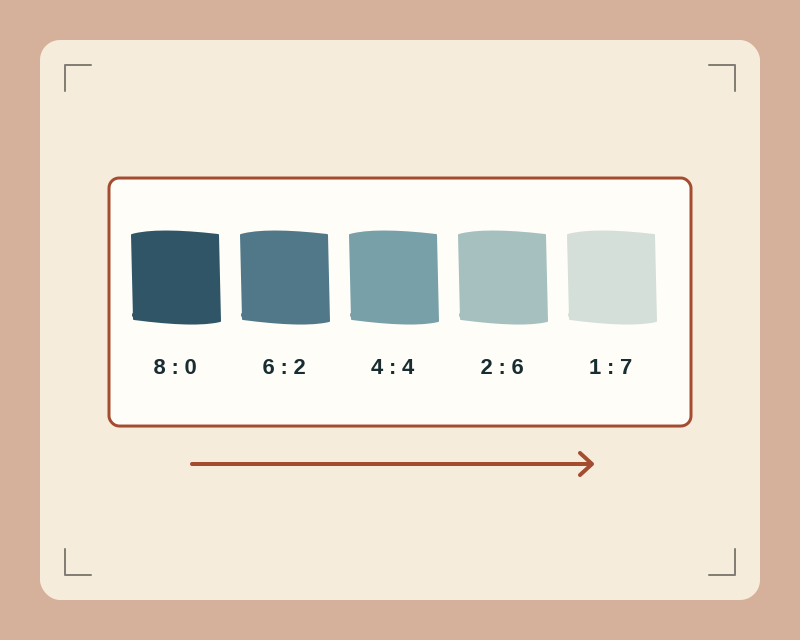
Prepara una mezcla base con agua y un solo pigmento. Remuévela y usa un gotero o la misma medida pequeña para todas las porciones. En cinco pocillos combina mezcla base y agua limpia en estas proporciones de ejemplo, respectivamente 8 y 0, 6 y 2, 4 y 4, 2 y 6, y 1 y 7. Cada pocillo suma ocho partes.
Pinta y espera
Usa el mismo pincel y una pasada por recuadro. Enjuaga y retira el exceso de agua entre muestras para reducir el arrastre de color. Deja secar en una superficie plana. Si una mancha tiene un borde oscuro o zonas más cargadas, registra dónde vas a compararla. El centro suele dar una lectura distinta del borde.
Ajusta los saltos que ves
Ordena las manchas secas de oscuro a claro y conserva sus etiquetas. Las proporciones regulares de mezcla pueden producir diferencias visuales irregulares. Si las dos últimas apenas se distinguen, prueba otra dilución entre dos muestras más separadas o elige una mezcla base distinta y vuelve a ensayar.
Haz una escena con tres valores
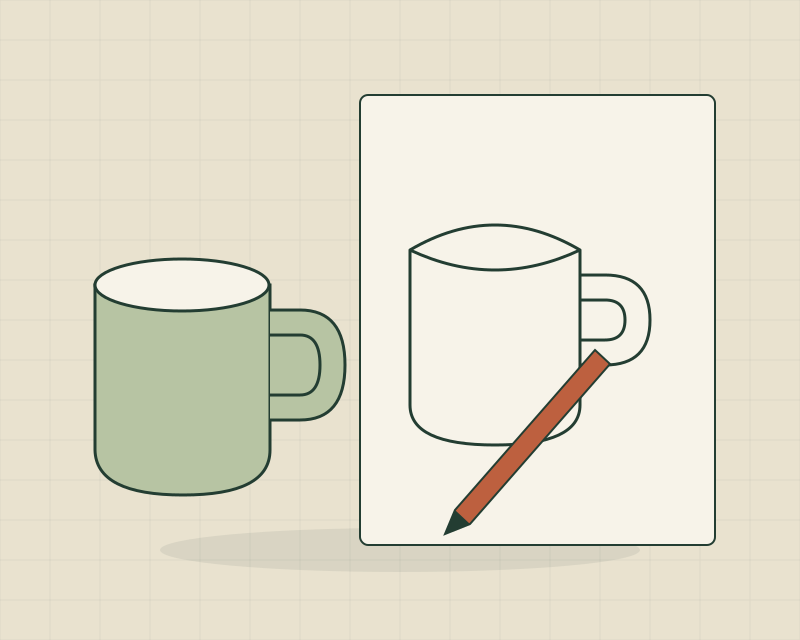
Dibuja el contorno de una taza. Deja un poco de blanco para la luz, pinta el cuerpo con un valor intermedio y coloca el más oscuro en una sombra. Guarda la tira junto al dibujo con el pigmento, papel y proporciones. Puedes volver a esas decisiones cuando quieras repetir el ejercicio.
Five watercolor swatches for practicing dark to light
One color can work for a sunlit wall and its shadow. Before painting the scene, a small strip lets you see which values the mixture produces on your paper.
Start with one mixture, add water in known proportions and compare the dried swatches before choosing three for a drawing.
Prepare the paper and base mixture
Draw five boxes about three centimeters wide on white watercolor paper. Leave a border unpainted. The Metropolitan Museum of Art explains that the brightness of the support contributes to the appearance of transparent colors. Use the same paper for the whole test and keep that border for comparison.
Divide the mixture using one measure
Make a base mixture with water and one pigment. Stir it and use a dropper or the same small measure for every portion. In five wells combine base mixture and clean water in these example ratios, respectively 8 and 0, 6 and 2, 4 and 4, 2 and 6, and 1 and 7. Each well totals eight parts.
Paint and wait
Use the same brush and make one pass per box. Rinse and remove excess water between swatches to reduce color carryover. Let the sheet dry flat. If a swatch has a dark edge or heavier patches, note where you will compare it. The center often reads differently from the edge.
Adjust the steps you see
Arrange the dried swatches from dark to light and keep their labels. Regular mixing proportions can produce uneven visual differences. If the last two barely differ, try another dilution between swatches farther apart or choose a different base mixture and test again.
Make a scene with three values
Draw the outline of a cup. Leave a little white for light, paint the body with a middle value and put the darkest value in a shadow. Keep the strip with the drawing and note pigment, paper and proportions. You can return to those choices when you want to repeat the exercise.
用五块水彩色样练习从深到浅
同一种颜色可以画受光的墙,也可以画它的阴影。动手画之前,先做一条小色卡,看看混合液在你的纸上能产生哪些明度。
从同一份母液开始,按已知比例加水。等色样干后再比较,然后挑三个明度来画一张小画。
准备纸和母液
在白色水彩纸上画五个约三厘米宽的方框,留下一圈不涂色的边。大都会艺术博物馆指出,底材本身的明亮程度有助于形成透明色彩的外观。整个练习用同一张纸,留着白边作对比。
用同一种量具分配混合液
用水和一种颜料调成母液。搅匀后,用滴管或同一个小量具取用。五个调色格中的母液与清水可依次用 8 比 0、6 比 2、4 比 4、2 比 6、1 比 7。每格总共八份。
画完等它干
用同一支笔,每格只涂一遍。换色样时冲洗画笔并去掉多余的水,减少带入前一格颜色。平放晾干。如果某块色样边缘很深或局部颜色更浓,记下要比较哪个位置。中央与边缘看起来常常不同。
调整看到的明度间隔
把干色样从深到浅排好,保留各自标签。混合比例变化得有规律,视觉差异也可能不均匀。如果最后两格几乎分不开,可以在差别较大的两格之间再试一种浓度,或者换一份母液重新试。
用三个明度画一张小画
画一只杯子的外形。留一些白作亮部,用中间明度画杯身,最深的用在阴影。把色卡与画放在一起,记下颜料、纸和比例。下次想重复练习时,可以找回这几个选择。
Fuentes y método
Fuentes consultadas el 12 de noviembre de 2026. Los casos y datos numéricos de los ejercicios son ficticios. Editorial standards · Disclosures.