Map participant relationships before interpreting network size. Registration, availability and a completed interaction are different facts.
Identify groups and the central interaction
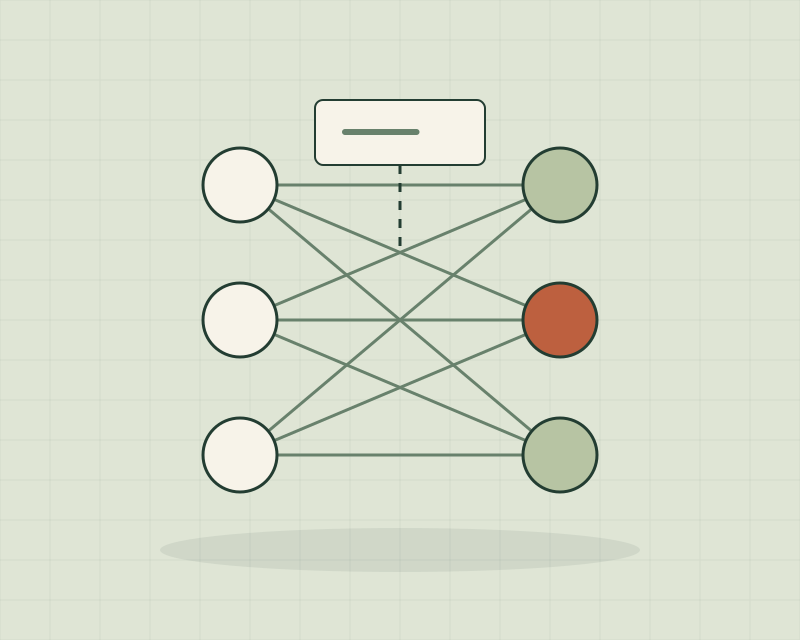
The OECD describes online platforms as services facilitating interactions between distinct, interdependent user groups. Its SME analysis distinguishes direct network effects involving the same group from indirect effects involving the other group. We use those concepts without presenting its historical company figures or examples as current.
Start with a concrete action: finding a class, receiving a reply and agreeing conditions, for example. Not every website with user accounts connects two market sides; an internal tool can serve another task.
Separate participants and operator in a fictional case
Imagine a local language class platform. Its two groups are teachers and people seeking to learn. The operator organizes the service; its table row identifies coordination work, rather than automatically making it a third user side.
| Actor | Need | Friction to review |
|---|---|---|
| Learners | A class fitting level and schedule | Profiles without current availability |
| Teachers | Requests matching their offer | Queries without level, time or format |
| Operator | A match that can continue | Outdated information and unowned steps |
The map describes neither a tested platform nor an existing commercial offer. It turns “connecting people” into an interaction that can be explained and reviewed.
Ask whom each new participant benefits
More teachers might broaden learners’ options if schedules, levels and formats fit. That is a possible cross-group effect. More people in the same group might support peer exchange while also competing for places or attention.
In this scenario, many profiles with morning availability do not themselves answer an evening class search. Total users hide that condition. Express the relationship as a hypothesis: which addition would improve which decision, and for whom. Then seek interaction evidence.
Examine who pays and for which action
Distinguish listing fees, subscriptions, transaction commissions or another revenue form. For a concrete proposal, ask when a charge arises, who bears it and what service each party receives. These are possible mechanisms, rather than verified provider prices.
One side paying no fee establishes neither zero operating costs nor usefulness for everyone. Review the work of maintaining data, handling problems and enabling continuity. Our circular models guide analyzes a different loop: physical object recovery.
Follow a match with its conditions
Choose an authorized path: someone finds an option, asks about availability and receives a reply. Record what was checked and what remains pending. Do not use an account’s creation as evidence that a class was agreed or delivered.
Our business evidence guide separates observation and outcome. The additional question here is whether the platform can coordinate needs across sides. One satisfactory interaction also does not establish that every network expansion adds the same value.
Evaluate the model with a map and an open question
Summarize groups, central interaction, matching conditions, payment mechanism and main friction. If work depends on the platform, review which information can be retrieved and which relationship can continue outside it under applicable conditions; our portable data guide helps prepare that check.
More users is a size observation, rather than a sufficient explanation of quality, profitability or permanence. Useful analysis shows who expects value from whom and what evidence is missing before claiming the network works.
Follow the evidence.
Sources checked October 23, 2026. Illustrative scenarios and numbers are fictional. The records and exercises are original editorial proposals, without attributed customer results or provider tests. Our editorial standards.