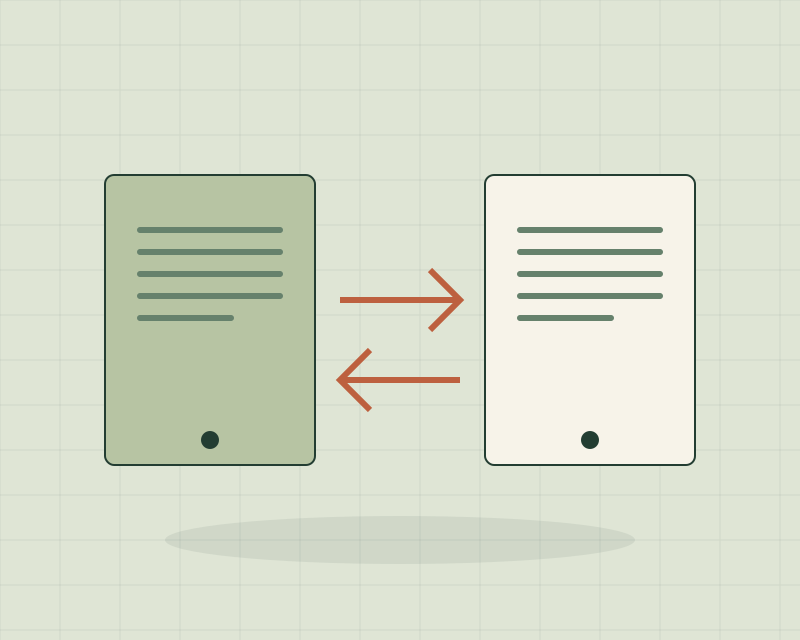
Test a representative sample in a separate environment. Downloading, understanding and importing a file are different states; document each before canceling a service.
Start with the work that depends on the tool
Describe what would stop if the service were unavailable tomorrow: consulting agreements, editing articles, receiving forms or finding files. Then identify the data, relationships, automations and access that support that work. An application list without dependencies does not explain what must be preserved.
The Government Digital Service’s technical-lock-in guidance considers exit effort against the value of remaining with a provider. It addresses UK public-sector cloud decisions; we use that question as context for a small continuity exercise, not a universal requirement or a recommendation to switch platforms.
Ask what export means in this product
Check the provider’s current documentation: format, information types, limits, permissions and compatible import tools. As one documented example, WordPress explains that its export screen creates an XML file with content and associated data for its import process. That supports a specific statement about this function, not every other product.
Do not assume exported text also preserves the design, integrations, permissions or behavior of your installation. Ask what this particular export includes and what needs a separate procedure. Keep the date and documentation link used to interpret the file.
Choose a sample that reveals relationships
In a fictional case, a studio stores projects in a tool. A useful sample includes a project with an owner, two related tasks, a file and a comment. Exporting a name alone demonstrates very little about continuing the work. Use fictional data or information you are authorized to handle.
Keep the original and work on a copy in a separate space. Record the project identifier and how relationships are represented. If an exported file contains only a download link, check whether its material will remain available after service access ends. Do not make destructive changes to complete the rehearsal.
Check four different states
- Downloaded: a readable file exists and its generation time is known.
- Understood: fields, units, references and omissions are identified.
- Imported: the destination accepts the sample and preserves required relationships.
- Usable: an authorized person can complete the agreed task.
Matching record counts do not prove the last state. A date may be interpreted differently, a task may lose its owner or an attachment may become inaccessible. Record problems and differences without turning a small rehearsal into a claim of complete compatibility.
Write an exit plan proportionate to the actual risk
Record who can export, where permitted material is kept, which parts need another procedure and who will verify the result. Add decision conditions: which change in availability, scope or service would justify reviewing alternatives? Preferring another interface has a different operational effect from losing access to essential information.
To understand a provider announcement, our business-news reading guide separates confirmed information from possible impact. This guide addresses the next step: testing one concrete dependency in your own work.
Decide with a test and an open-question list
The result may be staying and documenting the process better, asking the provider for clarification or preparing another test. You need not cancel a tool for the exercise to be useful. Before a real migration, confirm the full scope, responsible people and a recovery procedure appropriate to the system.
If the tool supports sales opportunities, our customer follow-up guide helps identify context and agreements worth preserving. To test a new workflow with explicit limits, see our validation guide. An available file is evidence of an export; continuity requires testing the work.
Follow the evidence.
- UK Government Digital Service · Managing technical lock-in in the cloud ↗
- WordPress.org · Tools Export screen ↗
Sources checked October 17, 2026. Examples are fictional and the working frameworks are original editorial proposals, not experiments, customer results or provider tests. Our editorial standards.

