Calcula el ritmo requerido en minutos por unidad y mídelo contra el ritmo observado. Si aparece una diferencia, identifica dónde se acumula antes de comprometer una fecha.
Fija el periodo y cuenta unidades comparables
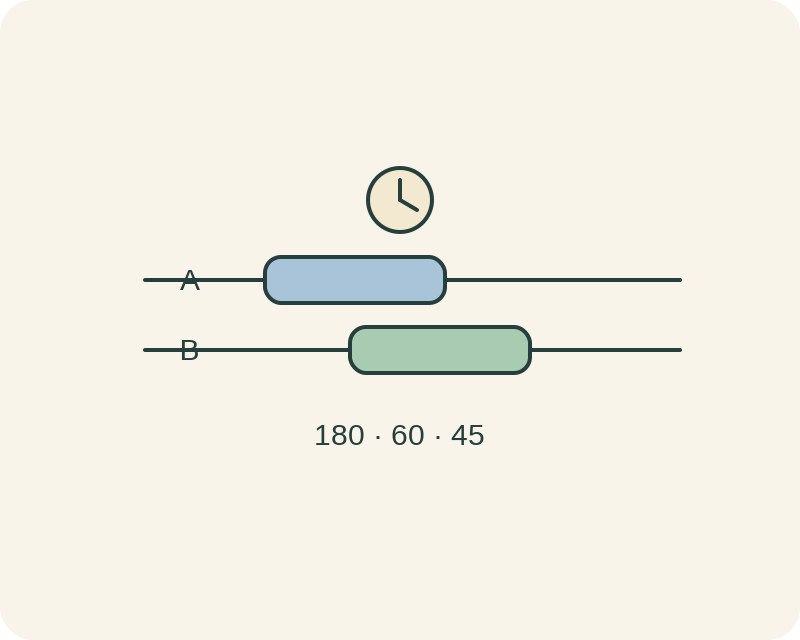
Usa la demanda de unidades aceptables que vencen en ese turno y los minutos disponibles para producirlas. El taller empieza con 480 minutos de turno y resta 60 de pausas programadas en las que no produce. Conserva los 420 minutos y 70 kits como entradas distintas. Anota por separado los paros imprevistos para saber cómo afectaron el ritmo real.
Calcula el objetivo
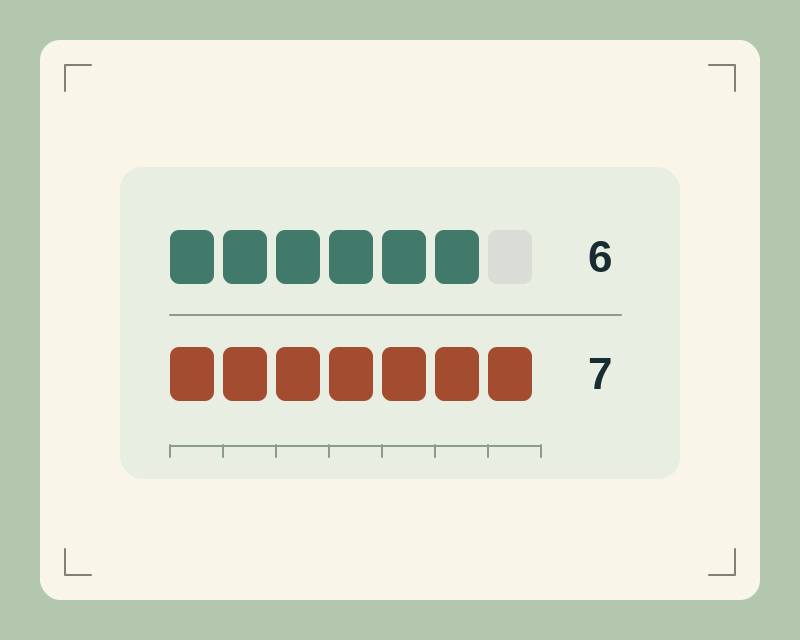
Divide 420 minutos entre 70 kits: el tiempo takt es de seis minutos por kit. Si el pedido sube a 84 y quedan los mismos 420 minutos, el ritmo exigido pasa a cinco minutos por kit. El cálculo expresa la cadencia necesaria; el taller aún tiene que comprobar si la puede sostener.
Mide la salida en condiciones normales
En el ejemplo, una única mesa de empaque entrega un kit aceptado cada siete minutos aproximadamente. Con esa cadencia y sin paros adicionales produciría unos 60 en 420 minutos; faltan diez. Registra varias salidas con su hora, los rechazos y la cola delante de esa mesa. Si hubiera dos mesas en paralelo, medirías la cadencia de salida conjunta.
Investiga la pérdida concreta
Observa si el empaque espera etiquetas, prepara material al cambiar de caja o repite verificaciones. Si los tiempos muestran que imprime etiquetas una a una, prueba prepararlas por lote sin omitir el control de correspondencia. Vuelve a medir unidades aceptadas y comprueba si la cola se movió a otra estación.
Actualiza antes de prometer
Deja escritos periodo, demanda, minutos, cadencia observada y próxima prueba. Calcula de nuevo cuando cambien volumen o tiempo. Si la brecha persiste, usa los datos para renegociar cantidades o fecha de entrega.
Takt time: find the pace a repeat order requires
A workshop assembles identical sample kits due at the end of a shift. It has people and machines available, but the team is unsure it can finish. The first question is concrete: how many minutes apart would accepted units have to come out to fill the order?
Calculate the required pace in minutes per unit and compare it with observed output. If there is a gap, find where it builds before committing to a date.
Set the period and count comparable units
Use the number of acceptable units due in that shift and the minutes available to make them. The workshop starts with a 480-minute shift and subtracts 60 minutes of planned breaks when no production takes place. Keep 420 minutes and 70 kits as separate inputs. Record unplanned stops separately to see how they affected the actual pace.
Calculate the target
Divide 420 minutes by 70 kits: takt time is six minutes per kit. If the order rises to 84 and the same 420 minutes are available, the required pace becomes five minutes per kit. The calculation gives the pace needed; the workshop still has to test whether it can sustain it.
Measure output under ordinary conditions
In the example, a single packing bench puts out one accepted kit roughly every seven minutes. At that pace and without further stops it would make about 60 in 420 minutes, ten short. Time several completions and record rejects and the queue ahead of that bench. If two benches worked in parallel, measure the rate of their combined output.
Investigate a specific loss
Watch whether packing waits for labels, prepares materials at box changes or repeats checks. If the timings show that labels are printed one at a time, try preparing them in batches while retaining the matching check. Measure accepted units again and see whether the queue moved to another station.
Update the numbers before making a promise
Write down the period, demand, minutes, observed pace and next test. Recalculate when volume or time changes. If the gap remains, use the findings to renegotiate quantities or the delivery date.
节拍时间:算出重复生产订单要求的速度
一家工坊组装同款样品套装,必须在下班前交货。设备和人员都已就位,但团队还不确定是否做得完。第一个问题很具体:要交足订单,平均每隔多少分钟就得产出一套合格品?
先算出每件产品允许占用的分钟数,再与实际的产出节奏比较。如果两者有差距,在承诺交付日期之前找出差距积累的位置。
明确时间范围,只统计可比较的单位
统计本班次到期的合格品需求量,以及可用于生产的分钟数。班次长 480 分钟,其中计划休息 60 分钟,期间不生产。把剩余的 420 分钟和 70 套需求分开记录。另记计划外停工,以便判断它对实际速度的影响。
算出所需节拍
420 分钟除以 70 套,节拍时间就是每套 6 分钟。如果需求增到 84 套,可用时间仍是 420 分钟,所需节拍就变成每套 5 分钟。这个数字表示交付需要达到的速度,工坊还要验证能否持续达到。
在正常条件下测量产出
本例只有一张包装台,大约每 7 分钟产出一套合格品。保持这个速度且没有额外停机,420 分钟约能做 60 套,比需求少 10 套。记录连续几套的完成时间、不合格品以及包装台前的积压。如果有两张包装台同时工作,就测量两张台合计的产出速度。
调查一项具体损耗
观察包装是因为等标签、换箱时备料,还是重复检查而变慢。如果计时显示标签逐张打印,可以试着成批准备,同时保留标签与套装的对应检查。重新统计合格品,再看看积压是否转移到了其他工位。
承诺之前更新数字
写下时间范围、需求量、可用分钟数、实测速率和下一项测试。数量或时间变了,就重新计算。如果差距依然存在,用测得的数据重新协商数量或交期。
Fuentes y método
Fuentes consultadas el 14 de noviembre de 2026. Los casos y datos numéricos de los ejercicios son ficticios. Editorial standards · Disclosures.