Describe una incertidumbre concreta, su posible efecto y quién revisará la respuesta. Mantén visibles los supuestos y la información que todavía falta.
Elige un objetivo que puedas reconocer
Empieza con una decisión y un horizonte: abrir una primera sesión de encuadernación para seis personas el próximo mes, por ejemplo. Ese caso es ficticio. Escribir la fecha, el alcance y la persona responsable permite preguntar qué incertidumbres podrían afectar esa sesión, sin convertir la ficha en una lista interminable de temores.
El Orange Book del gobierno británico define el riesgo en relación con la incertidumbre sobre objetivos y utiliza causas, eventos y consecuencias para expresarlo. Tomamos esa estructura conceptual para un ejercicio pequeño; no presentamos su marco gubernamental como una obligación para una microempresa.
Escribe la cadena completa
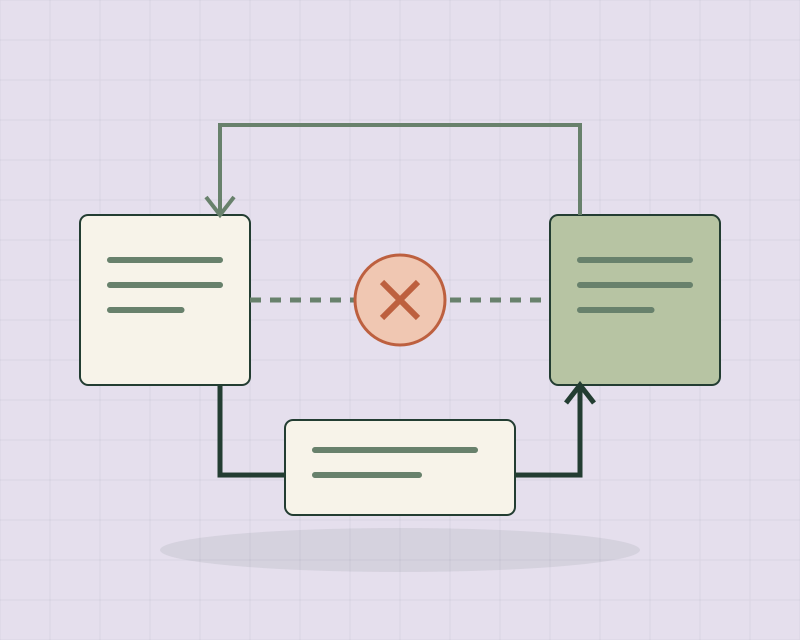
En el ejemplo, la causa sería depender de un material que aún no se ha confirmado; el evento posible, que ese material no esté disponible antes de la sesión; y la consecuencia, tener que cambiar el ejercicio anunciado. “Fracasar” deja demasiado espacio para interpretaciones. Una cadena específica permite investigar qué confirmación falta.
Evita redactar cada preocupación como una certeza. Si el proveedor ya confirmó que no entregará, registra ese hecho como un problema ocurrido y decide qué hacer ahora. La incertidumbre sobre una entrega futura y un incumplimiento confirmado requieren estados diferentes.
Añade contexto para decidir
Nuestra ficha propuesta añade evidencia disponible, respuesta, responsable, señal de revisión y fecha. La señal indica cuándo volver a mirar: por ejemplo, llegar al viernes previo sin confirmación escrita. No la confundas con una probabilidad medida. Si faltan datos, escribe desconocida y la acción para obtenerlos.
| Campo | Contenido del ejemplo |
|---|---|
| Objetivo | Realizar la primera sesión anunciada |
| Causa → evento → efecto | Material sin confirmar → falta antes de la sesión → cambio de ejercicio |
| Respuesta propuesta | Confirmar disponibilidad antes de abrir reservas |
| Responsable y revisión | Coordinación; revisar el viernes previo |
El viernes es un acuerdo del ejemplo, no un plazo recomendado para cualquier proyecto. Adapta la señal al tiempo que realmente necesitas para responder.
Propón una respuesta que tenga dueño
Para esta sesión, el equipo podría pedir la confirmación antes de anunciar la actividad o preparar un ejercicio alternativo y explicar sus condiciones. Compara el esfuerzo de cada opción con el objetivo. Una respuesta escrita sigue siendo una propuesta hasta que la persona responsable la acepta y se ejecuta.
Pregunta qué incertidumbre permanece después de esa acción. Confirmar un material no confirma asistencia, calidad del espacio ni preparación de quien imparte. Tampoco necesitas mezclar todas esas cuestiones en una sola fila: mantén cada cadena suficientemente clara para revisarla.
Ordena la atención sin inventar precisión
Si aparecen varias fichas, conversa sobre las consecuencias, la proximidad y la capacidad de responder. Conserva la razón de la prioridad elegida. Asignar 80% por intuición y multiplicarlo por un puntaje no crea evidencia; una descripción honesta de lo desconocido puede orientar mejor la siguiente consulta.
Una lista extensa no demuestra que el proyecto sea seguro ni completo. Para actividades que requieren revisión especializada, incorpora esa revisión dentro del trabajo necesario. Esta plantilla editorial no sustituye una evaluación técnica.
Revisa y conserva lo que cambió
Al llegar la fecha acordada, anota qué se confirmó, qué acción se completó y qué decisión queda abierta. Si cambia el objetivo o la fecha de la sesión, vuelve a leer la cadena: quizá su consecuencia ya no sea la misma.
Usa la guía relacionada de revisión semanal para coordinar decisiones de varias fichas. El resultado aquí es una preocupación que alguien puede comprender y revisar antes del evento, con sus límites visibles.
Before launch: write a risk as cause, event and consequence
“It might go wrong” expresses a concern but offers few clues for action. A short record helps explain what could happen, why and which objective it could affect before committing to a launch.
Describe a specific uncertainty, its potential effect and who will review the response. Keep assumptions and missing information visible.
Choose an objective you can recognize
Start with a decision and a time frame: opening a first bookbinding session for six people next month, for example. This is a fictional case. Writing down its date, scope and owner lets you ask which uncertainties could affect that session without turning the record into an endless list of fears.
The UK government’s Orange Book defines risk in relation to uncertainty about objectives and uses causes, events and consequences to express it. We borrow that conceptual structure for a small exercise; we do not present its government framework as a requirement for a microbusiness.
Write the whole chain
In this example, the cause would be reliance on an unconfirmed material; the possible event, that material being unavailable before the session; and the consequence, having to change the advertised exercise. “Failure” leaves too much room for interpretation. A specific chain identifies the missing confirmation to investigate.
Avoid writing every concern as a certainty. If the supplier has already confirmed that delivery will not happen, record an issue that has occurred and decide what to do now. Uncertainty about a future delivery and a confirmed failure need different statuses.
Add context for a decision
Our proposed record adds available evidence, response, owner, review trigger and date. A trigger says when to look again: reaching the preceding Friday without written confirmation, for example. Do not confuse it with a measured probability. Where data is missing, write unknown and how you will obtain it.
| Field | Example content |
|---|---|
| Objective | Hold the first advertised session |
| Cause → event → effect | Unconfirmed material → unavailable before session → change of exercise |
| Proposed response | Confirm availability before opening reservations |
| Owner and review | Coordinator; review on the preceding Friday |
Friday is an agreement in the example, not a recommended deadline for every project. Adapt the trigger to the time you actually need to respond.
Give the proposed response an owner
For this session, the team might request confirmation before advertising or prepare an alternative exercise and explain its conditions. Compare the effort of each option with the objective. A written response remains a proposal until its owner accepts it and the work is performed.
Ask which uncertainty remains after that action. Confirming material does not confirm attendance, venue quality or the instructor’s preparation. You need not combine all of these questions in one row: keep each chain clear enough to review.
Prioritize without inventing precision
With several records, discuss consequences, proximity and the ability to respond. Retain the reason for the chosen priority. Assigning an intuitive 80% and multiplying it by a score does not create evidence; an honest description of the unknown may better guide the next enquiry.
A long list does not establish that a project is safe or complete. For activities requiring specialist review, include that review in the necessary work. This editorial template does not replace a technical assessment.
Review and retain what changed
On the agreed date, record what was confirmed, which action was completed and which decision remains open. If the objective or session date changes, reread the chain: its consequence may have changed too.
Use the related weekly review guide to coordinate decisions across several records. The result here is a concern someone can understand and review before the event, with its limits visible.
启动之前:用原因、事件与后果写清一项风险
“可能出问题”表达了担忧,却没有提供多少行动线索。简短记录能在承诺启动前说明可能发生什么、为什么,以及哪个目标会受影响。
描述具体的不确定性、潜在影响及复查负责人,让假设与缺失信息保持可见。
选择能够辨认的目标
先明确决定与时间范围,例如下个月为六人举办首场装订体验课。这是虚构案例。写下日期、范围和负责人,就能讨论哪些不确定性可能影响这次活动,避免列出无穷无尽的担忧。
英国政府 Orange Book 把风险与目标所面临的不确定性联系起来,并用原因、事件和后果描述风险。本文借用这一概念结构做小练习,没有把政府框架当作微型企业的强制要求。
写出完整因果链
例子中的原因是依赖尚未确认的材料,潜在事件是材料在活动前无法获得,后果是必须更换已宣传的练习。“失败”留下太多解释空间;具体链条能指出需要调查哪项确认。
不要把每项担忧写成确定事实。如果供应商已经确认无法交付,就应记录已发生的问题,并决定眼下如何处理。未来交付的不确定性与已确认无法交付,需要不同状态。
补充做决定所需的背景
我们提出的记录包括现有证据、应对措施、负责人、复查触发条件和日期。触发条件说明何时再看,例如活动前的周五仍无书面确认。它不是测量所得的概率。缺少数据时,写明未知及获取办法。
| 字段 | 示例内容 |
|---|---|
| 目标 | 举办首场已宣传的活动 |
| 原因 → 事件 → 影响 | 材料未确认 → 活动前缺货 → 更换练习 |
| 拟议应对 | 开放预约前确认供应 |
| 负责人及复查 | 协调人;活动前周五复查 |
周五只是案例约定,不是所有项目的建议期限。触发条件应符合实际应对所需时间。
为应对措施明确负责人
团队可以在宣传前取得确认,或者准备替代练习并说明适用条件。把各选项的工作量与目标相比较。写下的措施仍是提议,直到负责人接受并实际执行。
继续追问行动后还有什么不确定性。确认材料并不能确认出席人数、场地质量或授课准备。也无需把这些问题全塞进一行;每条链应清楚到可以单独复查。
安排关注顺序,不制造精确感
出现多条记录时,讨论后果、临近程度和应对能力,并留下排序理由。凭直觉写 80% 再乘一个分数,并不会创造证据;坦诚说明未知,可能更有助于确定下一次询问。
长清单不能证明项目安全或完整。需要专业审查的活动,应把审查纳入必要工作。这份编辑模板不能替代技术评估。
复查并保留变化
在约定日期记录确认了什么、完成了什么、还有哪些决定未定。如果目标或活动日期改变,就重读链条,因为后果可能已经变化。
协调多条记录的决定时,可阅读相关每周业务复查指南。本文的成果是一项能在事件发生前被理解和复查的担忧,并保留明确边界。
Fuentes y método
Fuentes consultadas el 31 de octubre de 2026. Los casos, personas, códigos y cifras ilustrativos son ficticios. Son propuestas y ejercicios editoriales originales, sin atribuir registros de servidor, pruebas de tiendas, siembras ni resultados de clientes realizados. Editorial standards · Disclosures.