Divide los costos fijos del periodo entre la contribución de cada unidad. El resultado es un umbral del modelo; demanda, capacidad y cobros requieren comprobaciones propias.
Define qué cuenta como una unidad
En un estudio ficticio, una unidad es una revisión de catálogo con alcance y esfuerzo comparables. El periodo es un mes. Si un encargo añade producción fotográfica o varias revisiones, no lo cuentes como otra unidad idéntica sin ajustar los supuestos.
Escribe qué incluye el precio, qué trabajo exige y qué queda fuera. La guía para validar un primer servicio investiga interés y compra; este cálculo responde cuántas unidades cubrirían costos si se cumplen sus condiciones.
Separa costos fijos y variables sin omitir trabajo
Un costo fijo del modelo se mantiene dentro del intervalo de actividad considerado durante ese mes. Un costo variable aumenta con cada unidad. Revisa herramientas, materiales, colaboradores y tu propio trabajo: que una hora no se pague hoy por separado no la vuelve gratuita.
Clasifica cada concepto una sola vez y documenta cómo trataste la remuneración del responsable. Evita mezclar un gasto anual completo con ingresos de un mes sin una asignación explícita. Si atender más encargos requiere contratar capacidad adicional, el supuesto de costos fijos puede dejar de valer.
Calcula contribución y umbral
La SBA presenta el punto de equilibrio en unidades como costos fijos divididos entre precio unitario menos costo variable unitario. En nuestro ejemplo, las cantidades son unidades monetarias ficticias, sin impuestos ni financiación; el precio y los costos se mantienen constantes en el intervalo estudiado.
Costos fijos mensuales = 5,000
Precio por unidad = 700
Costo variable por unidad = 200
Contribución por unidad = 700 − 200 = 500
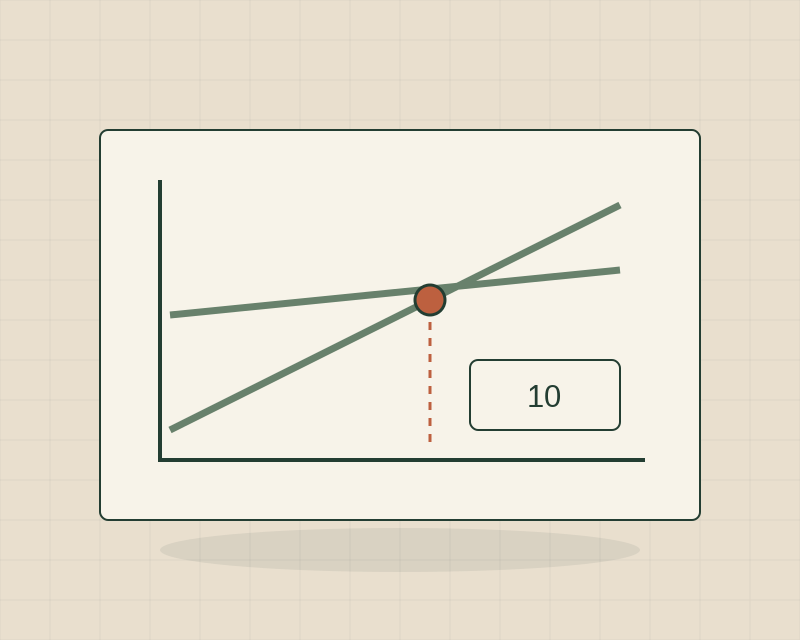
Punto de equilibrio = 5,000 / 500 = 10 unidades
La contribución de 500 sirve primero para cubrir los costos fijos. No es beneficio neto por venta. Si el precio fuera igual o menor al costo variable, este modelo no ofrecería un umbral positivo finito que cubra costos fijos positivos.
Comprueba el resultado con tres volúmenes
| Unidades | Ingresos | Costo total | Resultado del modelo |
|---|---|---|---|
| 8 | 5,600 | 6,600 | −1,000 |
| 10 | 7,000 | 7,000 | 0 |
| 12 | 8,400 | 7,400 | 1,000 |
Para ocho unidades, el costo total es 5,000 más 8 × 200. Para doce, es 5,000 más 12 × 200. La tabla muestra el resultado bajo estas hipótesis, no una previsión de ventas ni una promesa de rentabilidad.
Si un cálculo produce una fracción y solo puedes vender unidades completas, el mínimo para cubrir costos se redondea hacia arriba. Antes de utilizarlo, recalcula ingresos y costos en ese entero; no redondees el margen a conveniencia.
Contrasta el umbral con la operación real
- Demanda: ¿hay evidencia de que alguien contratará ese volumen al precio supuesto?
- Capacidad: ¿cuántas unidades completas pueden entregarse con los recursos disponibles?
- Cobro: ¿cuándo entra el dinero y qué pagos vencen antes?
- Mezcla: ¿estás combinando servicios con precios y costos distintos?
- Intervalo: ¿el volumen previsto obliga a cambiar estructura o herramientas?
Nuestra guía de capacidad ayuda a revisar la carga. Un umbral de diez no demuestra que puedan entregarse diez ni que se cobren dentro del mismo mes.
Conserva supuestos antes de cambiar el precio
Guarda una ficha con unidad, periodo, lista de costos, fuente de cada estimación, contribución y volumen calculado. Cambia un supuesto a la vez para entender su efecto y revisa después si sigue siendo viable el alcance ofrecido.
La revisión semanal del negocio permite volver a esos supuestos con evidencia. El cálculo es una herramienta de planificación limitada a los conceptos incluidos; no sustituye una evaluación contable completa ni demuestra que el negocio tenga efectivo suficiente.
A Service Break-Even Point: Unit, Costs and Period
Asking how many sales are needed has no useful answer when every sale means something different. Break-even analysis starts by defining a service unit, a period and the costs that belong to both.
Divide the period’s fixed costs by each unit’s contribution. The result is a threshold within the model; demand, capacity and collections need their own checks.
Define what counts as one unit
In a fictional studio, one unit is a catalog review with comparable scope and effort. The period is one month. If an assignment adds photography production or multiple revisions, do not count it as another identical unit without adjusting assumptions.
Write what the price includes, the work required and exclusions. Our first service validation guide investigates interest and purchasing; this calculation asks how many units would cover costs if its conditions hold.
Separate fixed and variable costs without omitting work
A fixed cost in the model remains unchanged within the activity range considered for that month. A variable cost increases with each unit. Review tools, materials, collaborators and your own work: an hour does not become free because it is not separately paid today.
Classify each item once and document how the owner’s compensation is treated. Avoid mixing an entire annual expense with one month’s revenue without an explicit allocation. If additional assignments require hiring more capacity, the fixed-cost assumption may stop holding.
Calculate contribution and threshold
The SBA presents break-even units as fixed costs divided by unit price minus unit variable cost. In our example, amounts are fictional monetary units, excluding taxes and financing; price and costs remain constant within the range studied.
Monthly fixed costs = 5,000
Unit price = 700
Unit variable cost = 200
Unit contribution = 700 − 200 = 500
Break-even point = 5,000 / 500 = 10 units
The contribution of 500 first goes toward fixed costs. It is not net profit per sale. If price equaled or fell below variable cost, this model would provide no finite positive threshold that covers positive fixed costs.
Check the result at three volumes
| Units | Revenue | Total cost | Model result |
|---|---|---|---|
| 8 | 5,600 | 6,600 | −1,000 |
| 10 | 7,000 | 7,000 | 0 |
| 12 | 8,400 | 7,400 | 1,000 |
For eight units, total cost is 5,000 plus 8 × 200. For twelve, it is 5,000 plus 12 × 200. The table shows the result under these assumptions, rather than a sales forecast or profitability promise.
If a calculation produces a fraction and you can only sell complete units, round the minimum needed to cover costs upward. Before using it, recalculate revenue and costs at that whole number; do not round the margin to suit a preference.
Compare the threshold with actual operations
- Demand: is there evidence that someone will purchase that volume at the assumed price?
- Capacity: how many complete units can available resources deliver?
- Collections: when does money arrive, and which payments fall due first?
- Mix: are you combining services with different prices and costs?
- Range: does the expected volume require a change in structure or tools?
Our capacity guide helps review workload. A threshold of ten establishes neither the ability to deliver ten nor collection within the same month.
Retain assumptions before changing a price
Keep a record of unit, period, cost list, source of each estimate, contribution and calculated volume. Change one assumption at a time to understand its effect, then review whether the offered scope remains feasible.
Our weekly business review helps revisit those assumptions with evidence. The calculation is a planning tool limited to included items; it neither replaces a complete accounting assessment nor establishes that the business has enough cash.
服务盈亏平衡点:先明确单位、成本和期间
每笔销售含义不同,问需要多少单就没有实用答案。盈亏平衡分析应先定义一个服务单位、一个期间,以及对应的成本。
用期间固定成本除以每单位贡献,得到模型中的门槛。需求、交付能力和收款仍需分别核对。
定义怎样算一个单位
在一家虚构工作室,一个单位是范围和投入相近的一次目录审核,期间为一个月。某项委托若增加摄影制作或多轮修改,就不能不改假设,仍把它算作相同单位。
写明价格包含什么、需要哪些工作、排除什么。本站首项服务验证指南研究兴趣与购买;这里计算的是条件成立时,多少单位能够覆盖成本。
区分固定与变动成本,不漏掉劳动
模型中的固定成本,是该月所考虑业务量区间内保持不变的成本。变动成本随每单位增加。检查工具、材料、协作者和自己的劳动;某小时今天没有单独付费,并不意味着它免费。
每项只分类一次,并说明如何处理负责人的报酬。不要没有明确分配,就把整年支出与单月收入混用。如果增加订单需要新增人员或能力,固定成本假设可能不再成立。
计算单位贡献与门槛
美国小企业管理局将按单位计算的盈亏平衡点表示为:固定成本除以单位售价减单位变动成本。本例金额均为虚构货币单位,不含税费及融资;在研究区间内价格和成本保持不变。
每月固定成本 = 5,000
单位售价 = 700
单位变动成本 = 200
单位贡献 = 700 − 200 = 500
盈亏平衡点 = 5,000 / 500 = 10 个单位
500 的贡献首先用于覆盖固定成本,不是每单净利润。若售价等于或低于变动成本,在固定成本为正时,此模型没有能够覆盖它的有限正数门槛。
用三种业务量核对结果
| 单位数 | 收入 | 总成本 | 模型结果 |
|---|---|---|---|
| 8 | 5,600 | 6,600 | −1,000 |
| 10 | 7,000 | 7,000 | 0 |
| 12 | 8,400 | 7,400 | 1,000 |
八个单位的总成本为 5,000 加 8 × 200;十二个单位为 5,000 加 12 × 200。表格显示这些假设下的结果,不是销量预测或盈利承诺。
结果若有小数,而服务只能按完整单位出售,覆盖成本所需的最少数量应向上取整。使用前,在该整数处重算收入与成本,不要为了理想结果随意舍入贡献。
把门槛与实际运营对照
- 需求:是否有证据表明客户会按假设价格购买该数量?
- 产能:现有资源能完成多少个完整单位?
- 收款:资金何时到账,哪些付款先到期?
- 组合:是否混合了售价和成本不同的服务?
- 区间:预期数量是否要求改变结构或工具?
本站服务产能指南帮助检查工作负荷。门槛为十,不能证明能交付十单,也不能证明同月收齐款项。
调价前保留假设
保留一张记录,包含单位、期间、成本清单、每项估计来源、单位贡献和计算数量。一次改变一个假设来理解影响,再检查所提供范围是否仍可执行。
本站每周业务复盘帮助结合证据重新检查假设。此计算是仅覆盖已纳入项目的规划工具,不能代替完整会计评估,也不能证明现金充足。
Fuentes y método
Fuentes consultadas el 21 de octubre de 2026. Los escenarios y cifras ilustrativos son ficticios. Las fichas y ejercicios son propuestas editoriales originales, sin resultados de clientes ni pruebas de proveedores atribuidos. Editorial standards · Disclosures.