State which units receive each rate and reconstruct the total separately; a tier’s name does not explain the rule.
Fix the table and assumptions
The fictional exercise uses identical units: 1 through 10 cost 100 per unit; 11 through 20 cost 80. These are invented monetary units. The model has no flat fee, taxes, additional minimums or other discounts.
We define an integer quantity within that range. A real quote also needs period, currency, scope and unit definition. Do not extend the exercise to zero or more than twenty without knowing the corresponding rule.
Apply the volume rule
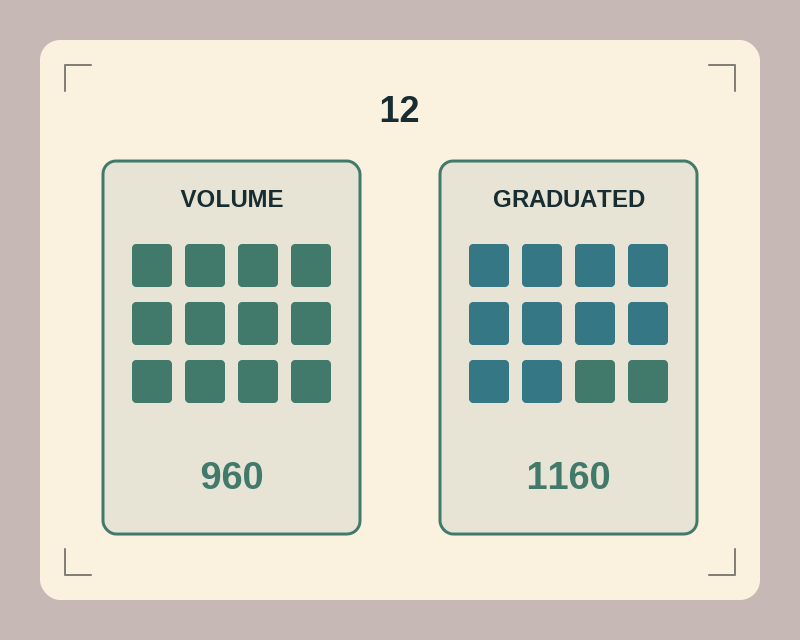
With volume pricing, final quantity selects a tier whose rate applies to every unit. Twelve selects 80: 12 × 80 = 960. The first ten do not retain the 100 rate under this rule.
Stripe documents this model as volume-based pricing. Here it helps interpret a quote without configuring a product or claiming these are the provider’s prices. The clarifying sentence would be: “When buying twelve, each of the twelve units is calculated at 80.”
Calculate the graduated rule
Under graduated pricing, each block retains its rate. The first ten units cost 10 × 100 = 1000; the next two cost 2 × 80 = 160. Total: 1160. The lower rate does not apply retroactively to the earlier block.
Stripe calls this distinction graduated pricing. For twelve units, the difference from volume pricing is 1160 − 960 = 200. The graduated average is 1160 / 12, approximately 96.67; that is not a new second-tier rate.
Check neighboring quantities at the boundary
At ten units, both models produce 1000. At eleven, volume pricing produces 11 × 80 = 880, while graduated pricing produces 1000 + 80 = 1080. This table can produce a lower volume total across the threshold because every unit’s price changes.
Do not treat it as a savings promise for a real offer. Other conditions or a differently designed table may apply. Ask for totals on both sides of the boundary and retain the answer before interpreting an advertised discount.
Keep the formula inside the proposal
Record quantity, inclusive limits, block rates, chosen rule, subtotals and total. A readable commercial explanation can accompany the table without making customers guess what “per tier” means.
If quantity changes, recalculate using the same conditions version. Arithmetic clarifies the model’s amount; a purchase decision also requires confirmed need, scope and terms. Nor does a calculated total establish an issued invoice or completed payment.
Follow the evidence.
Sources checked November 24, 2026. The exercise scenarios and figures are fictional. Our editorial standards.