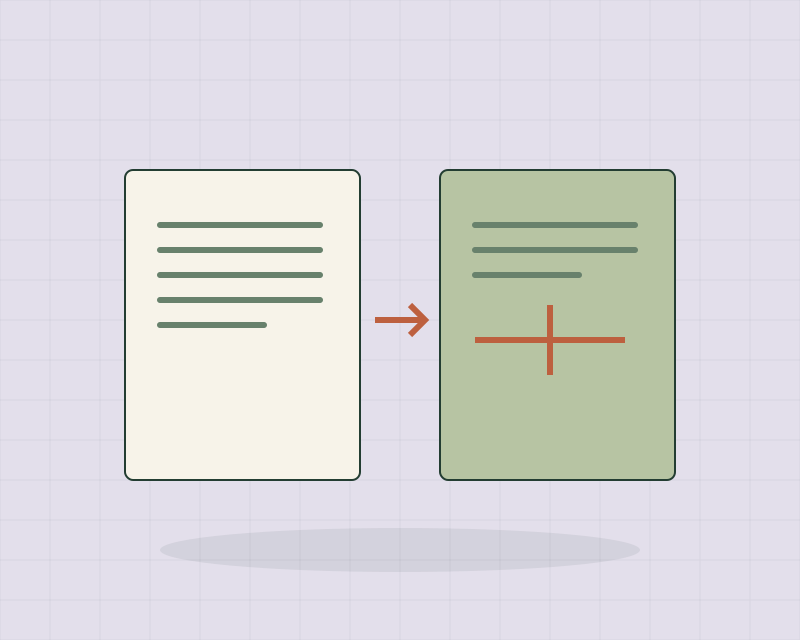
Clarify the concern with permission and offer only feasible alternatives. Changed scope or conditions need a new version the customer can accept or decline.
Hear the statement without assigning a motive
A Salesforce template includes limited budget among objection-handling cases. We use it as a conversation starting point without claiming to know each customer’s thoughts. A financial constraint may be exactly what the person reports.
Acknowledge the condition before defending the offer: “Thank you for clarifying. If useful, we can review which part does not fit.” A decision not to continue also closes the conversation; refusal is no permission to keep insisting.
Ask what needs reviewing
- Is there a budget limit worth knowing?
- Is the comparison based on the same scope?
- Are some deliverables unnecessary now?
- Is the concern amount, timing or an unresolved condition?
These are proposed questions rather than a mandatory interrogation. Choose one suited to the statement and allow people to withhold internal information. Do not label the problem as value before knowing whether the constraint is budget.
Try a dialogue with a concrete difference
A fictional studio proposes eight product records. The customer says the amount exceeds available funds. The studio asks whether all eight are needed for the first use. Four would suffice for that initial stage.
An original response could be: “We can assess an initial four-record stage and exclude the others from this proposal. I need to review shared preparation and scheduling before sending new conditions.” Halving the records need not halve the price: shared setup may remain.
Explain what each alternative changes
| Option | Required check | Avoid assuming |
|---|---|---|
| Keep scope | Relevant need and acceptable conditions | Explanation removes the constraint |
| Prepare a smaller stage | Revised deliverables, dependencies and price | An identical fraction of cost |
| Postpone or close | Whether the person wants another time or an end | A pause permits indefinite contact |
Do not present an unevaluated alternative as a commitment. A package comparison explains published options; here you respond to one specific conversational concern.
Review the offer as a whole
A new proposed condition should identify deliverables, exclusions, customer inputs, schedule and price. Check feasibility. Discounting a total without reviewing dependencies can leave the same promise with insufficient resources.
A change record maintains agreements during work. This negotiation may precede acceptance: keep the alternative proposed and seek an explicit decision through the agreed channel.
Close with a voluntary next step
Summarize the clarified condition, what you will review and unresolved agreement. Send a revised offer, clarify a question or close without a new proposal. Our follow-up guide helps resume only an appropriate step.
This example dialogue was neither conducted nor measured. Clarification supports an informed decision without guaranteeing a sale, satisfaction or profit. It justifies no invented urgency, availability or outcomes to obtain an answer.
Follow the evidence.
Sources checked October 26, 2026. Illustrative scenarios and numbers are fictional. The records and exercises are original editorial proposals, without attributed customer results or provider tests. Our editorial standards.