Escribe qué unidades reciben cada tarifa y reconstruye el total por separado; el nombre del tramo no basta para explicar la regla.
Fija una tabla y sus supuestos
El ejercicio ficticio usa unidades idénticas: de 1 a 10, tarifa de 100 por unidad; de 11 a 20, tarifa de 80. Los importes son unidades monetarias inventadas. No hay cuota fija, impuestos, mínimos adicionales ni otros descuentos en el modelo.
Definimos una cantidad entera dentro de ese intervalo. Una cotización real necesita además periodo, moneda, alcance y definición de unidad. No extiendas el ejemplo a cero o a más de veinte sin conocer la regla correspondiente.
Aplica la regla por volumen
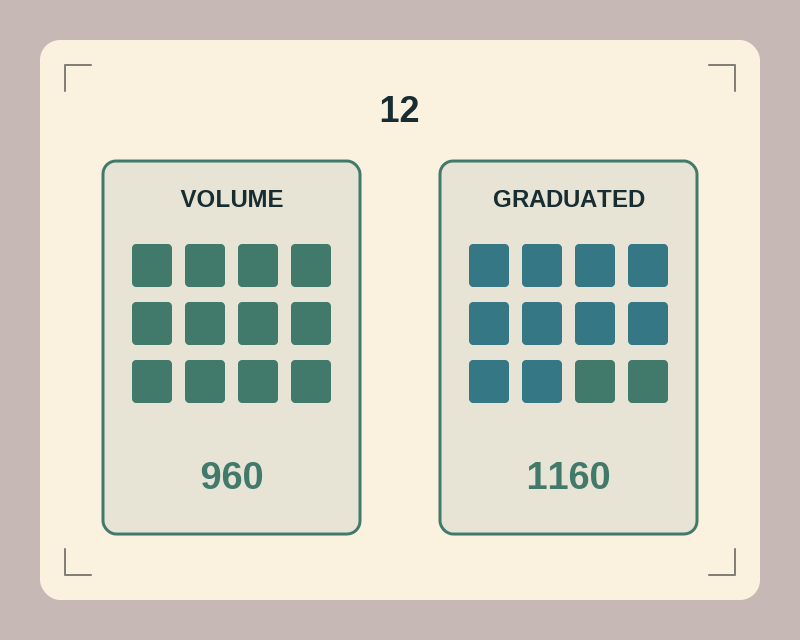
Con precio por volumen, la cantidad final selecciona un tramo y su tarifa se aplica a todas las unidades. Para doce, se utiliza 80: 12 × 80 = 960. Las primeras diez no conservan la tarifa de 100 dentro de esta regla.
Stripe documenta este modelo como volume-based pricing. Aquí lo usamos para entender una cotización, sin configurar un producto ni afirmar que estos sean precios del proveedor. La frase aclaratoria del ejemplo sería: «Al comprar doce, cada una de las doce unidades se calcula a 80».
Calcula la regla escalonada
En el modelo escalonado, cada bloque conserva su tarifa. Las primeras diez unidades cuestan 10 × 100 = 1000; las dos siguientes, 2 × 80 = 160. El total es 1160. La tarifa menor no se aplica retroactivamente al bloque anterior.
Esta es la distinción que Stripe denomina graduated pricing. Para doce unidades, la diferencia respecto del volumen es 1160 − 960 = 200. El precio medio escalonado sería 1160 / 12, aproximadamente 96,67; no es una nueva tarifa del segundo tramo.
Comprueba la frontera con cantidades vecinas
A diez unidades, ambos modelos dan 1000. A once, volumen da 11 × 80 = 880, mientras escalonado da 1000 + 80 = 1080. La caída del total por volumen al cruzar el umbral es posible con esta tabla, porque cambia el precio de todas las unidades.
No lo tomes como una promesa de ahorro en una oferta real. Puede haber otras condiciones o una tabla diseñada de otra manera. Pregunta por el total de ambos lados del límite y conserva la respuesta antes de interpretar un descuento anunciado.
Deja la fórmula dentro de la propuesta
Registra cantidad, límites inclusivos, tarifa de cada bloque, regla elegida, subtotales y total. Una explicación comercial legible puede acompañar la tabla sin obligar al cliente a adivinar qué significa «por tramo».
Si cambia la cantidad, vuelve a calcular con la misma versión de condiciones. La aritmética aclara qué importe produce el modelo; decidir una compra requiere además necesidad, alcance y condiciones confirmadas. Tampoco un total calculado demuestra factura emitida o pago realizado.
Volume or graduated pricing: the same threshold can produce two quotes
A table showing “1 to 10” and “11 to 20” leaves a question unanswered: at twelve, does the price change for every unit or only the two additional ones? The answer changes the total even when the table shows identical rates.
State which units receive each rate and reconstruct the total separately; a tier’s name does not explain the rule.
Fix the table and assumptions
The fictional exercise uses identical units: 1 through 10 cost 100 per unit; 11 through 20 cost 80. These are invented monetary units. The model has no flat fee, taxes, additional minimums or other discounts.
We define an integer quantity within that range. A real quote also needs period, currency, scope and unit definition. Do not extend the exercise to zero or more than twenty without knowing the corresponding rule.
Apply the volume rule
With volume pricing, final quantity selects a tier whose rate applies to every unit. Twelve selects 80: 12 × 80 = 960. The first ten do not retain the 100 rate under this rule.
Stripe documents this model as volume-based pricing. Here it helps interpret a quote without configuring a product or claiming these are the provider’s prices. The clarifying sentence would be: “When buying twelve, each of the twelve units is calculated at 80.”
Calculate the graduated rule
Under graduated pricing, each block retains its rate. The first ten units cost 10 × 100 = 1000; the next two cost 2 × 80 = 160. Total: 1160. The lower rate does not apply retroactively to the earlier block.
Stripe calls this distinction graduated pricing. For twelve units, the difference from volume pricing is 1160 − 960 = 200. The graduated average is 1160 / 12, approximately 96.67; that is not a new second-tier rate.
Check neighboring quantities at the boundary
At ten units, both models produce 1000. At eleven, volume pricing produces 11 × 80 = 880, while graduated pricing produces 1000 + 80 = 1080. This table can produce a lower volume total across the threshold because every unit’s price changes.
Do not treat it as a savings promise for a real offer. Other conditions or a differently designed table may apply. Ask for totals on both sides of the boundary and retain the answer before interpreting an advertised discount.
Keep the formula inside the proposal
Record quantity, inclusive limits, block rates, chosen rule, subtotals and total. A readable commercial explanation can accompany the table without making customers guess what “per tier” means.
If quantity changes, recalculate using the same conditions version. Arithmetic clarifies the model’s amount; a purchase decision also requires confirmed need, scope and terms. Nor does a calculated total establish an issued invoice or completed payment.
总量定价与阶梯定价:同一门槛可以算出两份报价
表格写着“1 至 10”和“11 至 20”,仍留下一个问题:数量到十二时,是全部单位改价,还是只有新增两单位改价?即使档位单价相同,答案也会改变总额。
写清哪些单位采用哪项费率,再分别重建总额;档位名称不能代替计算规则。
固定表格与假设
虚构练习采用相同单位:第 1 至 10 单位每个 100,第 11 至 20 单位每个 80。金额使用虚构货币单位,不含固定费、税、额外最低收费或其他折扣。
数量定义为该范围内的整数。实际报价还需要期间、货币、服务范围与单位定义。没有对应规则时,不要推广到零或二十以上。
应用总量规则
总量定价由最终数量选择档位,选中单价应用于全部单位。十二单位选中 80,因此 12 × 80 = 960。在这条规则下,前十个不会保留 100 的单价。
Stripe 将此模式称为 volume-based pricing。本文只借此理解报价,不配置产品,也不声称这些是供应商实际价格。清楚说明可以写为:“购买十二个时,十二个全部按每个 80 计算。”
计算阶梯规则
阶梯定价保留每个区间的单价。前十个为 10 × 100 = 1000,后两个为 2 × 80 = 160,合计 1160。较低单价不会追溯应用于之前的区间。
Stripe 将这种方式称为 graduated pricing。十二单位时,两种计算相差 1160 − 960 = 200。阶梯平均单价为 1160 / 12,约 96.67,但这不是第二档的新费率。
检查门槛两侧的数量
十单位时,两种规则都是 1000。十一单位时,总量计算为 11 × 80 = 880,阶梯计算为 1000 + 80 = 1080。这张表跨过门槛后,总量总额可能下降,因为全部单位单价都改变了。
不能把它当作实际优惠的节省承诺。真实报价可能有其他条件,或采用不同表格。解读折扣宣传之前,应询问门槛两侧总额并保留答复。
把公式保留在提案中
记录数量、包含端点的界限、各区间单价、选定规则、小计与总额。表格旁的易读解释,可以避免让客户猜测“按档位”的意思。
数量变化时,使用同一版本条件重算。算术说明模型产生什么金额,购买决定还需要已确认的需求、范围和条款。算出总额,也不等于已经开票或付款。
Fuentes y método
Fuentes consultadas el 24 de noviembre de 2026. Los casos y datos numéricos de los ejercicios son ficticios. Editorial standards · Disclosures.