Compare equivalent units and hours worked for the same period. Read the ratio alongside both quantities before explaining the change.
Define what leaves the shop and which hours count
The US Bureau of Labor Statistics describes labor productivity as real output per hour worked. To practice with one product, the shop counts finished boxes that pass the same check. Record the hours of everyone included in the process and use the same criterion for both weeks.
Calculate both weeks
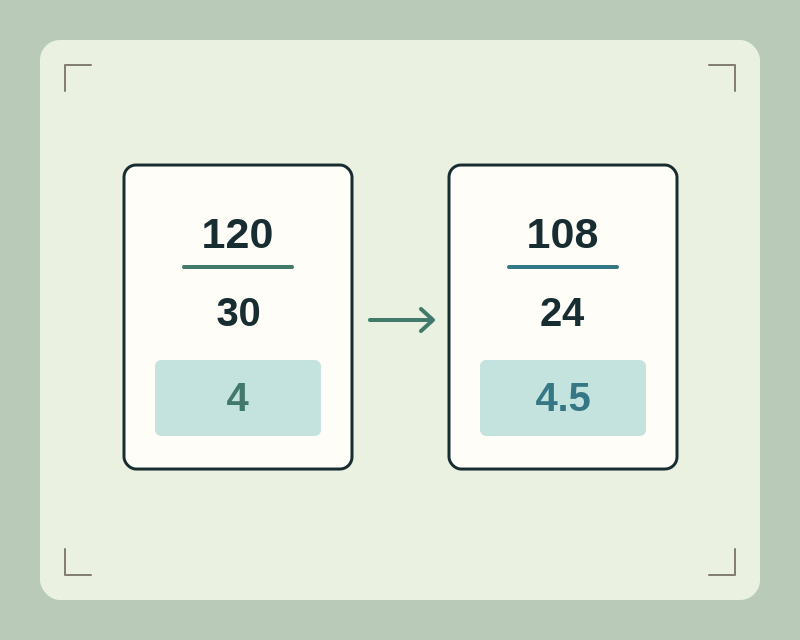
The first week yields 120 boxes in 30 work hours, or 4 boxes per hour. The second yields 108 in 24 hours, or 4.5 boxes per hour. Output fell 10%, hours fell 20% and output per hour rose 12.5%.
Check the unit when the work changes
If the second week includes simpler boxes, keep that difference before attributing the change to a method. Look for comparable boxes and see what happens under the same quality check. If the company measures many products, review how it builds a common output measure.
Look at what changed besides hours
BLS documentation explains that machinery, experience, processes and other factors can affect labor productivity. In the example, both ratios describe what happened. If someone attributes the change to a new tool, look at when it was used and for which jobs.
Write a conclusion that can be recalculated
A note might read “We made 108 boxes in 24 hours, compared with 120 in 30. The shop made fewer boxes and went from 4 to 4.5 per hour.” For a bulletin, record the sector, output definition, hours, period and whether the rate is annualized.
Follow the evidence.
- U.S. Bureau of Labor Statistics · What is labor productivity? ↗
- U.S. Bureau of Labor Statistics · Productivity overview ↗
Sources checked November 13, 2026. The exercise scenarios and figures are fictional. Our editorial standards.