Divide the local industry share by the share of the same industry in the reference area. Keep the four counts, period and coverage when explaining the result.
Define the industry, geography and measure
The US Bureau of Labor Statistics QCEW program publishes location quotients and explains how it uses the country as the reference area. In its employment example, it first calculates the industry’s share of total employment in each geography. It then divides those shares.
Before calculating, align the period, industry classification and coverage. If the numerator includes private employment only and the denominator covers all ownership types, keep that definition in both areas.
Calculate the local and reference shares
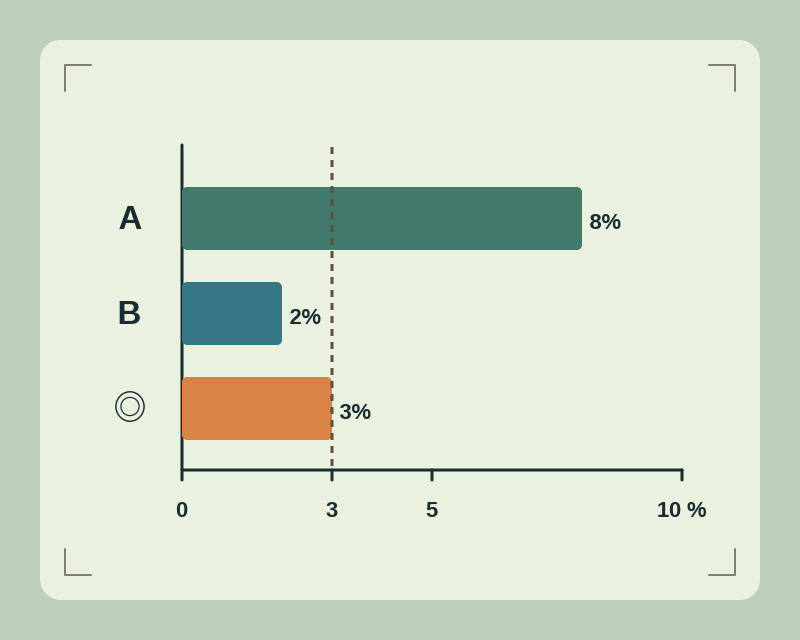
The fictional country has 30,000 furniture manufacturing jobs and one million jobs in total. Its reference share is 3%. City A has 800 industry jobs out of 10,000. Its share is 8%. A’s quotient is 8 ÷ 3, or about 2.67.
City B has 1,600 industry jobs out of 80,000. Its share is 2% and its quotient is 2 ÷ 3, or about 0.67. B has twice as many industry jobs as A and an employment base eight times as large.
Read one as the point of comparison
A quotient of one means both shares are equal. Above one, the industry accounts for more of local employment than in the reference area. Below one, it accounts for less. In A the industry share is about 2.67 times the national share.
The figure describes the composition of employment. To understand wages, output or growth, retrieve the corresponding measure and period. To know how many people work in the industry, keep the count beside the quotient.
Test what happens when the denominator moves
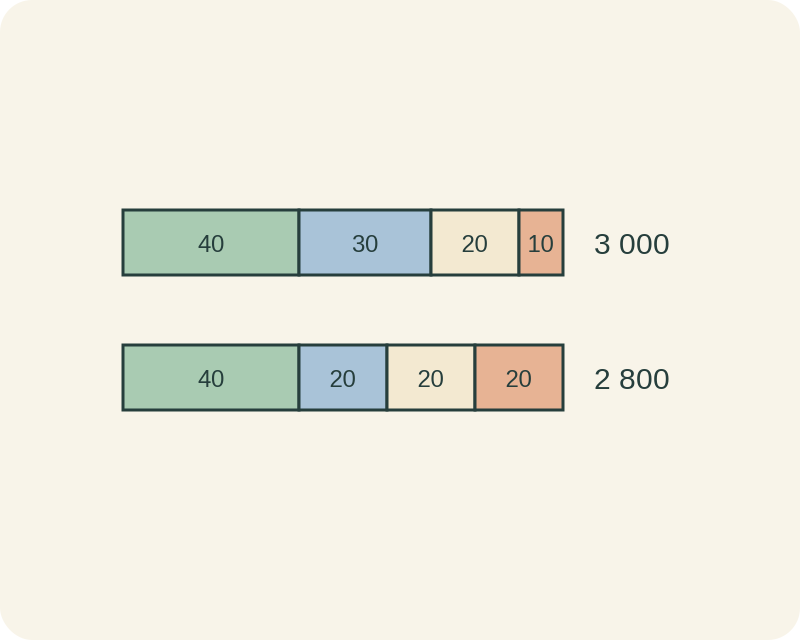
Suppose A keeps 800 industry jobs and total employment rises to 12,500. With the reference share still at 3%, the local share falls to 6.4% and the quotient to about 2.13. A larger local base explains the change in this scenario. In a real report the reference share may move too.
Keep the calculation visible
Show the four counts and the quotient without rounding the shares before division. If a count is suppressed or the reference share is zero, mark the calculation unavailable. In the example you can say that A has 800 industry jobs and a quotient of 2.67 against the fictional country. Each figure answers a different part of the question.
Follow the evidence.
- US Bureau of Labor Statistics · QCEW Location Quotient Details ↗
- US Bureau of Labor Statistics · QCEW Overview ↗
Sources checked November 9, 2026. The exercise scenarios and figures are fictional. Our editorial standards.