Conserva invitaciones, valoraciones y respuestas positivas. Calcula la satisfacción y la tasa de respuesta con sus propios denominadores.
Define qué entra al informe
En el ejemplo, cada caso cerrado elegible recibe una invitación y cuenta una sola vez. Se usan dos opciones, positiva y negativa. Fija una ventana de siete días desde el envío y cierra la medición al terminarla. Separa los casos sin invitación de los que recibieron una y no respondieron.
Calcula dos tasas en cada equipo
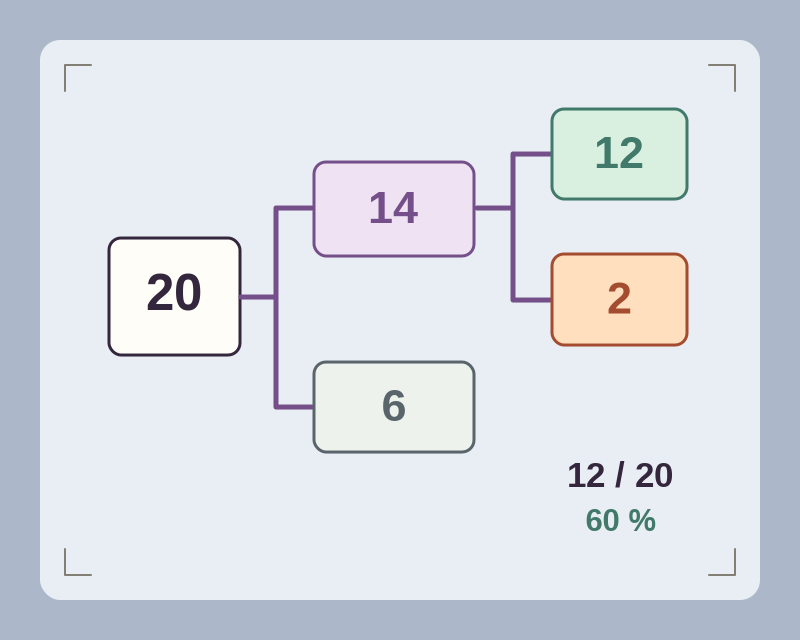
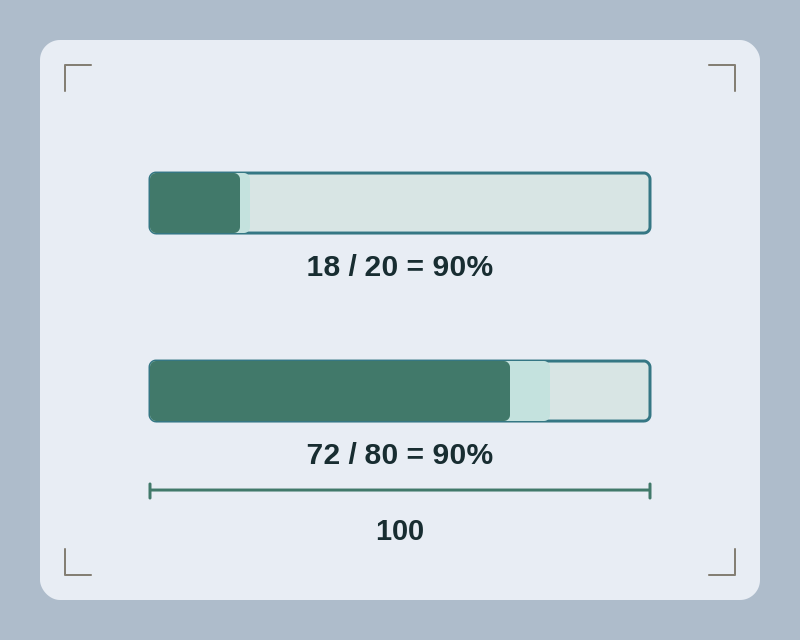
El equipo A envía 100 encuestas y recibe 20 valoraciones, 18 positivas. Su satisfacción es 18 ÷ 20, o 90 %. Su tasa de respuesta es 20 ÷ 100, o 20 %. El equipo B envía 100 y recibe 80, con 72 positivas. Tiene 90 % de satisfacción y 80 % de respuesta.
Conserva lo que sabe cada denominador
Zendesk documenta una puntuación de satisfacción basada en tickets valorados y un indicador de respuesta sobre los tickets encuestados. En este ejercicio, el 90 % describe a quienes respondieron. Si una persona no contesta, su caso sigue en la base de invitaciones y su opinión queda desconocida.
Comprueba cómo se reunieron las respuestas
Compara canal, momento del envío y tipo de solicitud. Si un equipo envía al terminar un chat y otro al día siguiente, escribe esa diferencia antes de atribuir el resultado a la atención. Revisa el registro de invitaciones y una muestra de comentarios. Las opiniones de quienes respondieron no permiten reconstruir automáticamente las de quienes faltan.
Muestra cantidades junto a los porcentajes
Una fila útil dice «18 de 20 positivas, 20 de 100 invitaciones respondidas». Guarda periodo, canal, escala y ventana. En el ejemplo, puedes investigar por qué A recibe menos valoraciones y repetir el cálculo con cohortes que completaron el mismo plazo.
How to read customer satisfaction alongside the response rate
Two teams show 90% satisfaction in their reports. Twenty people responded to one and eighty to the other. Both scores summarize positive opinions among respondents. Survey coverage helps you decide what to investigate before comparing.
Keep the invitation, rating and positive counts. Calculate satisfaction and response using their own denominators.
Define what enters the report
In the example, each eligible closed case receives one invitation and counts once. It has two options, positive and negative. Use a seven-day window from sending and close the measure at its end. Keep cases without invitations separate from those invited without a response.
Calculate two rates for each team
Team A sends 100 surveys and receives 20 ratings, 18 positive. Satisfaction is 18 ÷ 20, or 90%. Response is 20 ÷ 100, or 20%. Team B sends 100 and receives 80 ratings, 72 positive. It has 90% satisfaction and 80% response.
Keep what each denominator tells you
Zendesk documents a satisfaction score based on rated tickets and a response measure based on surveyed tickets. In this exercise, 90% describes those who responded. If someone does not reply, the case remains in the invitation base and their opinion stays unknown.
Check how the responses were collected
Compare channel, timing and request type. If one team sends at the end of chat and another sends the next day, record that difference before attributing the result to support. Review the invitation record and a sample of comments. The people who responded cannot automatically tell you what the others thought.
Show counts next to percentages
A useful row reads “18 of 20 positive, 20 of 100 invitations answered.” Keep the period, channel, scale and window. In the example, investigate why A receives fewer ratings and repeat the calculation with cohorts that completed the same window.
怎样把客户满意度与回复率一起读
两个团队的报告都显示满意度 90%。其中一个收到二十人的评价,另一个收到八十人的评价。两个数字都概括答复者中的正面意见。调查覆盖情况有助于判断比较之前还需要查什么。
保留邀请数、评价数和正面数,用各自的分母计算满意度与回复率。
定义哪些案件进入报告
本例每件符合条件的已结案件收到一次邀请,并且只计一次。选项有正面和负面。自发送起设七天窗口,到期结束测量。没有邀请的案件与已邀请但未回复的案件分开记录。
为每个团队算两项比率
A 团队发出 100 份调查,收到 20 个评价,其中 18 个正面。满意度为 18 ÷ 20,即 90%。回复率为 20 ÷ 100,即 20%。B 团队也发 100 份,收到 80 个评价,其中 72 个正面。满意度同为 90%,回复率为 80%。
保留每个分母所说明的信息
Zendesk 的文档区分以已评价工单为基础的满意度,和以收到调查的工单为基础的回复指标。练习里的 90% 描述已经回复的人。有人没有答复时,案件仍计入邀请,意见则保持未知。
核对评价是怎样收集的
比较渠道、发送时机和请求类型。如果一个团队在聊天结束时发送,另一个第二天才发,先记下差异,再考虑服务过程是否解释了结果。核对邀请记录并抽看几条评论。答复者的意见不能自动代表未答复者。
在百分比旁给出计数
一行可以写成“20 个评价中 18 个正面,100 份邀请中 20 份收到答复”。保留时期、渠道、评分方式和窗口。本例可继续调查 A 为什么收到的评价少,并在同样走完窗口的案件组上重算。
Fuentes y método
Fuentes consultadas el 13 de noviembre de 2026. Los casos y datos numéricos de los ejercicios son ficticios. Editorial standards · Disclosures.