Sostén cuatro pulsos a intervalos iguales y divide cada intervalo en dos. Cambia las palmas mientras mantienes la cuenta.
Encuentra una velocidad que puedas repetir
Marca cuatro golpes suaves sobre la mesa y repite. Deja el mismo tiempo entre el cuarto golpe y el primero de la siguiente vuelta que entre los demás. Cuenta uno, dos, tres, cuatro con cada golpe.
Carnegie Hall presenta el pulso regular como referencia para explorar tempo y ritmo. En este ejercicio puedes usar un dedo o un movimiento discreto si hacer ruido resulta incómodo.
Coloca una sílaba a mitad de cada intervalo
Di uno y dos y tres y cuatro y. Los números coinciden con tus golpes y cada y queda justo a mitad del intervalo que sigue. Mantén la misma velocidad de los números cuando añadas la voz.
El compendio de Baylor muestra que un pulso de negra puede dividirse en dos corcheas. Aquí usamos dos lugares iguales por pulso para practicar esa división sin leer partitura.
Toca un patrón con espacios
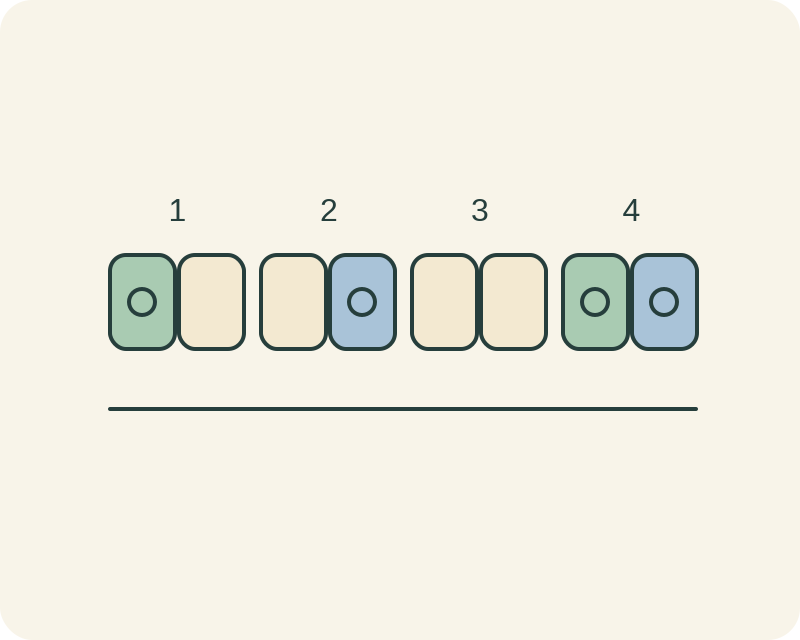
| Pulso | En el número | En la y |
|---|---|---|
| 1 | Palma | Espacio |
| 2 | Espacio | Palma |
| 3 | Espacio | Espacio |
| 4 | Palma | Palma |
Mantén la cuenta en voz alta y da palmas solo en los lugares indicados. Si quieres conservar otra marca de pulso, usa el pie o pide a alguien que marque los cuatro números. Durante el tercer pulso, la voz sigue aunque las manos estén quietas.
Vuelve a empezar con la misma separación
Después de la palma en la y del cuarto pulso, el número uno llega tras la otra mitad del intervalo. Escucha si estás dejando tiempo extra para empezar otra vez. Prueba dos vueltas lentas antes de subir la velocidad.
Si te adelantas al segundo pulso, vuelve un momento a la voz y al golpeteo. Después añade las palmas de nuevo.
Cambia un lugar y escucha qué sucede
Mueve la palma de la y del segundo pulso al número dos. Conserva todas las demás. La cuenta ocupa el mismo tiempo en ambas versiones, aunque una palma caiga antes en la segunda.
Puedes alternar dos vueltas de cada versión con otra persona manteniendo el mismo pulso. Observa qué parte de la cuenta te ayuda a entrar.
Dibuja tu propia vuelta
Haz cuatro pares de casillas, coloca una marca donde quieras una palma y cuenta todos los lugares. Lee el dibujo en voz alta antes de tocarlo. Si te funciona, conserva la secuencia y una nota sobre dónde fue más fácil sentir el tiempo.
Pulse and subdivision in a clapping exercise
A clapping pattern can leave a space while the pulse continues. Hear the difference with a counting voice, a steady beat and claps in selected places.
Keep four evenly spaced beats and split each interval in two. Change the claps while holding the count.
Find a speed you can repeat
Tap four gentle beats on a table and repeat. Leave the same time from beat four to the next one as between other beats. Count one, two, three, four with the taps.
Carnegie Hall uses a steady pulse to explore tempo and rhythm. Use a finger or a quiet motion if sound is inconvenient.
Put a syllable halfway through each interval
Say one and two and three and four and. Numbers match taps and each and goes halfway into the following interval. Keep the numbers at the same speed when adding your voice.
The Baylor compendium shows how a quarter-note beat can divide into two eighth notes. Two equal slots per beat let us practice that division without reading a score.
Play a pattern with spaces
| Beat | On the number | On the and |
|---|---|---|
| 1 | Clap | Space |
| 2 | Space | Clap |
| 3 | Space | Space |
| 4 | Clap | Clap |
Count aloud and clap only in the marked slots. To keep another beat marker, use your foot or ask someone to tap the numbers. The voice continues through beat three while your hands stay still.
Restart with the same spacing
After clapping on the and of beat four, beat one arrives after the other half of the interval. Listen for an extra pause at the restart. Try two slow rounds before speeding up.
If you rush into beat two, return briefly to counting and tapping. Add the claps again afterward.
Move one clap and listen
Move the clap on the and of beat two to the number two. Keep the others. The count takes the same time in both versions, while one clap comes earlier in the second.
Alternate two rounds of each version with someone keeping the same beat. Notice which part of the count helps you enter.
Draw your own round
Draw four pairs of boxes, mark the claps and count every slot. Read the drawing aloud before playing. Keep the pattern and a note on where you felt time most easily if it helps.
用拍手练习节拍与细分
拍手图案可留下空位,节拍仍继续。用口数、稳定拍点和选定位置的拍手感受区别。
以等间隔保持四拍,每段等分为二。改变拍手位置,同时保持口数。
找一个能重复的速度
在桌上轻点四拍并重复。第四拍到下一轮第一拍的距离与其他拍间相同。每点一下数一、二、三、四。
卡内基音乐厅以稳定脉搏探索速度和节奏。若不便出声,可用手指或安静动作。
每段中间放一个音节
念“一和二和三和四和”。数字与敲击对应,每个“和”位于其后区间正中。加入口数时保持数字的速度。
贝勒大学节奏手册示范一拍四分音符可分成两个八分音符。此处每拍两个等长位置,无需识谱也能练习。
打一轮含空位的节奏
| 拍 | 数字处 | 和字处 |
|---|---|---|
| 1 | 拍手 | 留空 |
| 2 | 留空 | 拍手 |
| 3 | 留空 | 留空 |
| 4 | 拍手 | 拍手 |
出声数,只在标记处拍手。还可用脚或请人敲数字拍点。第三拍双手静止,口数仍继续。
用相同距离开始下一轮
第四拍的“和”拍手后,再过半段便到下一轮第一拍。听听重新开始时是否多停了一会。先慢做两轮,再加速。
若抢到第二拍,先回到口数和敲击,之后再加入拍手。
移动一处并聆听
把第二拍“和”处的拍手移到数字二。其他保持。两版口数用时相同,第二版有一次拍手提前。
可和同伴以同一拍点交替各做两轮,观察口数哪部分帮助你进入。
画出自己的一轮
画四对方格,标拍手,数过所有位置。先念图再打节奏。若有帮助,保存图案和一条备注,记录哪里最容易感到时间。
Fuentes y método
Fuentes consultadas el 8 de noviembre de 2026. Los escenarios y cifras ilustrativos son ficticios. Ejercicios y fichas originales, sin resultados de clientes ni observaciones de campo atribuidos. Editorial standards · Disclosures.