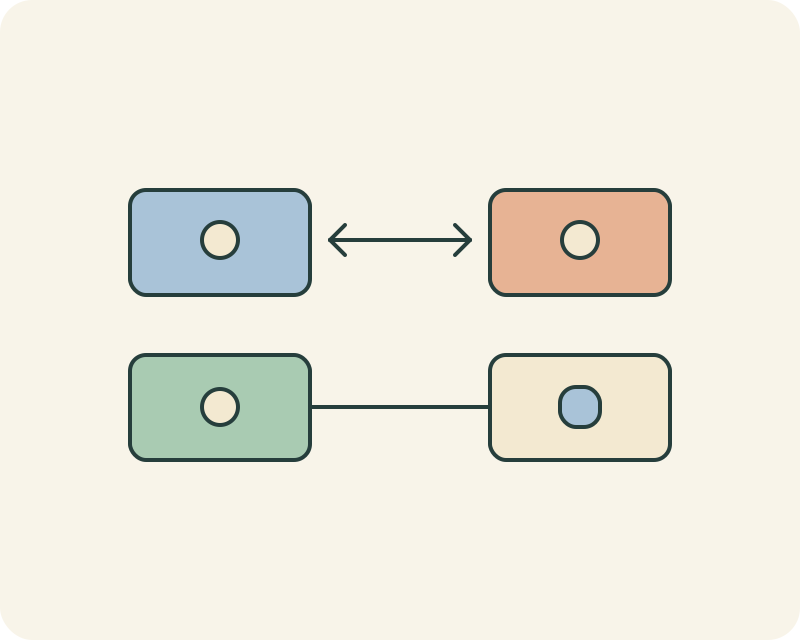
Describe el uso concreto y sus condiciones; después pregunta si admite exclusión y si una persona reduce lo disponible para otra.
Formula dos preguntas independientes
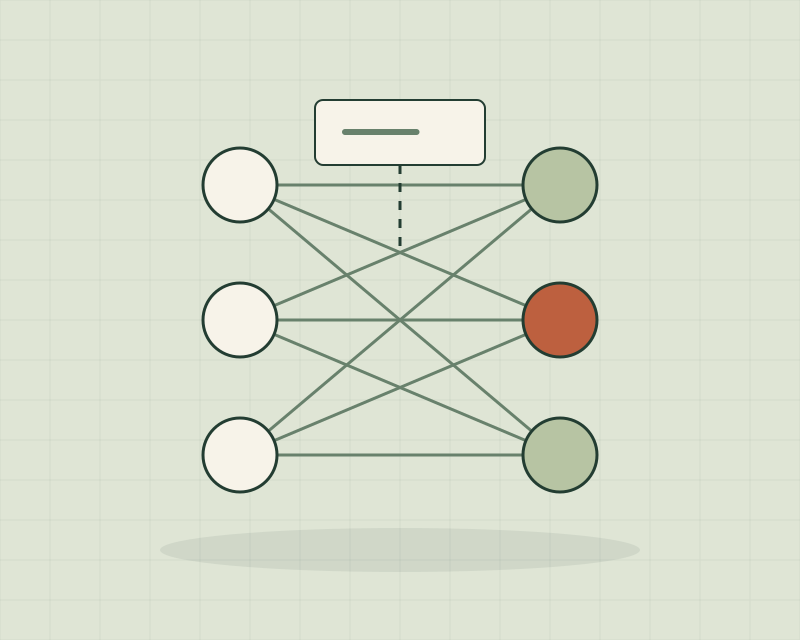
Hay rivalidad cuando el consumo de una persona reduce lo disponible para otra. Hay exclusión cuando se puede impedir de forma viable el acceso de determinadas personas. Un precio de cero no prueba que excluir sea imposible.
OpenStax identifica el bien público por no rivalidad y no exclusión. Esta combinación es una categoría analítica, no una declaración sobre propiedad estatal, calidad o importancia social. Antes de clasificar, define qué servicio o unidad estás examinando.
Recorre cuatro casillas
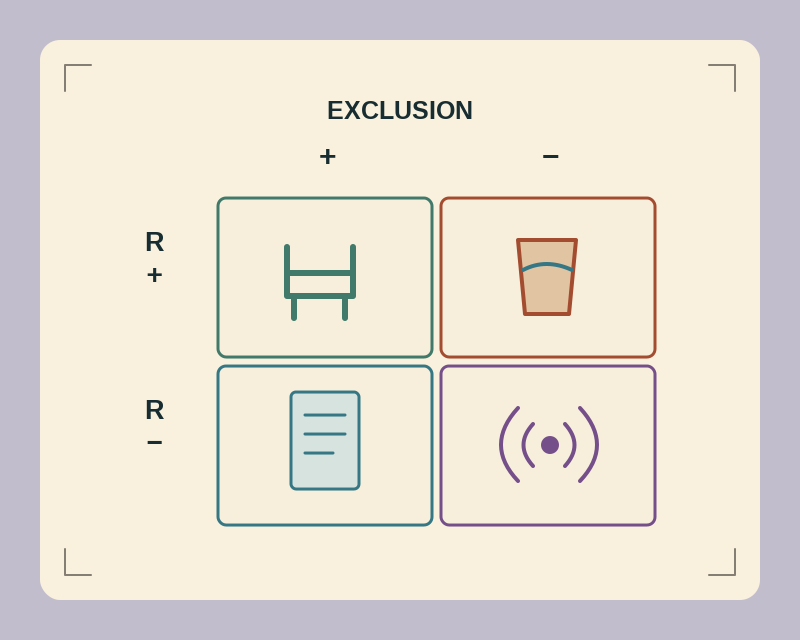
En una matriz, combina uso rival o no rival con acceso excluible o no excluible. Rival y excluible corresponde a un bien privado; no rival y excluible, a un bien de club. Rival y no excluible describe un recurso común; no rival y no excluible, un bien público.
Los nombres son una ayuda para ordenar dos respuestas. No convierten automáticamente un caso en deseable o indeseable, ni fijan quién debe financiarlo. Esa decisión necesita otras preguntas sobre costes, beneficios y reglas.
Prueba cuatro casos con condiciones explícitas
En un taller ficticio con diez asientos y entrada controlada, cada asiento ocupado deja uno menos y se puede impedir entrar sin boleto: rival y excluible. Un archivo digital entregado mediante contraseña, con capacidad suficiente para usuarios simultáneos, permite restringir acceso sin que una lectura retire otra copia: bien de club bajo esas condiciones.
Un pozo compartido de acceso irrestricto y agua limitada es un recurso común en el ejercicio: lo extraído ya no queda para otra persona. Un aviso por altavoz en una plaza, audible para todos sin control de acceso y sin pérdida por añadir oyentes, funciona como bien público dentro de ese alcance. Son supuestos del ejemplo, no descripciones de lugares reales.
Cambia una condición y vuelve a mirar
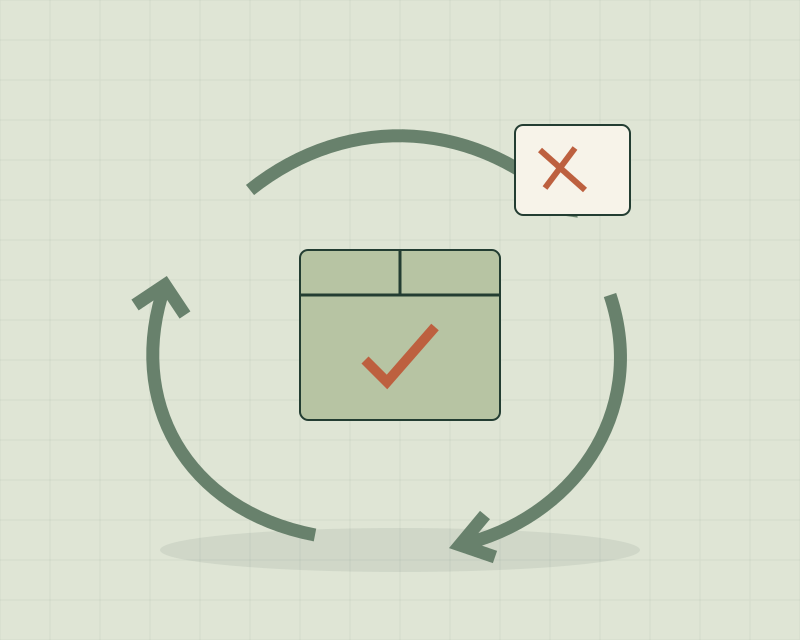
Si el archivo requiere una sesión limitada a un solo usuario, aparece una restricción de capacidad relevante. Si el pozo recibe un control efectivo de acceso, cambia la posibilidad de exclusión. Especifica el cambio antes de repetir la clasificación.
La entrada académica de Stanford subraya que el contexto, las instituciones y la tecnología afectan estas fronteras. Por eso «digital», «municipal» o «gratuito» no resuelven las dos preguntas por sí solos. También distingue escuchar el aviso de ocupar un asiento para escucharlo.
Guarda el razonamiento junto al nombre
Prepara una ficha con servicio observado, ámbito, límite de capacidad, mecanismo de acceso y respuesta a cada pregunta. Escribe la casilla al final, acompañada de la condición que podría hacerla cambiar.
Si no conoces las reglas de acceso o el efecto de añadir usuarios, conserva la clasificación como pendiente. Una matriz bien documentada ayuda a discutir problemas distintos —restricción, congestión o financiación— sin suponer que todos se resuelven con la misma intervención.
Public goods: classify use through rivalry and exclusion
Government funding or a zero price is not enough to call something a public good in economics. The classification examines how it is used and whether excluding users is feasible.
Describe the specific use and its conditions; then ask whether exclusion is feasible and whether one person reduces what remains for another.
Ask two independent questions
Consumption is rival when one person’s use reduces what is available to another. Exclusion is feasible when particular people can practicably be prevented from accessing the good. A zero price does not prove that exclusion is impossible.
OpenStax identifies a public good through nonrivalry and nonexclusion. That combination is an analytical category, not a statement about state ownership, quality or social importance. Define the service or unit under examination before classifying it.
Walk through four cells
Combine rival or nonrival use with excludable or nonexcludable access in a matrix. Rival and excludable corresponds to a private good; nonrival and excludable to a club good. Rival and nonexcludable describes a common resource; nonrival and nonexcludable describes a public good.
The names help organize two answers. They do not automatically make a case desirable or undesirable, or determine who should fund it. That decision needs additional questions about costs, benefits and rules.
Test four explicitly bounded cases
In a fictional workshop with ten seats and controlled entry, each occupied seat leaves one fewer and entry without a ticket can be prevented: rival and excludable. A password-protected digital file, with sufficient capacity for simultaneous users, permits restricted access without one reading removing another copy: a club good under those conditions.
A shared well with unrestricted access and limited water is a common resource in the exercise: extracted water is no longer available to someone else. A plaza loudspeaker announcement, audible to everyone without access control or loss from adding listeners, functions as a public good within that scope. These are example assumptions, not descriptions of actual places.
Change a condition and look again
If the file requires a session limited to one user, a relevant capacity constraint appears. If the well acquires effective access control, the possibility of exclusion changes. Specify the change before classifying again.
Stanford’s scholarly entry emphasizes how context, institutions and technology affect these boundaries. Consequently, “digital,” “municipal” or “free” does not answer both questions by itself. Also distinguish hearing an announcement from occupying a seat to hear it.
Save the reasoning beside the name
Prepare a record with the service observed, scope, capacity limit, access mechanism and answer to each question. Write the cell last, alongside the condition that could change it.
If you do not know the access rules or the effect of additional users, keep the classification pending. A documented matrix helps discuss different problems—restriction, congestion or funding—without assuming that one intervention solves them all.
公共物品:用消费竞争性与可排他性分类
由政府出资或免费提供,不足以使某物在经济学上成为公共物品。分类关注使用方式,以及实际排除部分使用者是否可行。
描述具体用途和条件,再问能否排除使用者,以及一个人的使用是否减少另一个人可获得的数量。
提出两个相互独立的问题
如果一个人的消费减少了别人可使用的数量,就具有消费竞争性。如果能够切实阻止特定人员获得使用机会,就具有可排他性。价格为零,并不能证明排除使用者是不可能的。
OpenStax 用非竞争性与非排他性的组合定义公共物品。这是分析类别,不是对国有产权、质量或社会重要性的判断。分类之前,先确定研究的是哪项服务或哪个单位。
遍历四个格子
在矩阵中组合有或无消费竞争性,以及有或无可排他性。有竞争性且可排他的,是私人物品;无竞争性但可排他的,是俱乐部物品。有竞争性且不可排他的,是公共资源;无竞争性且不可排他的,是公共物品。
这些名称帮助整理两个答案,不会自动说明某个案例好或不好,也不会决定应由谁付款。资金安排还需要另外研究成本、收益和规则。
用四个条件明确的案例练习
一个虚构工作坊有十个座位,并控制入场。占用一个座位会少一个,而且可以阻止无票人员进入,因此具有竞争性和可排他性。一个需要密码的数字文件,假定有足够容量支持同时使用,可以限制访问,但一次阅读不会拿走另一份副本;在这些条件下属于俱乐部物品。
一个不限制进入且水量有限的共用水井,在练习中属于公共资源:被取走的水不能再供他人使用。广场上的扩音器通知,如果所有人都能听到、没有访问控制,且增加听众不会造成损失,就在这个范围内具有公共物品性质。这些只是练习假设,不是对真实地点的描述。
改变条件后重新观察
如果文件必须通过仅允许一名用户的会话使用,就出现了相关容量限制。如果水井建立有效的访问控制,可排他性也会改变。重新分类之前,应明确发生了什么变化。
斯坦福的学术条目强调,情境、制度与技术会影响这些边界。因此,“数字”“市政”或“免费”本身都不能回答两个问题。还应区分听到通知与占用一个座位听通知。
把推理与名称一起保存
制作记录,写明所观察的服务、范围、容量上限、访问机制,以及对两个问题的回答。最后再写所属格子,并注明什么条件可能使它改变。
如果不知道访问规则或增加使用者的影响,就把分类保留为待定。有依据的矩阵有助于分别讨论限制、拥挤或筹资问题,避免假设同一种干预能够解决所有问题。
Fuentes y método
Fuentes consultadas el 22 de noviembre de 2026. Los casos y datos numéricos de los ejercicios son ficticios. Editorial standards · Disclosures.