Use days in stage to start a review. Read the latest customer evidence and decide whether to prepare, clarify or pause.
Separate the clocks
Total age starts when the deal is created. Time in the current stage starts on its latest entry into that stage. An earlier stay in the same stage has its own duration. HubSpot, for example, distinguishes time in the current stage, time in the latest completed stay and cumulative time in stage. Check your CRM's definitions before exporting.
Compare deals at the same cutoff
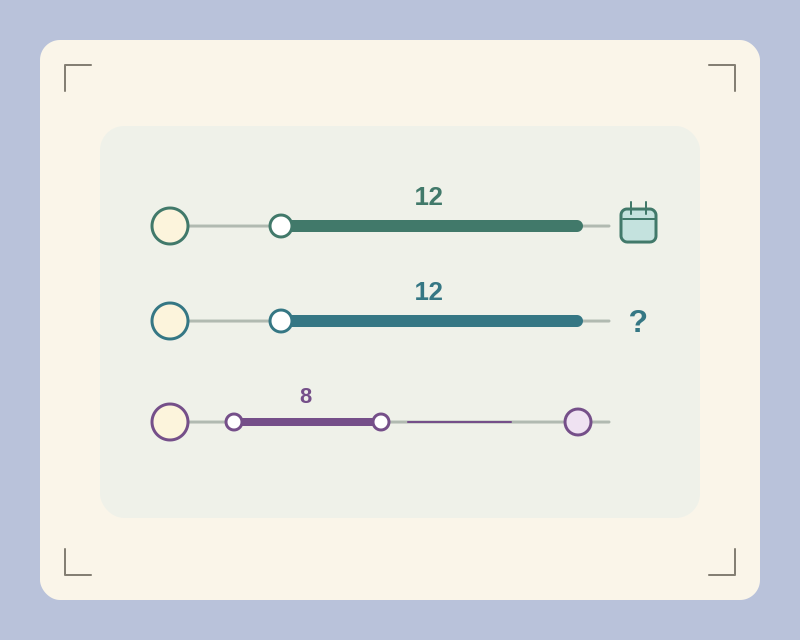
At nine on Monday, A has been open 35 days and in review for twelve, with a meeting confirmed for tomorrow. B has also been in review for twelve days, with no date and no outstanding question on record. C moved back into review today after a scope adjustment; its previous stay lasted eight days. Keep those eight out of the current stay's clock.
Give each case a way forward
For A, confirm the criteria the committee will use and bring answers. For B, ask for a specific decision, such as whether the customer needs to compare two scopes or whether the project no longer has a target date. For C, record what changed so the next person understands why it came back to review.
Check the signal against your own history
Group comparable deals by type of sale and stage. Distinguish business days from calendar days before comparing reports, and document how missing entry dates are handled. A long stay may be typical in formal procurement and unusual for an order the customer needed this week.
Keep your stage exit criteria
Record the stage, entry date, evidence and next step with an owner. Move the deal when it meets the business criteria for the next stage. If it goes on hold, keep the reason and the review agreement so the pipeline still records what happened.
Follow the evidence.
Sources checked November 14, 2026. The exercise scenarios and figures are fictional. Our editorial standards.