Usa los días en etapa para abrir una revisión. Lee la última evidencia del cliente y decide si corresponde preparar, aclarar o pausar.
Separa los relojes
La edad total se cuenta desde la creación de la oportunidad. El tiempo en la etapa actual empieza al entrar en ella por última vez. Una visita anterior a la misma etapa tiene su propia duración. En HubSpot, por ejemplo, las propiedades de etapa distinguen tiempo en la etapa actual, tiempo de la última estancia completada y tiempo acumulado. Lee la definición de tu CRM antes de exportar.
Compara casos al mismo corte
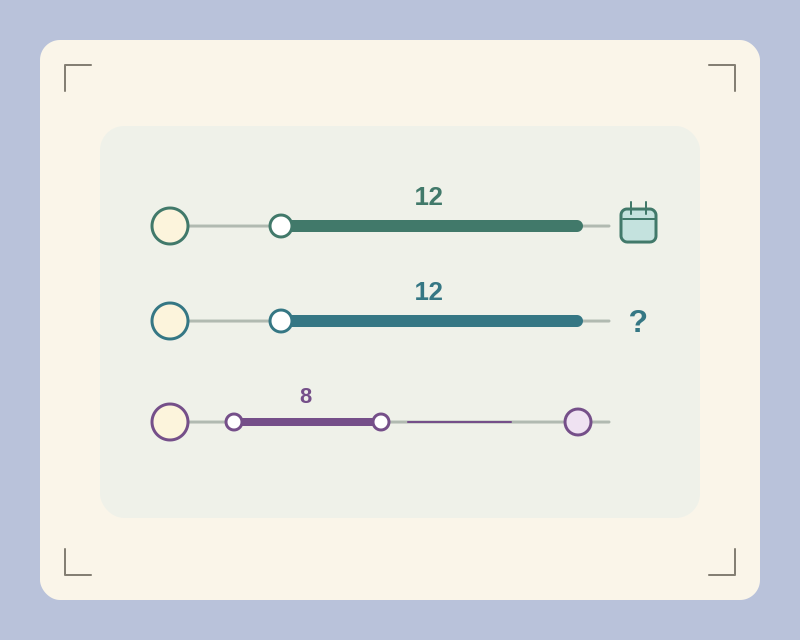
El lunes a las nueve, A lleva 35 días abierta y doce en revisión, con reunión confirmada para mañana. B también lleva doce días en revisión, sin fecha y sin pregunta pendiente registrada. C volvió hoy a revisión después de ajustar el alcance: su estancia anterior duró ocho días. No sumes esos ocho al reloj de la estancia actual.
Da una salida a cada caso
Para A, confirma qué criterios usará el comité y lleva las respuestas. Para B, pide una decisión concreta: por ejemplo, si hace falta comparar dos alcances o si el proyecto perdió fecha. Para C, registra qué cambió para que quien retome el caso sepa por qué regresó a revisión.
Revisa la señal con tu propio historial
Agrupa casos comparables por tipo de venta y etapa. Distingue días hábiles de naturales antes de comparar informes; indica también qué pasa cuando falta la fecha de entrada. Una estancia larga puede ser habitual en compras formales y extraña en un pedido que el cliente necesitaba esta semana.
Mantén el criterio de salida
Registra etapa, fecha de entrada, evidencia y próximo paso con responsable. Mueve la oportunidad cuando se cumpla el criterio comercial de la siguiente etapa. Si queda en pausa, conserva el motivo y el acuerdo de revisión para que el tablero siga contando lo que ocurrió.
Twelve days in stage: review a deal without moving it by habit
Two proposals have spent twelve days in review. On one, the customer invited the team to tomorrow's committee meeting. On the other, the material went out almost two weeks ago and no one agreed on a decision date. The same number calls for different conversations.
Use days in stage to start a review. Read the latest customer evidence and decide whether to prepare, clarify or pause.
Separate the clocks
Total age starts when the deal is created. Time in the current stage starts on its latest entry into that stage. An earlier stay in the same stage has its own duration. HubSpot, for example, distinguishes time in the current stage, time in the latest completed stay and cumulative time in stage. Check your CRM's definitions before exporting.
Compare deals at the same cutoff
At nine on Monday, A has been open 35 days and in review for twelve, with a meeting confirmed for tomorrow. B has also been in review for twelve days, with no date and no outstanding question on record. C moved back into review today after a scope adjustment; its previous stay lasted eight days. Keep those eight out of the current stay's clock.
Give each case a way forward
For A, confirm the criteria the committee will use and bring answers. For B, ask for a specific decision, such as whether the customer needs to compare two scopes or whether the project no longer has a target date. For C, record what changed so the next person understands why it came back to review.
Check the signal against your own history
Group comparable deals by type of sale and stage. Distinguish business days from calendar days before comparing reports, and document how missing entry dates are handled. A long stay may be typical in formal procurement and unusual for an order the customer needed this week.
Keep your stage exit criteria
Record the stage, entry date, evidence and next step with an owner. Move the deal when it meets the business criteria for the next stage. If it goes on hold, keep the reason and the review agreement so the pipeline still records what happened.
在一个阶段停了十二天:如何复盘商机而不机械推进
两份报价都在审核阶段停留了十二天。第一位客户邀请销售团队参加明天的委员会会议;第二份材料已经发出将近两周,却没人约定何时做决定。同一个数字,对应的是不同的沟通任务。
用停留天数发起复盘,再看客户最近提供的信息,决定应当准备、澄清还是暂停。
分开不同的计时
商机总时长从创建时算起。当前阶段的停留时间从最近一次进入该阶段时算起。以前在同一阶段的停留另有独立时长。例如,HubSpot 的阶段属性区分当前停留时间、最近一次已结束的停留时长,以及累计停留时间。导出前,先读清自己 CRM 中的定义。
在同一个时点比较
以周一上午九点为准,商机 A 创建了 35 天,其中 12 天在审核,且已确认明天开会。商机 B 也审核了 12 天,却没有约定日期,也没记录待解决的问题。商机 C 调整范围后今天回到审核阶段,上一次停留了 8 天。不要把这 8 天算进当前这次停留。
为每项商机安排下一步
对 A,确认委员会会依据哪些标准决定,并带上回答。对 B,请客户明确一个具体问题,例如是否要比较两个范围方案,或者项目是否已经没有目标日期。对 C,记录发生了什么变化,让接手的人明白为什么它回到审核。
用自己的历史记录检验信号
按销售类型和阶段给相似商机分组。比较报表前,分清工作日与自然日,并说明缺少进入日期时如何处理。正式采购流程停留较久可能很正常;对本周就需要交付的订单,同样的时长可能异常。
保留阶段退出条件
记录阶段、进入日期、依据、下一步和负责人。满足下一阶段的业务条件时,再变更商机阶段。如果商机暂停,保留原因和约定的复盘时间,让看板持续反映已经发生的事。
Fuentes y método
Fuentes consultadas el 14 de noviembre de 2026. Los casos y datos numéricos de los ejercicios son ficticios. Editorial standards · Disclosures.