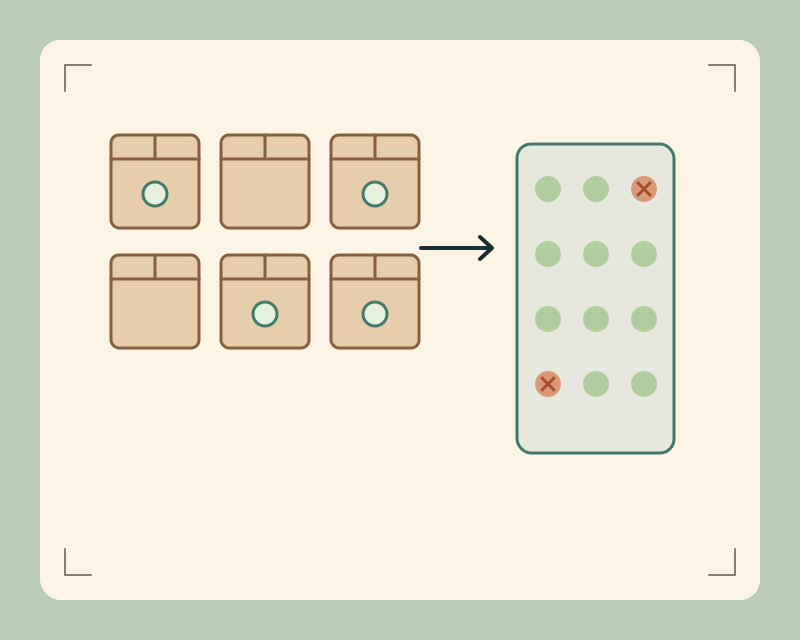
Count each unit once on entry and once if it passes the first time. Then reconcile repaired, scrapped and pending units.
Define the start and acceptance criteria
In the workshop a folder enters when assembly starts. It passes when dimensions, fastener and finish meet the agreed checks. A unit needing adjustment and another test is excluded from the first-pass numerator even if ultimately delivered. ASQ defines this yield around meeting requirements without rework or repetition.
Calculate the first result
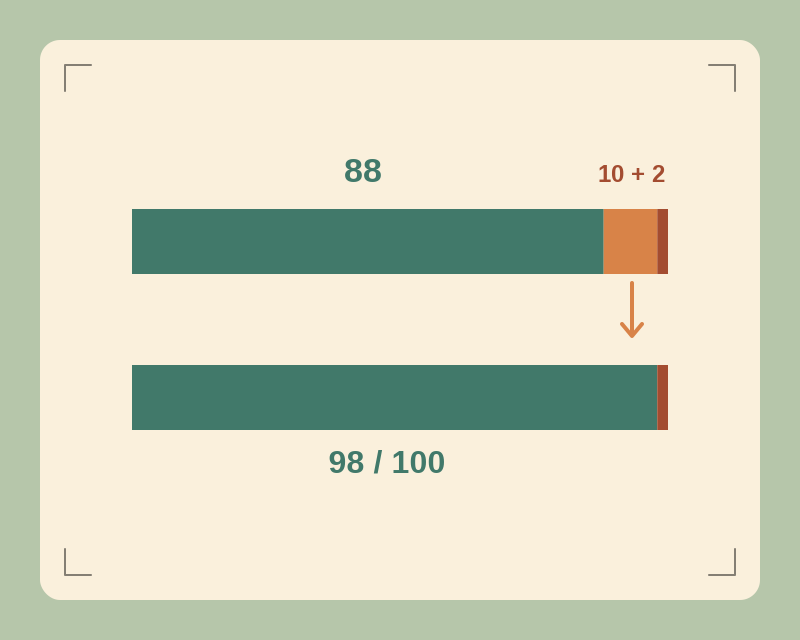
Of the 100 folders, 88 pass without going back. Ten go to adjustment and two are scrapped. First-pass yield is 88 ÷ 100 × 100 = 88%. Keep the ten units' identifiers so they are not counted as new inputs when they return.
Add recovery without erasing the history
All ten adjusted units later pass review. The final accepted count is 98, or 98% of the original 100. The ten-percentage-point difference shows how many units were recovered through rework in this example. Also record the minutes and materials used to recover them.
Review what caused the repeat
Open the ten cases. If seven share an incorrectly positioned fastener, check assembly and its locating guide. Try a correction and measure again with the same criteria. A final 98% figure alone cannot reconstruct that work.
Keep the observation cutoff
Close the observation when every unit's destination is known, or show pending units explicitly. Save the lot, original inputs, first-pass accepted units, recovered units, scrap and pending units. When comparing lots, also review product and acceptance requirements.
Follow the evidence.
Sources checked November 18, 2026. The exercise scenarios and figures are fictional. Our editorial standards.