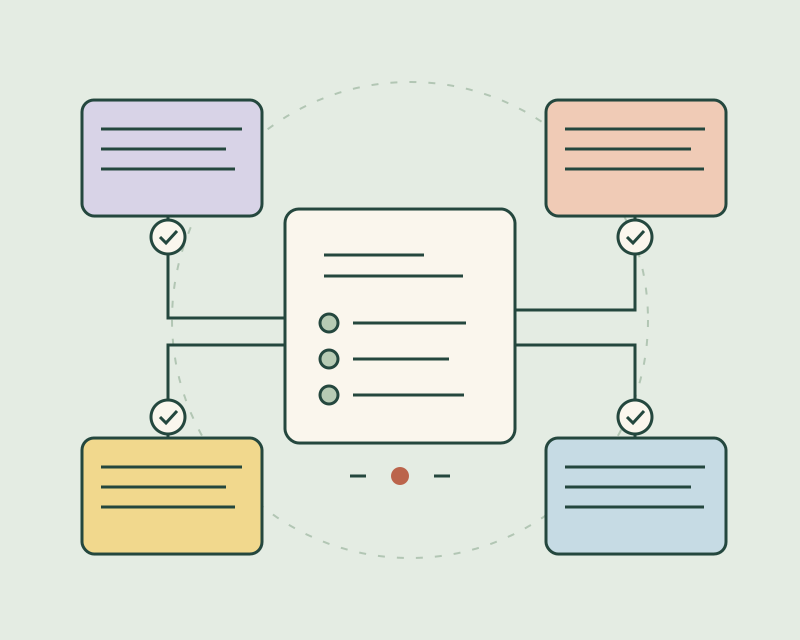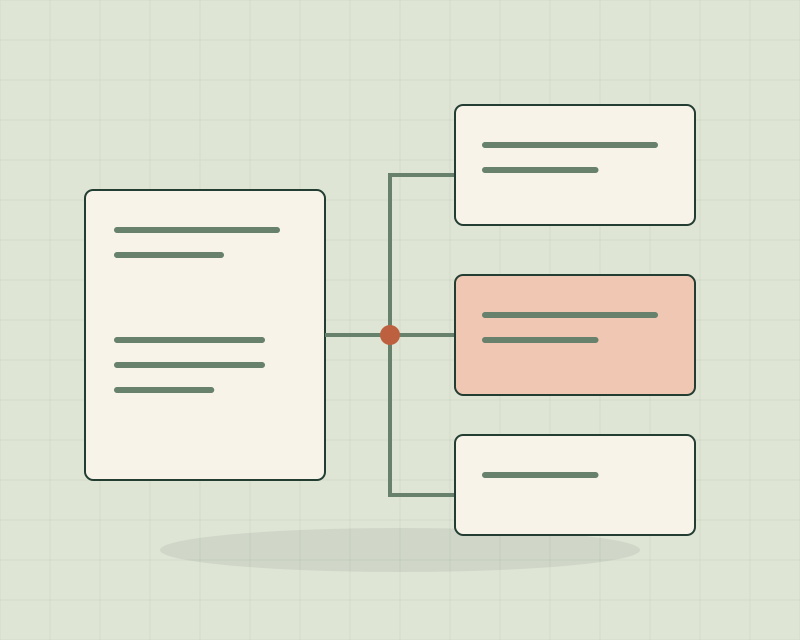
Treat llms.txt as editorial guidance toward documents. Check its content, scope and destinations, and examine access through the appropriate controls.
Identify the proposal you are reading
The llms-txt v2 proposal, modified August 10, 2026, describes a Markdown file with context, guidance and links to documents suitable for agents. It can sit at the root or a more specific path. It is a proposal: publishing a file does not establish adoption by every service.
Record the version consulted and location. A guide describing only a root-level file may need revision. Here we examine the document and its destinations; we have neither installed nor tested a provider integration.
Walk through a small example
This fictional library publishes guides about repairing objects. The fragment is an original illustration; example.org addresses represent hypothetical resources, rather than documents we checked for availability.
# Object library

> Public guides to materials and maintenance.

Each record identifies its review date and limitations.

## Guides
- [Materials](https://example.org/docs/materiales.md): Identify the material before choosing a guide.
- [Care](https://example.org/docs/cuidado.md): Described routines and exceptions.
The heading identifies the collection; the summary explains its purpose; notes help interpret links. In the proposed format, H1 is the only required section. Meeting that minimum does not ensure that a person or agent finds enough information.
Examine what each link leads to
For each real entry, open the destination and check that it contains the promised document. Is it readable text, an access screen or an error? Does it retain examples, warnings and a date? A clean summary that omits conditions can change a guide’s meaning.
Keep a record of label, URL, purpose, date checked and problem found. If Markdown and HTML editions exist, compare an important claim between them. This editorial review does not simulate how every agent would fetch or interpret the site.
Address access separately
RFC 9309 describes robots.txt rules that crawlers are requested to honor; it also states that these are not access authorization. llms.txt neither replaces those rules nor protects private documents. A descriptive link does not grant entry to a restricted resource.
Use our robots.txt testing guide to check a rule. The distinction between robots, noindex and canonical addresses other publication questions. Do not write restrictions expecting a link directory to enforce them.
Assign the map a review
- Choose public documents that answer recognizable tasks.
- Describe each destination’s purpose without promising absent content.
- Correct broken references and keep replacements identifiable.
- Review the map when documents, paths or conditions change.
For the fictional library, replacing a material record requires checking both the link and the note explaining when to consult it. Automatically copying every title can produce a long list with little useful guidance.
Match the conclusion to the check
A review can establish that the file exists, links open and content corresponds. Claiming use by a service requires evidence from that service; claiming inclusion in an answer requires observing that answer in context.
Our multi-platform answers guide organizes broader checks. This map may ease documentation reading, but its presence establishes neither indexing, citations, permitted training nor higher rankings.
Follow the evidence.
Sources checked October 24, 2026. Illustrative scenarios and numbers are fictional. The records and exercises are original editorial proposals, without attributed customer results or provider tests. Our editorial standards.