Start with observed sessions, apply engagement criteria once per session and keep the same base when calculating the complement.
Check the criteria and settings
Google defines an engaged session as one exceeding the configured time, containing a key event or accumulating at least two page or screen views. The default timer is ten seconds and can be adjusted. Our exercise uses that value. Also save which events are marked as key before comparing periods.
Separate four groups without duplication
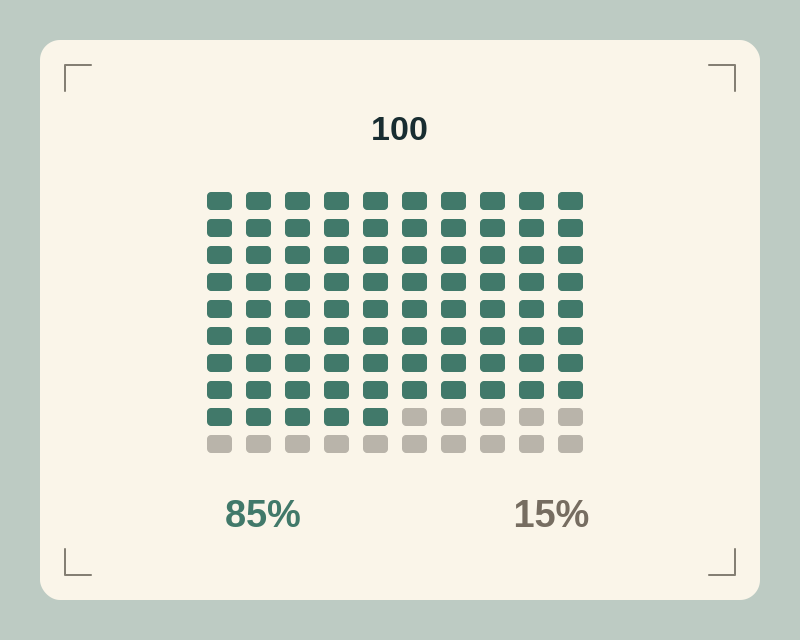
Of one hundred fictional sessions, sixty last twenty seconds. Another twenty last five seconds and have two views. Another five last five seconds, show one page and record a key event. The remaining fifteen last five seconds, show one page and have no key events. These exercise groups are mutually exclusive; a real session meeting several criteria still counts once.
Calculate both rates
Engaged sessions total 60 + 20 + 5 = 85. Engagement rate is 85 / 100 = 85%. The other fifteen do not qualify, yielding 15 / 100 = 15% bounce. Within the same set, both rates sum to 100%. Removing short sessions with a key event from the first group would incorrectly change the calculation.
Read a single-page visit
A twenty-second session on one page can be engaged under the exercise assumptions. So can the short session with a key event. GA4 bounce therefore does not simply mean “viewed only one page.” The result classifies recorded signals; it does not independently establish understanding, satisfaction or a sale.
Preserve the comparison's scope
Record property, stream, period, filters, timer and key-event definition. If measurement changes, note when before interpreting a variation. These hundred sessions are a constructed example, not Jincheng data. When analyzing visits from search engines or assistants, also preserve how you identified that group and its coverage.
Follow the evidence.
- Google Analytics: engagement rate and bounce rate ↗
- Google Analytics: tag settings and engaged-session timer ↗
Sources checked November 21, 2026. The exercise scenarios and figures are fictional. Our editorial standards.