Fold and number a test copy. Write or draw in the assembled booklet, then use it as a map if you want to reproduce it.
Choose something that fits a small booklet
Gather a rectangular sheet, pencil and scissors. Choose an idea you can explore in a few pages. In the example, an umbrella changes place over a rainy day. Each page will have a small image, a line or a blank pause.
Start with a sheet you can devote to practice. If you like the result, the dummy can become your first copy.
Mark eight panels before cutting
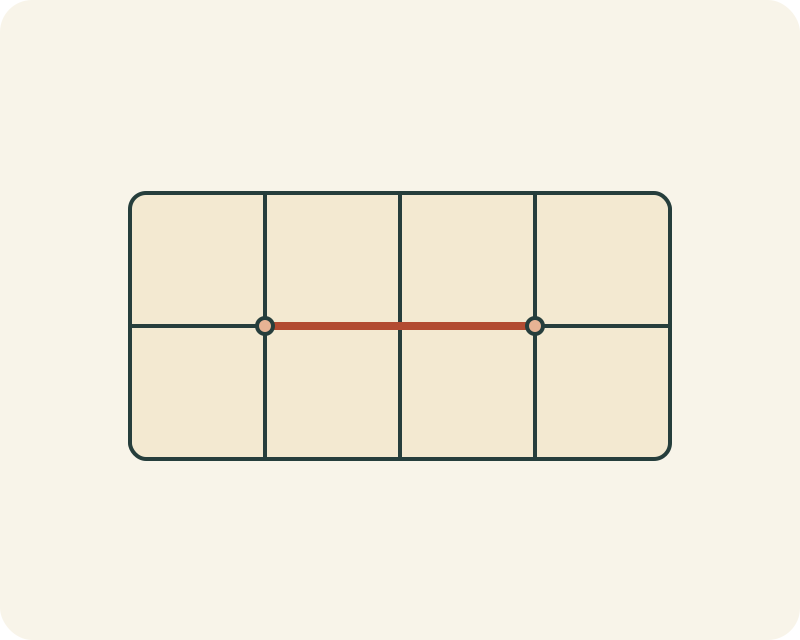
Place the sheet in landscape orientation. Bring the long edges together and reopen to get a horizontal center crease. Bring the short edges together and reopen for the vertical center. Fold each short edge to that center. Open the sheet to see two rows of four columns.
Wisconsin Union explains the format with folds and a central opening. Refer to its illustrations if the directions are hard to identify while creasing the grid.
Open the central segment only
With the sheet folded at its vertical center, cut along the horizontal mark. Start at the folded edge and stop at the first vertical crease you reach. When opened, the slit lies on the center line and spans only the middle two columns.
Bring the long edges together again. Hold the ends of the strip and gently push them inward. The opening expands into a diamond. Bring the ends closer until a cross forms and gather its arms as pages. Chandra shows the intermediate shape in its guide.
Number the assembled booklet
Choose the front cover. Turn the faces in reading order and number one through eight, including the back cover. Draw a small upward arrow on each face. Unfold the sheet to see page orientations on the flat layout.
The arrows are useful if you transfer the dummy to a file. Refolding gives you a direct way to test the order.
Spread a story over the eight faces
This umbrella sequence is an original prompt. Change the rhythm with a drawing, a line or blank space.
| Pages | Possible content |
|---|---|
| 1 and 2 | Title and umbrella by the door |
| 3 and 4 | First drops and crossing the puddle |
| 5 and 6 | Closed umbrella in a doorway and rain easing |
| 7 and 8 | Return to the door and a last drop |
Read the copy at its actual size. If a line crosses a crease or an image needs space, adjust that face before making the next version.
Check one complete copy
To reproduce it, use the unfolded map to transfer content and orientation. Fold a full proof and check cover, continuity and back cover. Turning the pages makes placement errors easier to find than inspecting the flat sheet.
The related photo sequence works with story order. Paper adds a decision here. What appears on a page turn depends on how it sits on the sheet.
Follow the evidence.
Sources checked November 3, 2026. Illustrative scenarios and numbers are fictional. Original exercises and records, without attributed customer results or field observations. Our editorial standards.