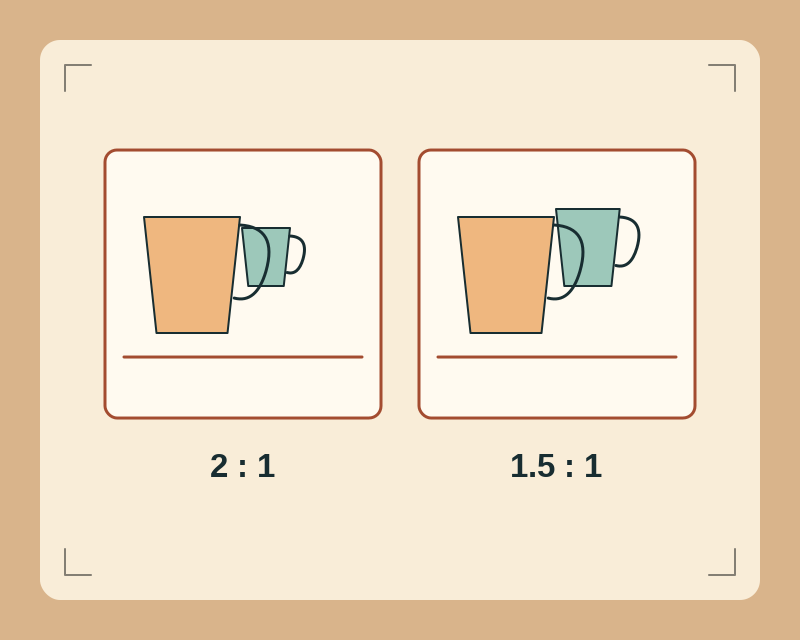
Move the camera and leave the cups still. Compare the size of one relative to the other in each image.
Set up a simple scene
Place two identical cups one meter apart in depth. Shift the second slightly sideways so both are visible. Mark two camera positions about one and two meters from the front cup. Choose a comfortable height and try to keep it for both shots.
Use the same lens or phone camera setting. Keep lighting and orientation consistent. The goal is to see what changes when you move the viewpoint.
Take a near shot and a far shot
From the first mark, take a photo with both cups visible. Then step back to the second mark, keep the same height and repeat. Reframe if needed to include both without moving them.
The approximate distances in the first shot are one and two meters. In the second they are two and three. The meter between the cups is a smaller part of the distance to the front cup when you step back.
Compare the proportions on screen
Measure the height of both cups in each image with a ruler on the screen or a photo editor. Divide the front cup’s image height by the rear cup’s image height. In a simple projection model, small identical objects at those distances give ratios near 2 and 1.5. In the actual photo, camera tilt, cup dimensions and distortion near the edges may affect the result.
Nikon’s material explains perspective in terms of camera-to-subject distance. Canon’s examples pair focal length and distance to compare how a background appears.
Try a crop from the same position
Duplicate the far shot and crop it so the front cup looks the same size as in the near shot. If the crop keeps both cups, their ratio stays the one from the far shot. Cropping enlarges the part you see from the same image.
Choose a distance for what you want to show
Put the three versions next to one another. Choose which conveys more depth and which makes the background appear closer. Keep the two distance marks with the photos. Repeat the exercise with a figurine and a plant and look at how their relationship in the frame changes.
Follow the evidence.
Sources checked November 11, 2026. The exercise scenarios and figures are fictional. Our editorial standards.