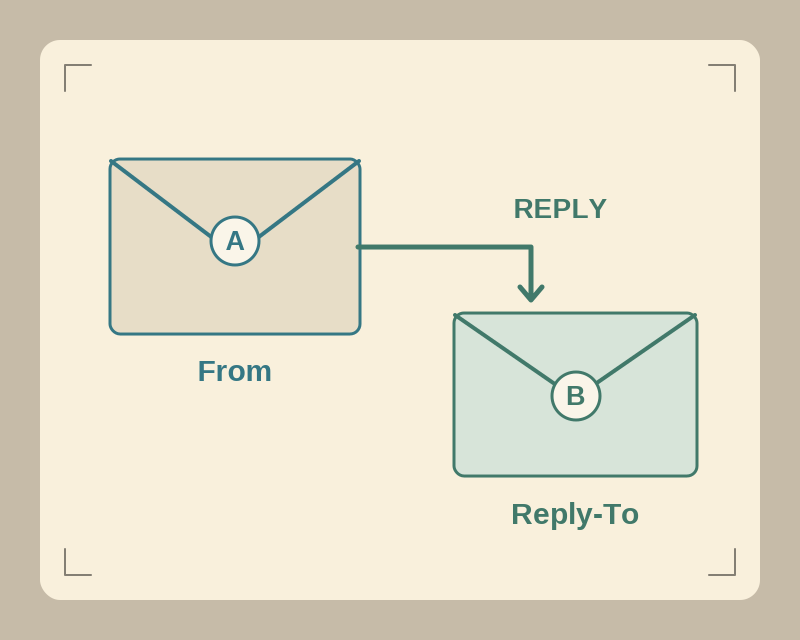
The visible name, From address and Reply-To have different roles; inspect the reply draft and who would handle that mailbox.
Describe the expected path
A fictional library sends an invitation and wants workshop staff to receive questions. Displaying “Biblioteca Luma” in the inbox does not finish the task. The subsequent conversation also needs an identified destination.
Create a record with display name, origin address, intended reply address and mailbox owner. Confirming team access and message monitoring is an operational check separate from configuring a header.
Distinguish the two fields
RFC 5322 defines From as identifying the message’s author. When present, Reply-To indicates where the author suggests replies should be sent. When absent, the standard’s default is to reply to From, unless the person composing the reply decides otherwise.
An email client’s display name can accompany an address without immediately revealing it. Reading only “Biblioteca Luma” therefore does not check the mailbox. Open sender details in the client you use.
Follow an example without sending messages
In the documentary example, From uses boletin@example.org and Reply-To uses talleres@example.org. These addresses are reserved for illustration, not project contacts. Selecting Reply should produce a draft addressed to talleres@example.org.
If the draft points to boletin@example.org, inspect the received message and its Reply-To before correcting the platform. That field might be absent, or the configuration might differ from the approved one. Do not infer the destination from footer wording or a contact link inside the body.
Check the experience with an authorized test
When a test message has reached a mailbox designated for review, open its details, inspect the fields and select Reply to observe the recipient. You do not need to send the reply to check this step. Also record whether the client allows changing the destination.
Inspecting a draft confirms what that client prepares for that message. It does not establish that the mailbox exists, that a reply will be delivered or that someone will handle it. A real receipt and handling test needs its own agreement and evidence.
Keep the decision with the campaign
Save campaign, message version, display name, From, observed Reply-To, draft recipient and confirmed mailbox owner. If access has not been checked, leave that field pending.
The review can lead to a specific correction: changing the approved reply destination or assigning someone to handle it. These fields do not establish sender authenticity or deliverability. The editorial promise should be able to continue as a conversation in the intended place.
Follow the evidence.
Sources checked November 23, 2026. The exercise scenarios and figures are fictional. Our editorial standards.