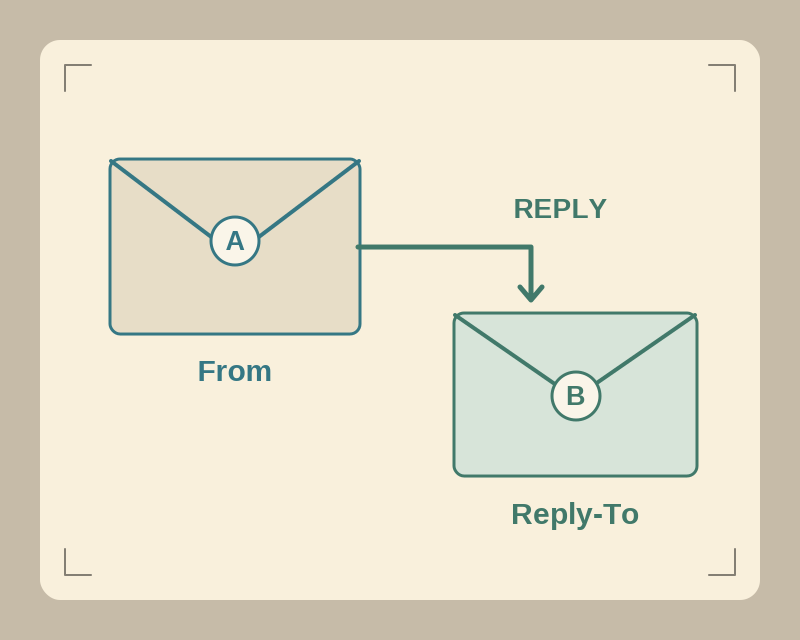
El nombre visible, la dirección From y Reply-To cumplen funciones distintas; revisa el borrador de respuesta y quién atendería ese buzón.
Describe el recorrido que esperas
Una biblioteca ficticia envía una invitación y quiere recibir preguntas en el equipo de talleres. La tarea no termina al mostrar «Biblioteca Luma» en la bandeja. También debe quedar claro quién recibe la conversación posterior.
Escribe una ficha con nombre visible, dirección de origen, dirección prevista para respuestas y responsable del buzón. Confirmar que el equipo tiene acceso y revisa mensajes es una comprobación operativa distinta de configurar una cabecera.
Distingue los dos campos
RFC 5322 define From como el campo que identifica al autor del mensaje. Reply-To, cuando está presente, indica dónde sugiere el autor que se envíen las respuestas. Si no aparece, el comportamiento predeterminado indicado por el estándar es responder a From, salvo decisión de quien redacta la respuesta.
El nombre mostrado por el cliente de correo puede acompañar a una dirección sin hacerla visible de inmediato. Por eso leer solo «Biblioteca Luma» no permite comprobar el buzón. Abre los detalles del remitente en el cliente que utilices.
Sigue un ejemplo sin enviar mensajes
En el ejemplo documental, From usa boletin@example.org y Reply-To usa talleres@example.org. Son direcciones reservadas para ilustración, no contactos del proyecto. El resultado esperado al pulsar Responder es un borrador dirigido a talleres@example.org.
Si el borrador apunta a boletin@example.org, revisa el mensaje recibido y su Reply-To antes de corregir la plataforma. Podría faltar ese campo o existir una configuración diferente de la que se aprobó. No deduzcas el destino a partir del texto del pie ni de un enlace de contacto dentro del cuerpo.
Comprueba la experiencia con una prueba autorizada
Cuando exista un mensaje de prueba recibido en un buzón previsto para revisión, abre detalles, comprueba los campos y pulsa Responder para observar el destinatario. No hace falta enviar la respuesta para comprobar ese paso. Registra también si el cliente permite modificar el destino.
Inspeccionar un borrador confirma lo que ese cliente prepara con ese mensaje. No demuestra que el buzón exista, que una respuesta se entregue o que alguien la atienda. Una prueba real de recepción y atención requiere su propio acuerdo y evidencia.
Conserva la decisión junto a la campaña
Guarda campaña, versión del mensaje, nombre visible, From, Reply-To observado, destinatario del borrador y responsable confirmado. Si no se ha comprobado el acceso al buzón, deja esa casilla pendiente.
La revisión puede terminar en una corrección concreta: cambiar el destino de respuesta aprobado o asignar su atención. No convierte estos campos en prueba de autenticidad del remitente ni de entregabilidad. La promesa editorial debe poder continuar como conversación en el lugar previsto.
Who the email comes from and where replies go
An invitation can display a recognizable name while directing replies to a different mailbox. Before approving a campaign, check both decisions: who appears as author and which address is suggested when someone selects Reply.
The visible name, From address and Reply-To have different roles; inspect the reply draft and who would handle that mailbox.
Describe the expected path
A fictional library sends an invitation and wants workshop staff to receive questions. Displaying “Biblioteca Luma” in the inbox does not finish the task. The subsequent conversation also needs an identified destination.
Create a record with display name, origin address, intended reply address and mailbox owner. Confirming team access and message monitoring is an operational check separate from configuring a header.
Distinguish the two fields
RFC 5322 defines From as identifying the message’s author. When present, Reply-To indicates where the author suggests replies should be sent. When absent, the standard’s default is to reply to From, unless the person composing the reply decides otherwise.
An email client’s display name can accompany an address without immediately revealing it. Reading only “Biblioteca Luma” therefore does not check the mailbox. Open sender details in the client you use.
Follow an example without sending messages
In the documentary example, From uses boletin@example.org and Reply-To uses talleres@example.org. These addresses are reserved for illustration, not project contacts. Selecting Reply should produce a draft addressed to talleres@example.org.
If the draft points to boletin@example.org, inspect the received message and its Reply-To before correcting the platform. That field might be absent, or the configuration might differ from the approved one. Do not infer the destination from footer wording or a contact link inside the body.
Check the experience with an authorized test
When a test message has reached a mailbox designated for review, open its details, inspect the fields and select Reply to observe the recipient. You do not need to send the reply to check this step. Also record whether the client allows changing the destination.
Inspecting a draft confirms what that client prepares for that message. It does not establish that the mailbox exists, that a reply will be delivered or that someone will handle it. A real receipt and handling test needs its own agreement and evidence.
Keep the decision with the campaign
Save campaign, message version, display name, From, observed Reply-To, draft recipient and confirmed mailbox owner. If access has not been checked, leave that field pending.
The review can lead to a specific correction: changing the approved reply destination or assigning someone to handle it. These fields do not establish sender authenticity or deliverability. The editorial promise should be able to continue as a conversation in the intended place.
邮件来自谁,回复又会发到哪里
邀请邮件可以显示熟悉的名称,却把回复引向另一个邮箱。批准活动邮件之前,应检查两项决定:谁被标为作者,以及点击“回复”后建议使用哪个地址。
显示名称、From 地址与 Reply-To 各有作用;检查回复草稿,并确认哪个团队负责接收邮箱。
描述预期路径
一家虚构图书馆发出邀请,希望工作坊团队接收提问。收件箱显示“Biblioteca Luma”,并不意味着任务完成。后续对话也需要明确去向。
制作记录,包含显示名称、来源地址、预期回复地址和邮箱负责人。确认团队有访问权限并查看邮件,是独立于邮件头配置的运营检查。
区分两个字段
RFC 5322 用 From 标识邮件作者。存在 Reply-To 时,它表示作者建议回复发送到的地址。该字段缺失时,标准建议默认回复 From,除非回复撰写者另有决定。
客户端显示名称可以与地址一起存在,却不立即展示完整地址。因此,只读“Biblioteca Luma”无法核实邮箱。应在使用的客户端中打开寄件人详情。
不发送邮件也能跟踪示例
文档示例的 From 为 boletin@example.org,Reply-To 为 talleres@example.org。这些地址仅用于示例,并非项目联系人。点击“回复”后,预期草稿收件人为 talleres@example.org。
如果草稿指向 boletin@example.org,应先检查收到的邮件及其 Reply-To,再修改平台。该字段可能缺失,也可能实际配置不同于批准版本。不能根据页脚文字或正文联系链接推断回复去向。
使用获授权的测试检查体验
指定审核邮箱收到测试邮件后,打开详情、检查字段,再点击“回复”观察收件人。检查这一步不需要实际发送回复。同时记录客户端是否允许修改目的地址。
查看草稿只能确认这个客户端针对这封邮件准备了什么,不能证明邮箱存在、回复能送达或有人处理。真正的接收和处理测试需要另行约定,并保存证据。
与活动一起保存决定
记录活动、邮件版本、显示名称、From、实际 Reply-To、草稿收件人和已确认的负责人。尚未核实邮箱访问权限时,应将该项标为待确认。
审核可以形成具体修正:调整获批准的回复地址,或安排接收责任人。但这些字段不能证明寄件身份真实或邮件可送达。邮件中的承诺,应能在预定地点继续成为一段对话。
Fuentes y método
Fuentes consultadas el 23 de noviembre de 2026. Los casos y datos numéricos de los ejercicios son ficticios. Editorial standards · Disclosures.