Divide unit contribution by minutes on the constrained resource. Then check whole units, demand and the mix's total time.
Set the exercise conditions
A sells for 50 currency units and has variable cost of 20: its contribution is 30. B sells for 40 with variable cost of 16: its contribution is 24. Period fixed costs are the same across options; materials, labor and all other resources are sufficient. Assume constant times, no changeovers and no prior commitments requiring a different mix.
Use the same minute in the denominator
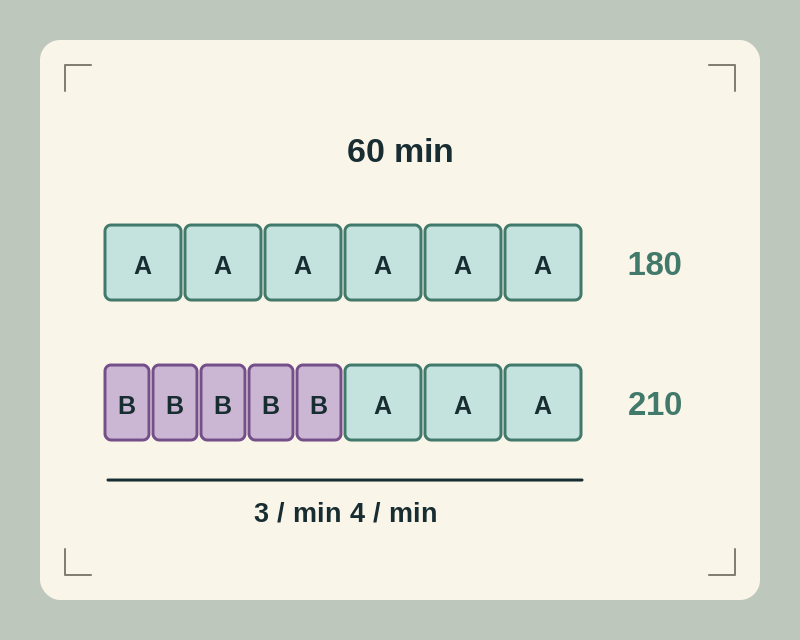
Each A needs ten minutes on that machine; each B needs six. A yields 30 / 10 = 3 per minute; B yields 24 / 6 = 4. The denominator is time on the constrained resource, not everyone's combined working hours. OpenStax develops this criterion for allocating a scarce resource according to its contribution.
Build two feasible plans
Making six A units consumes all 60 minutes and contributes 180. Making the five B units first consumes 30 minutes and contributes 120; the remaining 30 minutes allow three A units and another 90. Five B plus three A contribute 210. Both plans fit and respect demand caps, but yield different contributions.
Check limits before generalizing
The example cannot sell ten B units: demand is only five. With indivisible units, leftover minutes can affect the preferred combination; inspect feasible mixes. If another constraint, a setup cost or an obligation to deliver complete sets appears, recalculate. Ranking ratios does not automatically solve all those cases.
State what the result demonstrates
Under these assumptions, the proposed mix contributes 30 more than making only A. Fixed costs still need covering; 210 is not net profit. Keep prices, variable costs, minutes, demand and chosen quantities. In a real operation, add commercial and service conditions before turning the calculation into a plan.
Follow the evidence.
Sources checked November 20, 2026. The exercise scenarios and figures are fictional. Our editorial standards.