Identify whether you compare documentation or performed tests. Use equivalent criteria, retain sources for each value and limit conclusions to what you actually checked.
Begin with the comparison question
A fictional publication prepares a label-printer comparison for a space-limited desk. Its initial question concerns declared dimensions and formats, rather than the “best printer” for every business.
Write the use, relevant conditions and possible research method. A technical sheet, commercial claim and performed test provide different evidence. Here we propose a documentary comparison; we neither tested the fictional products nor recommend a purchase.
Identify model, version and origin
Record manufacturer, full reference, market, document and consultation date. One family can include variants with different power supplies, connectors or accessories. Do not combine one edition’s weight with another’s advertised runtime.
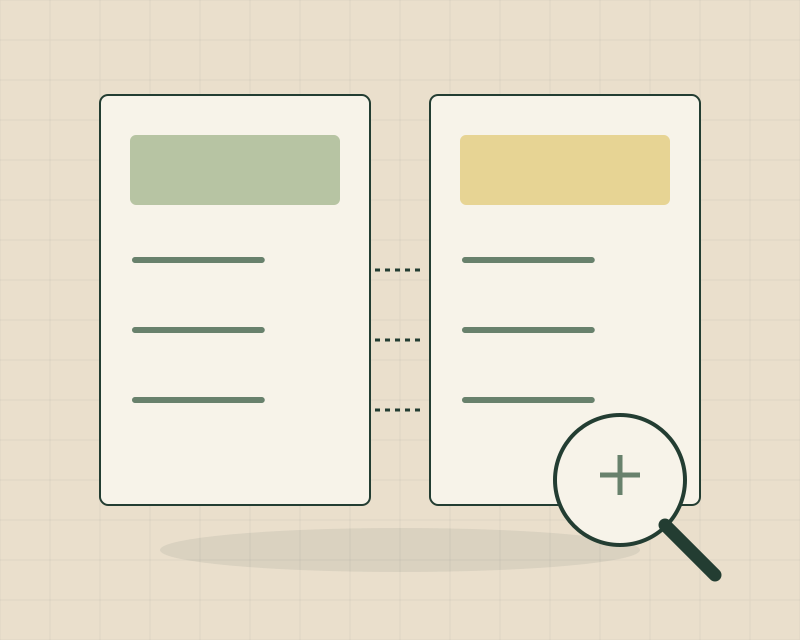
Retain each value’s location. If two manufacturer sources disagree, keep both and request clarification. A newer page does not automatically resolve the difference if it concerns another model. Our claim review helps maintain traceability.
Use rows supporting equivalent reading
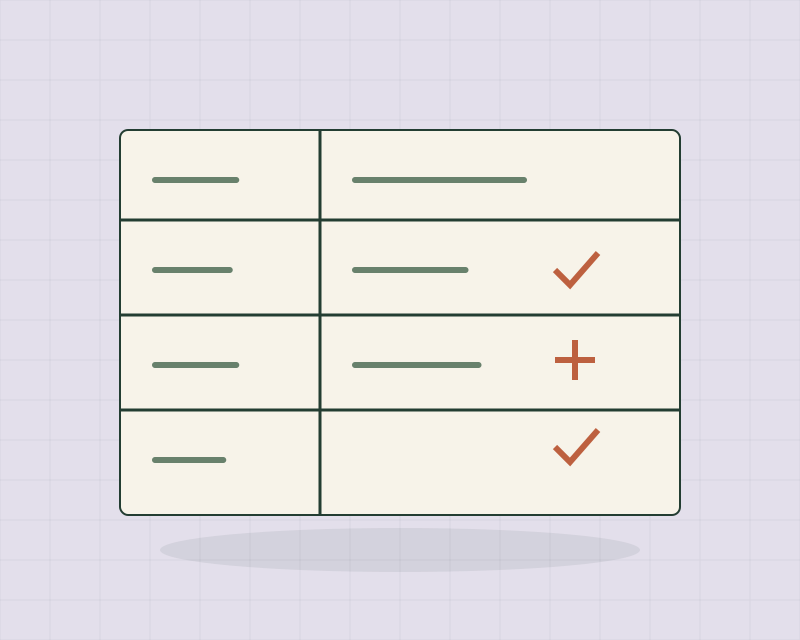
| Criterion | Model A | Model B |
|---|---|---|
| Body width | 18 cm, document A | 22 cm, document B |
| Declared label width | Up to 5 cm | Up to 6 cm |
| Weight with battery | Not stated | Not stated |
This table represents no real brands. Numbers illustrate retaining units and references. “Not stated” means neither zero weight nor absence of a battery. If one measurement includes accessories and another does not, explain that before comparing.
Nielsen Norman Group recommends consistent table content. Do not treat “compact” and “22 cm” as equivalent values: one is a description; the other a measurement with scope to check.
Bound the experience you describe
Google recommends evidence of experience for reviews and support for prominent recommendations. Document-based comparisons should identify that method without fabricating usage photographs, noise measurements or weeks of work.
If later testing, record equipment, version, conditions, procedure and results. A packaging photograph establishes what appears in it, rather than runtime or precision. The shot list helps document views without turning an image into a performance test.
Conclude by criterion and retain questions
In this case, A declares a narrower body while B declares support for wider labels. That resolves neither speed, consumable costs nor compatibility. A 20 cm desk still needs connection, clearance and handling checks; width alone does not establish that A fits.
Avoid a total score without explainable weights and missing data. “We need these two conditions confirmed before choosing” can be useful. Do not fill gaps with stars or an unidentified sponsored recommendation.
Publish the method alongside the comparison
- Intended use and chosen criteria.
- Exact option references.
- Origin, date and scope of each value.
- Performed experience or absence of testing.
- Unknowns, limitations and conclusion rationale.
Check links and the table on mobile. A package comparison explains your own offer; here you investigate external options. Keep versions when specifications change, and do not present a documentary update as another physical test.
Follow the evidence.
Sources checked October 27, 2026. Illustrative scenarios and numbers are fictional. The records and exercises are original editorial proposals, without attributed customer results or provider tests. Our editorial standards.