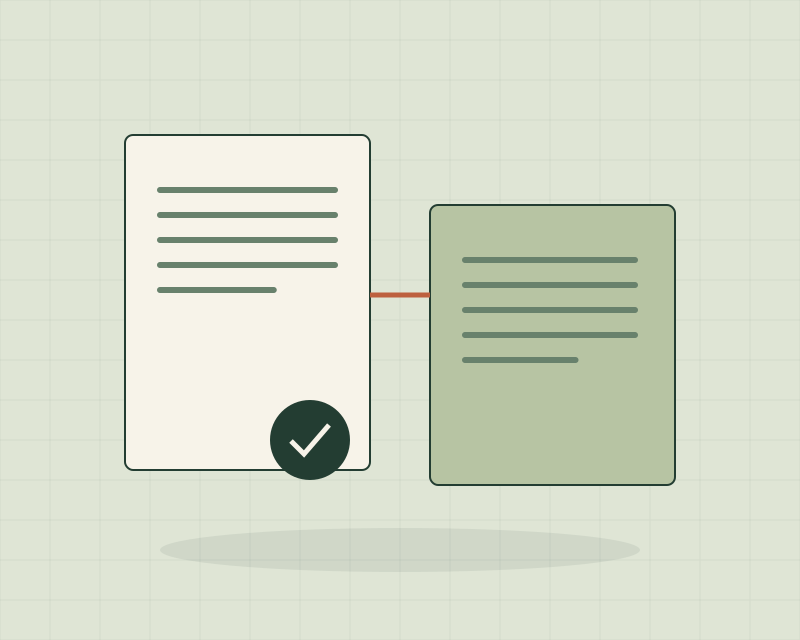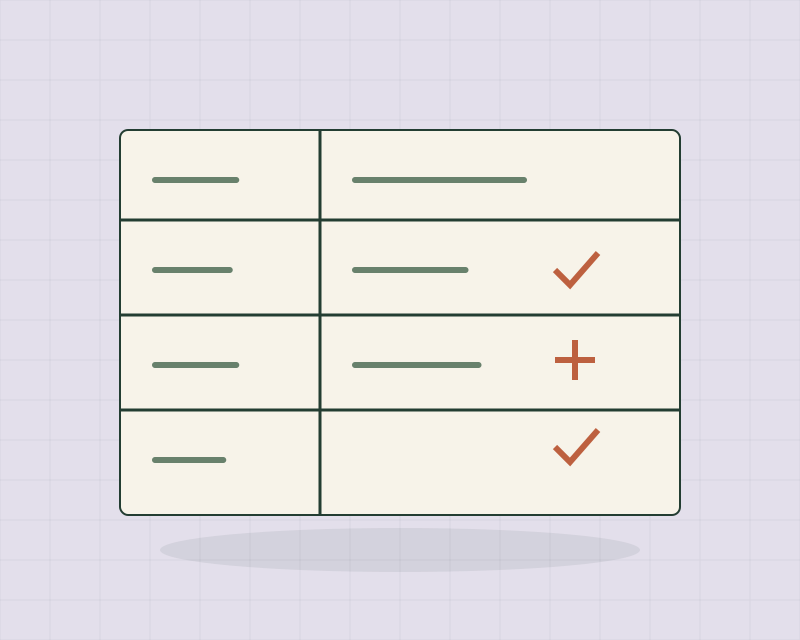
Connect claim, evidence, owner and change signal. Then record what was corrected in each edition and what remains unresolved.
Locate decisions that depend on current information
Read the guide as someone who must act. Mark interface instructions, requirements, availability, amounts, deadlines and examples that depend on a third party. Separate these from general explanations that have not changed. Not every paragraph needs the same follow-up.
GOV.UK guidance for existing content recommends regularly checking usefulness and correcting errors, broken links or outdated information. The following record is our editorial proposal for turning that task into a concrete review; it does not reproduce that service’s internal tools.
Connect each claim to a check
Imagine a fictional guide to applying for workshop access. Its previous version mentions a form, a participation option and a deadline. These are not the conditions of an actual provider.
| Claim | Evidence to seek | Review signal |
|---|---|---|
| Apply through this form | Official page and current public path | The link changes or the form is withdrawn |
| A remote option is available | Official offer and conditions | The organization announces a different option |
| A response takes five days | Current commitment and deadline scope | The source changes the deadline |
Add URL, passage location, consultation date and owner. A homepage link does not make a condition easy to retrieve. If the source no longer confirms the detail, mark it “awaiting confirmation”; do not assume it remains valid because nobody announced otherwise.
Review a change’s dependencies
If the remote option disappears, also find mentions in the introduction, questions, table, images and description. Changing an isolated sentence can leave a contradictory recommendation. Review the practical example: its steps may no longer be possible.
Distinguish correction, substantive update and change of focus. If the reader’s question remains the same, update the existing guide instead of creating a competing one. Our writing guide addresses initial development; this task sustains the usefulness of something already published.
Track the change across translations
Open one row per language with a state: pending, reviewed or published. Include the affected passage and its replacement. Reviewing Spanish does not establish that English or Chinese reflects the same condition; translating a paragraph is also insufficient if a table retains the old detail.
Keep the current version and decision history identifiable. Our brand file package guide covers a file handoff; this inventory connects claims inside pages and their language editions.
Explain what each action’s date represents
- First publication: retain when that edition appeared.
- Content update: document a substantive change and its reason.
- Source consultation: record references checked, even when no changes were needed.
- Next review: choose a signal or time based on how volatile the detail is.
This separation is a proposed editorial policy, rather than a universal calendar requirement. Do not change an update date merely to make a guide appear recent. Our article data review helps compare visible dates and metadata afterward.
Close with evidence and a complete reading
Keep a brief note: “The source no longer lists the remote option; its instructions were removed from all three editions.” Identify who checked the new page and what remains unconfirmed. Repeat the guide’s exercise from the beginning.
If no useful answer remains, consider a historical notice or withdrawal through an explicit editorial and technical decision. Checking one source does not automatically make the entire guide current. Start with one page and its decisive claims, then expand the inventory based on what that reading reveals.
Follow the evidence.
Sources checked October 21, 2026. Illustrative scenarios and numbers are fictional. The records and exercises are original editorial proposals, without attributed customer results or provider tests. Our editorial standards.